
As demand continues to grow for carbon steel, stainless steel, aluminum alloy, and high-quality welded structures, manufacturers face challenges including shortages of skilled welders, welding quality variation, distortion control, and increasing production capacity.
With more than 15 years of experience in welding processes and robotic automation, DS Technology integrates welding parameter development, robot path planning, fixture and positioner design, TCP calibration, Robotmaster® offline programming, and automation peripherals to establish stable, repeatable robotic welding processes suitable for mass production.
We provide more than welding equipment. Our services cover the complete process from process evaluation, welding trials, and fixture design to equipment integration and production implementation.
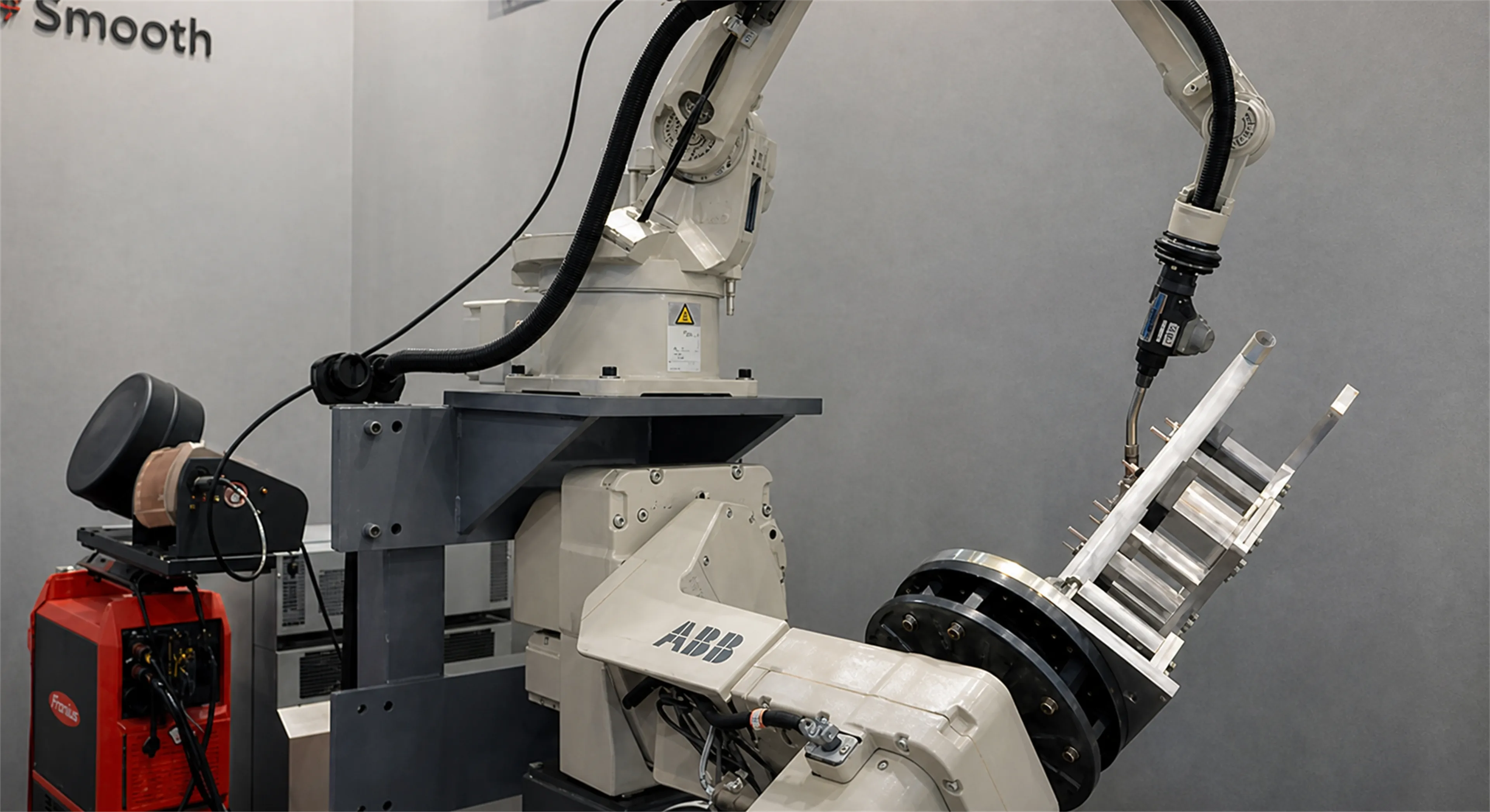

DS provides welding process engineering and automation integration services. Based on workpiece material, structure, weld location, quality requirements, cycle time, and production capacity, we develop suitable welding processes and automation architectures.
Services Include:
By combining more than 15 years of welding process experience with system integration capabilities, DS helps customers improve welding quality consistency, process stability, and mass-production efficiency.
DS Technology integrates laser processing, robotic welding, welding process engineering, and FlexRC™ post-weld surface finishing. From welding distortion and dimensional control to penetration, full-penetration and fusion quality validation, TIG Smooth Welding, and weld grinding, DS establishes stable and repeatable welding processes.
By integrating welding and post-weld surface finishing, DS reduces visible weld marks and improves final appearance consistency while maintaining joint quality.
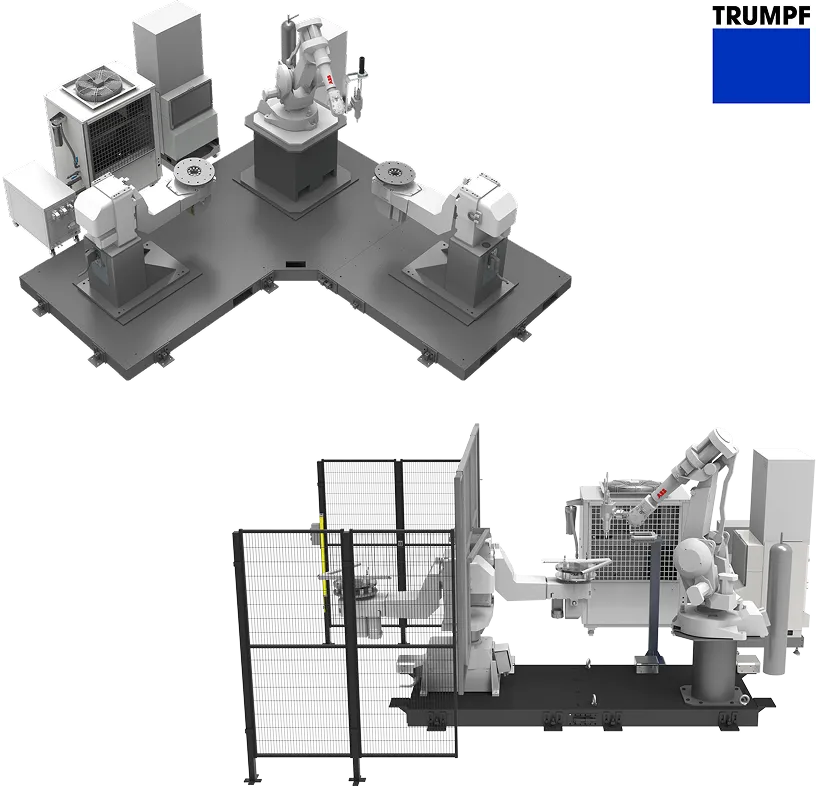
Robotic Laser Processing & Welding System
Integrates TRUMPF laser processing systems for 3D laser cutting, trimming, and laser welding. Automated processing can be configured according to workpiece geometry, joint configuration and design, and process requirements to improve dimensional consistency and joint quality.
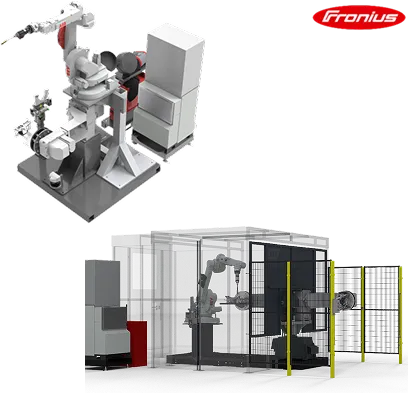
Robotic Precision Welding System
Integrates pulsed MIG / MAG welding, CO₂ welding, and TIG processes. TIG Smooth Welding can be added according to product requirements to refine weld bead geometry and appearance while improving welding consistency and process stability.
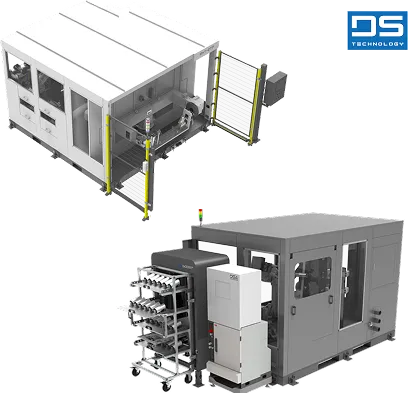
Robotic Weld Grinding & Surface Finishing System
Combines FlexRC™ compliant force control with weld grinding technology to maintain stable contact force, processing paths, and material removal. Supports weld finishing, grinding, and surface finishing to reduce visible weld marks and improve appearance consistency.
DS provides MIG / MAG / CO₂ / TIG robotic welding automation solutions integrating robots, welding power sources, wire feeding systems, welding torches, fixtures, positioners, and process control. Through joint design and tolerance management, fixture positioning, welding sequence planning, heat input control, and welding parameter optimization, DS helps reduce welding distortion, accumulated dimensional error, and lack-of-fusion risks while improving weld quality, dimensional consistency, and production stability.
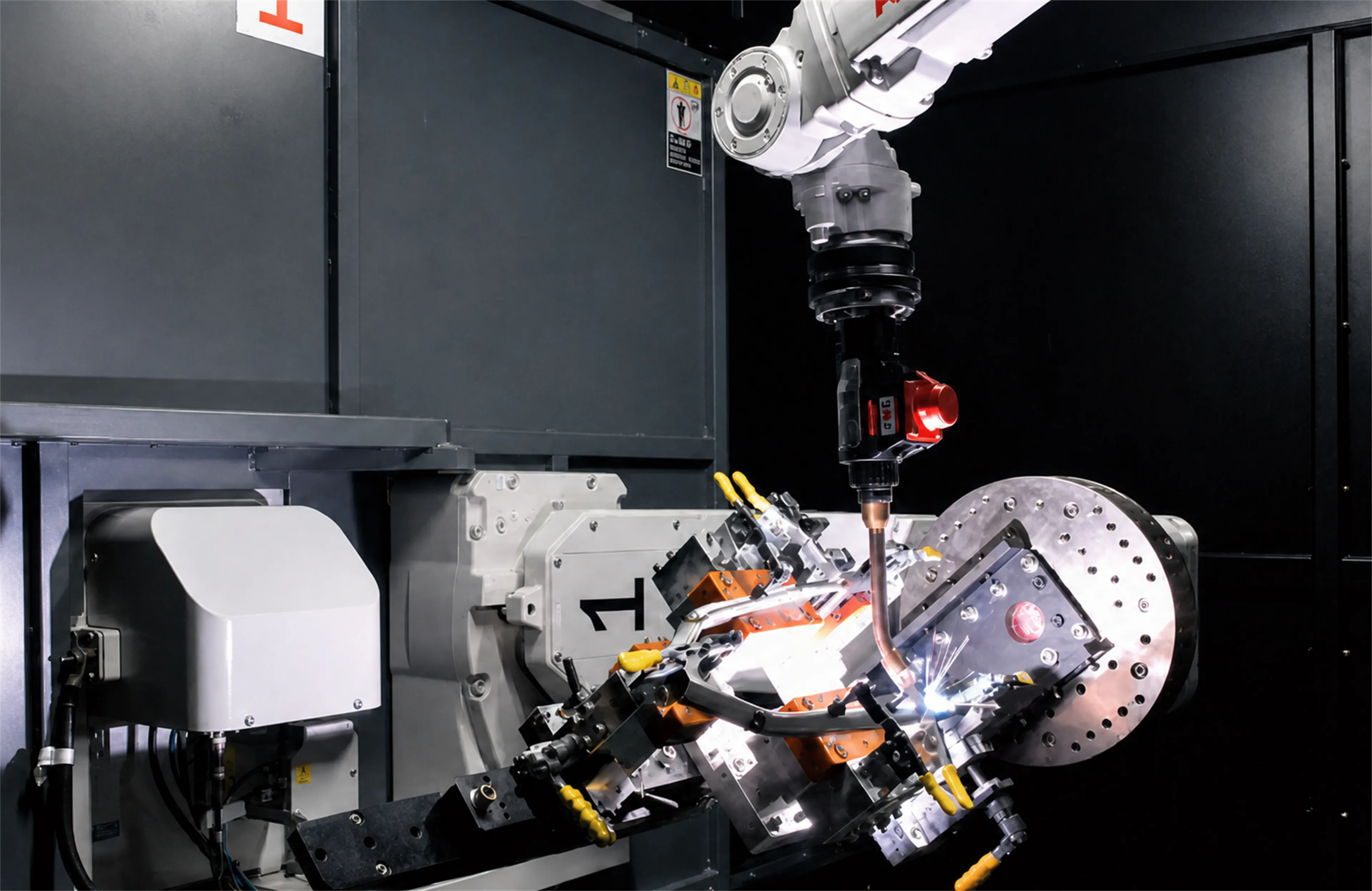
Develop welding speed, current, voltage, wire feed speed, heat input, and other process parameters according to material, plate thickness, joint configuration, and quality requirements.
Workpiece positioning, fixture restraint, welding sequence, and heat input planning help reduce thermal distortion and accumulated dimensional error.
Integrates robot TCP calibration, machine calibration, and Robotmaster® offline programming to improve consistency between programmed robot paths and actual welding positions.
Through process parameter optimization and welding quality validation, penetration depth, degree of penetration, fusion condition, and weld quality are verified according to joint design and product requirements.
Records welding parameters, equipment status, and abnormal events, with optional integration into smart manufacturing systems to support quality traceability and process improvement.
DS Technology integrates precision robotic welding, TIG Smooth Welding, FlexRC™ weld grinding, and process control to establish a complete process from welding through post-weld surface finishing. By controlling welding sequence, heat input, fixture positioning, and post-weld dimensions, together with penetration and fusion quality validation and consistent weld-bead profile management, controlled weld grinding and surface finishing can be applied to reduce visible weld marks and improve final appearance consistency while maintaining joint quality.
Applications include premium bicycles and sporting goods, automotive and EV structures, AI server racks and liquid-cooling structures, semiconductor equipment frames, aerospace and UAV metal structures, and precision sheet-metal and welded structures requiring high cosmetic quality.
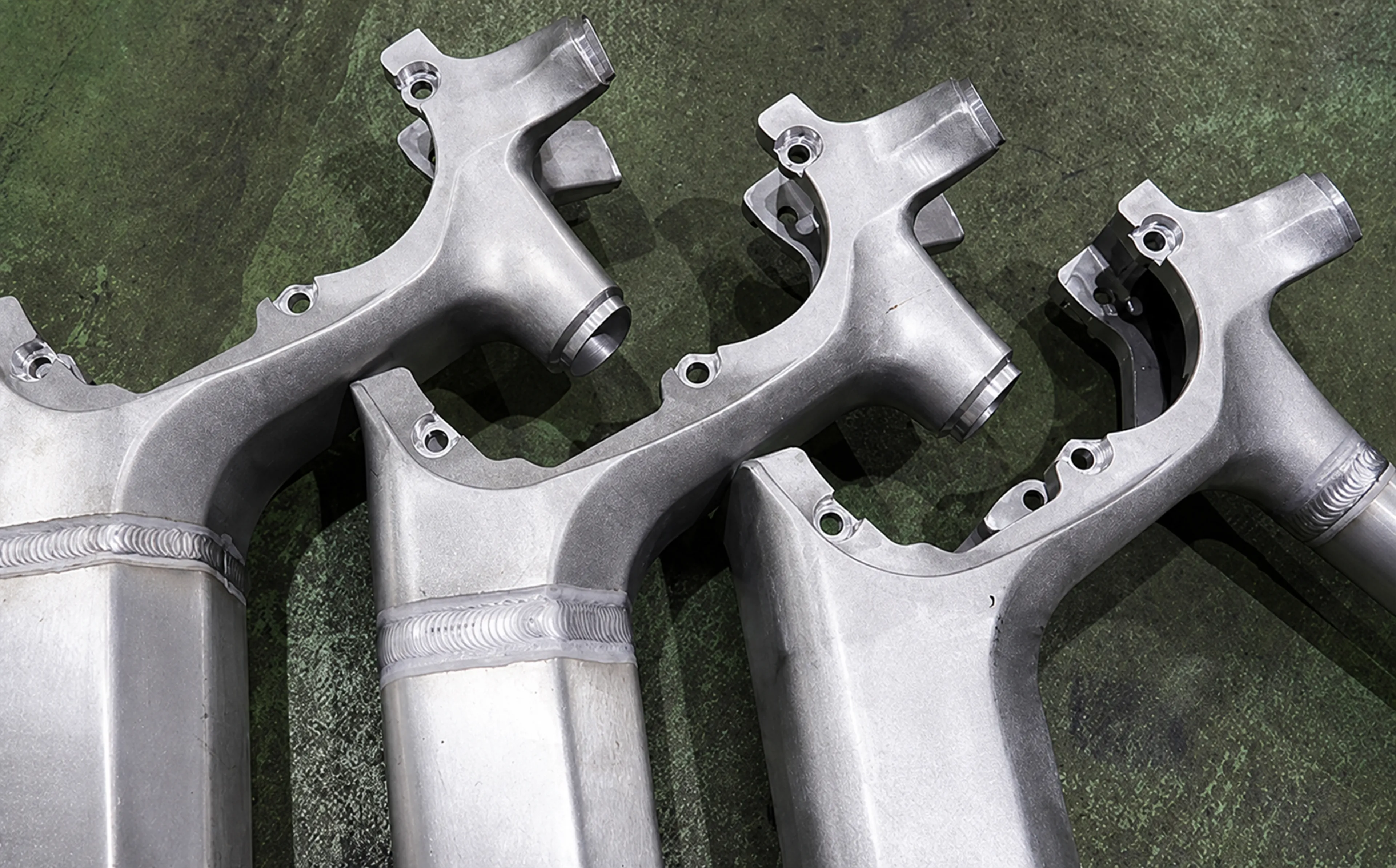
Welding parameters are developed according to material, plate thickness, and joint design to control penetration depth, degree of penetration, fusion quality, and heat input, reducing welding distortion while maintaining consistent weld-bead geometry.
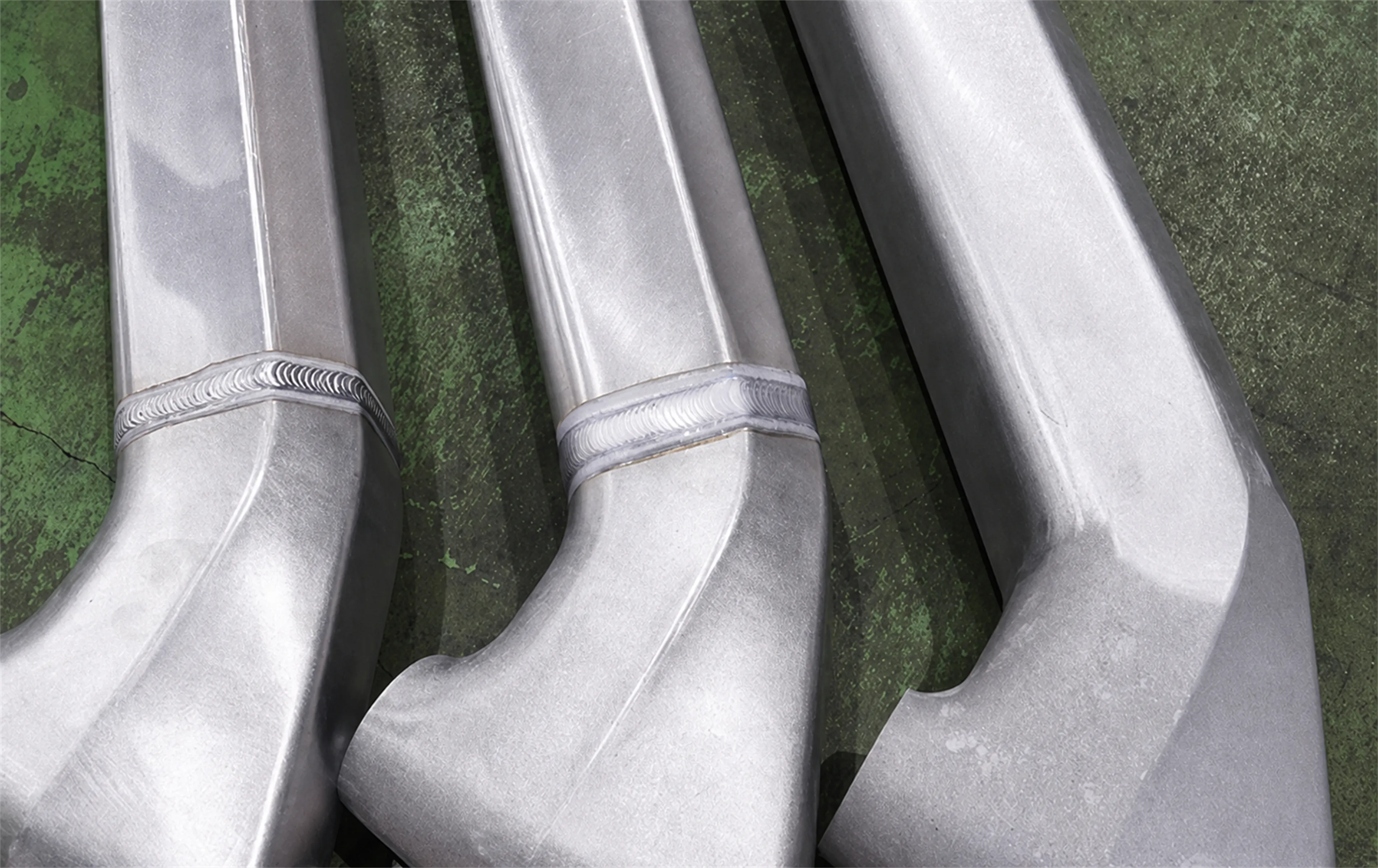
After MIG / MAG welding, a secondary TIG remelting process is used to refine weld-bead geometry and surface condition, improving bead consistency and creating a more stable foundation for subsequent grinding and surface finishing.
DS FlexRC™ compliant force control stabilizes contact force, processing paths, and material removal to support weld finishing, grinding, and surface finishing, reducing visible weld marks while improving surface smoothness and appearance consistency.
Process Illustration
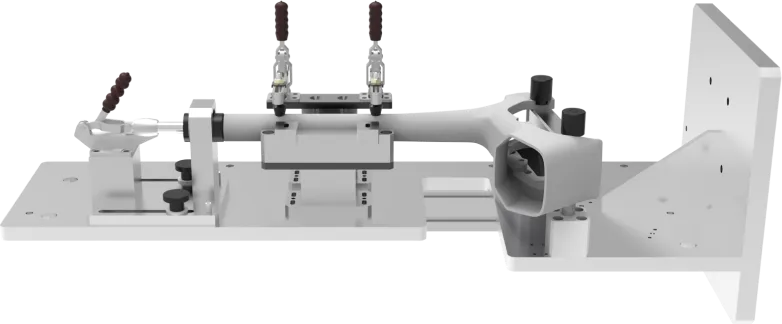
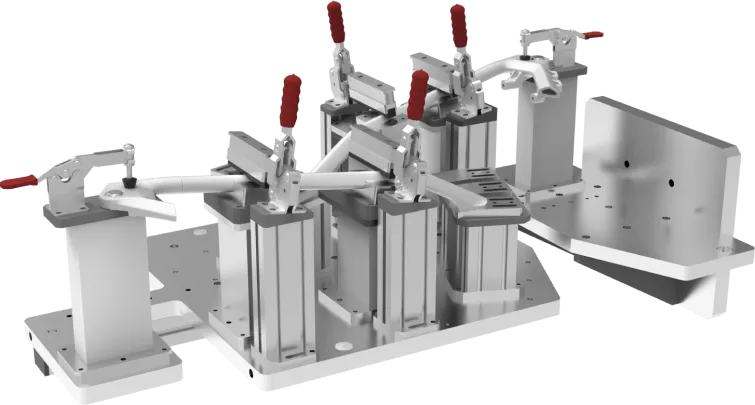
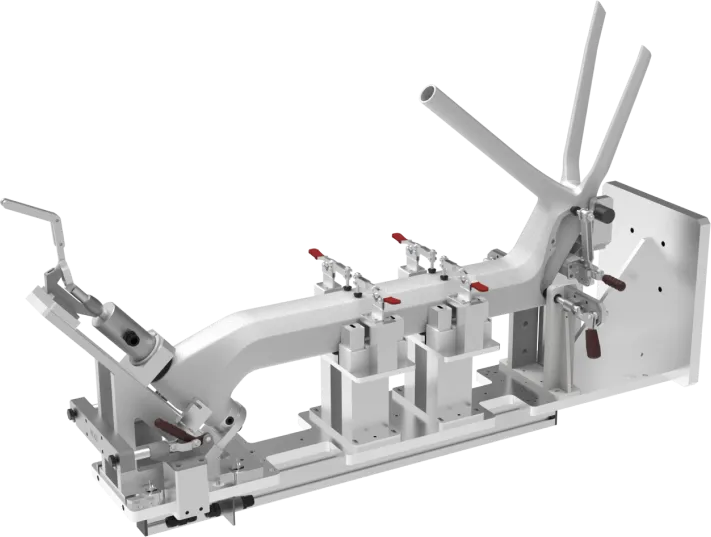
Workpieces in the photos are arranged in process order (left to right in the first two photos, bottom to top in the third).
Two system configurations are available according to welding process, production capacity, and automation requirements: Advanced Integrated and Standard Modular.
AVWD-1P / AVWD-2TP
Designed for high flexibility, high throughput, and advanced process integration.
BVWD-1P / BVWD-2P
Standardized modular design for rapid implementation and flexible expansion.
The AVWD Series features a modular robotic welding workstation architecture that can be configured as single-, dual-, or multi-station systems according to workpiece size, welding process, cycle time, loading/unloading method, and production capacity requirements.
The system supports MIG / MAG / CO₂, pulsed MIG / MAG, and TIG welding processes, integrating industrial welding robots, welding power sources, dedicated fixtures, positioners, robot and workstation calibration, Robotmaster® offline programming, and welding peripherals to establish stable, repeatable automated welding processes suitable for production.
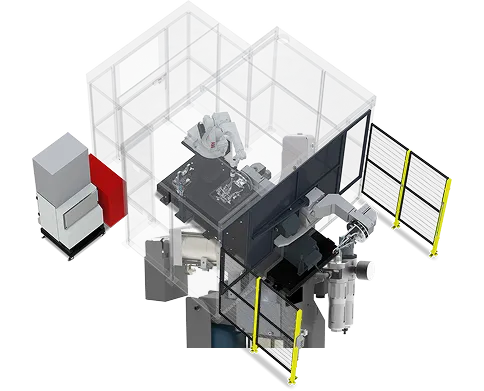
| Configuration | Description | |
|---|---|---|
| 01 | High-Accuracy Industrial Welding Robot | Equipped with ABB industrial welding robots featuring Absolute Accuracy calibration and advanced motion control to improve consistency between actual robot positions, welding paths, and offline simulation models, supporting complex weld paths and demanding automated welding applications. |
| 02 | Industrial Welding Power Source | Fronius, Megmeet, and other industrial welding power sources can be selected according to material, plate thickness, joint configuration, welding process, quality requirements, and project budget. The system supports MIG / MAG / CO₂, pulsed MIG / MAG, and TIG processes with integrated wire feeding, robotic welding torches, and control interfaces. |
| 03 | Multi-Axis Positioner System | Multi-axis positioners can rotate, flip, and position the workpiece according to weld location and welding orientation, maintaining suitable welding positions while improving accessibility, process stability, and production efficiency. |
| 04 | Robot Calibration, Offline Programming & Virtual-to-Real Alignment | Integrates welding-torch TCP calibration, workstation calibration, robot calibration, and Robotmaster® offline programming for welding path planning, robot posture optimization, interference and collision checking, and machine validation, improving alignment between offline programs, actual robot positions, and weld locations. |
| 05 | Control System & Safety Integration | Integrates control of robots, welding power sources, multi-axis positioners, and peripheral equipment while supporting equipment status, welding parameter, and process management. Safety systems can be configured with guarding, light curtains, door interlocks, and other safety devices according to equipment layout and risk assessment, with design support for applicable CE, UL, JIS, and related safety and electrical requirements. |
The following modules can be flexibly integrated according to workpiece characteristics, product changeover frequency, welding quality requirements, and desired automation level.
Automatic Seam Tracking
Automatic Wire Trimming
Automatic Torch Cleaning
Dedicated Welding Fixtures
Zero-Point Positioning System
Quick-Change Fixture System
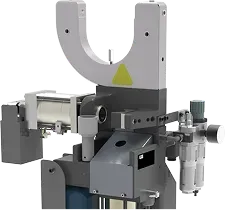
AMRs can be integrated to automate the transport of workpieces and materials, reducing manual handling requirements and improving production-line logistics efficiency.
Program switching, process recipes, and welding parameter management help reduce changeover time between products and support high-mix, low-volume production.
Integrates equipment status, welding parameters, production information, and abnormal-event data to improve equipment and process visibility while supporting quality traceability and production management.
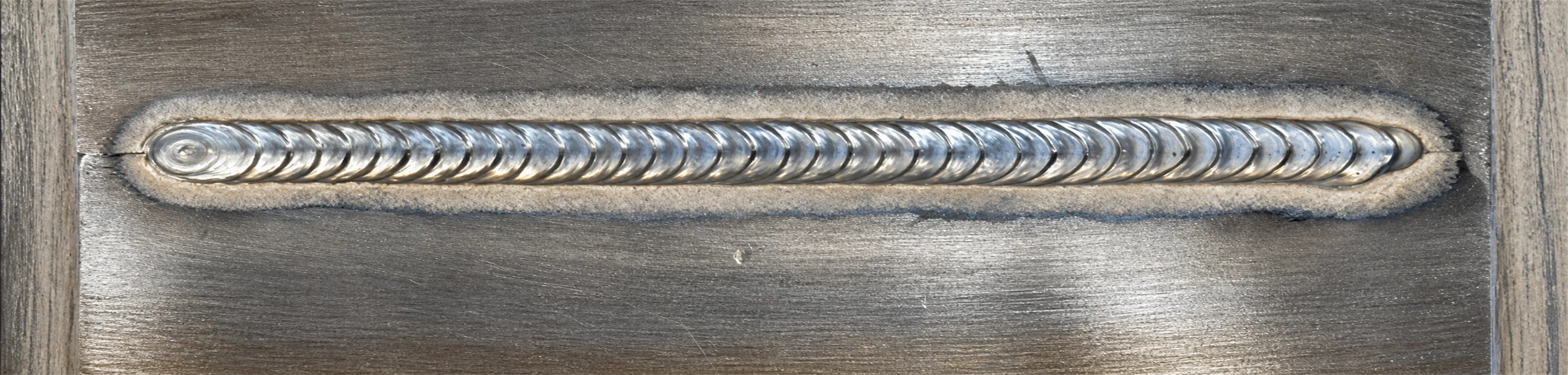
Establishes stable weld-bead geometry and fusion quality while controlling welding parameters and heat input to reduce distortion and improve process consistency.
Watch Video
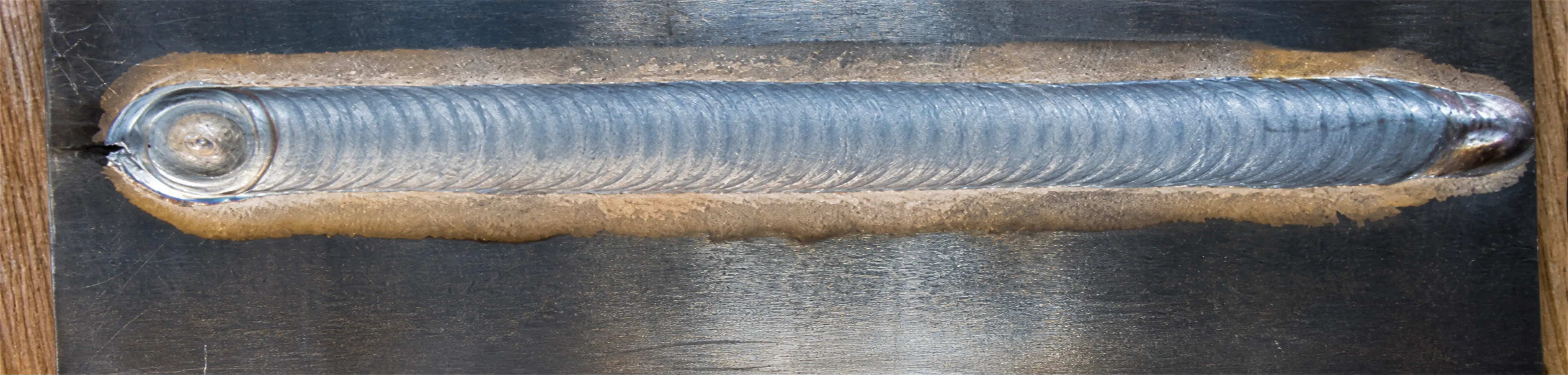
A secondary TIG remelting process refines weld-bead geometry and surface condition, improving bead consistency and providing a stable foundation for subsequent grinding and surface finishing.
Watch Video
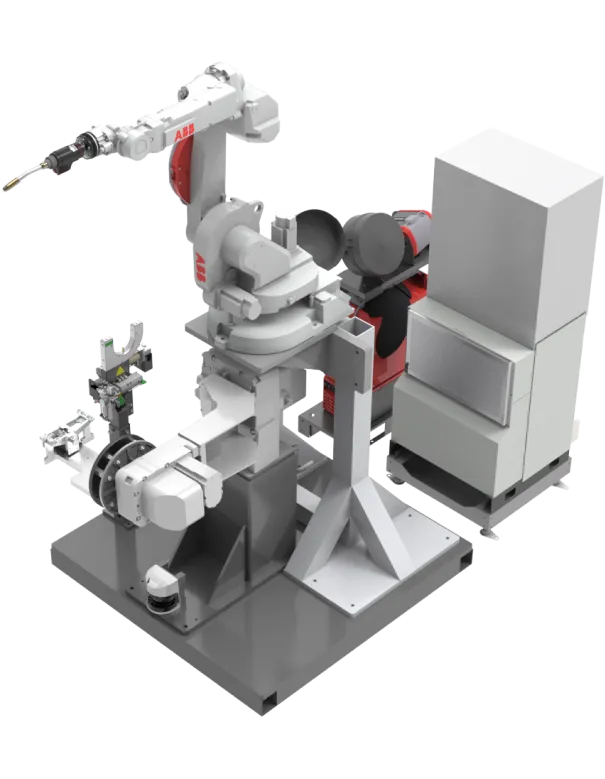
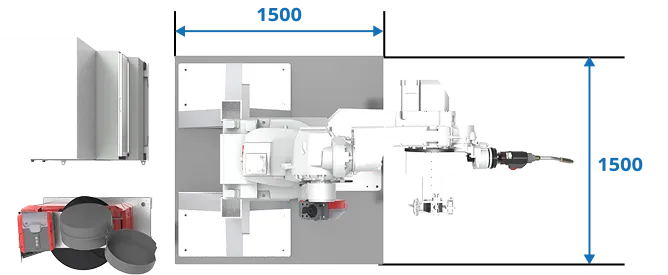
Compact modular design minimizes equipment footprint and is suitable for small- to medium-sized workpieces, high-mix low-volume production, and flexible welding applications.
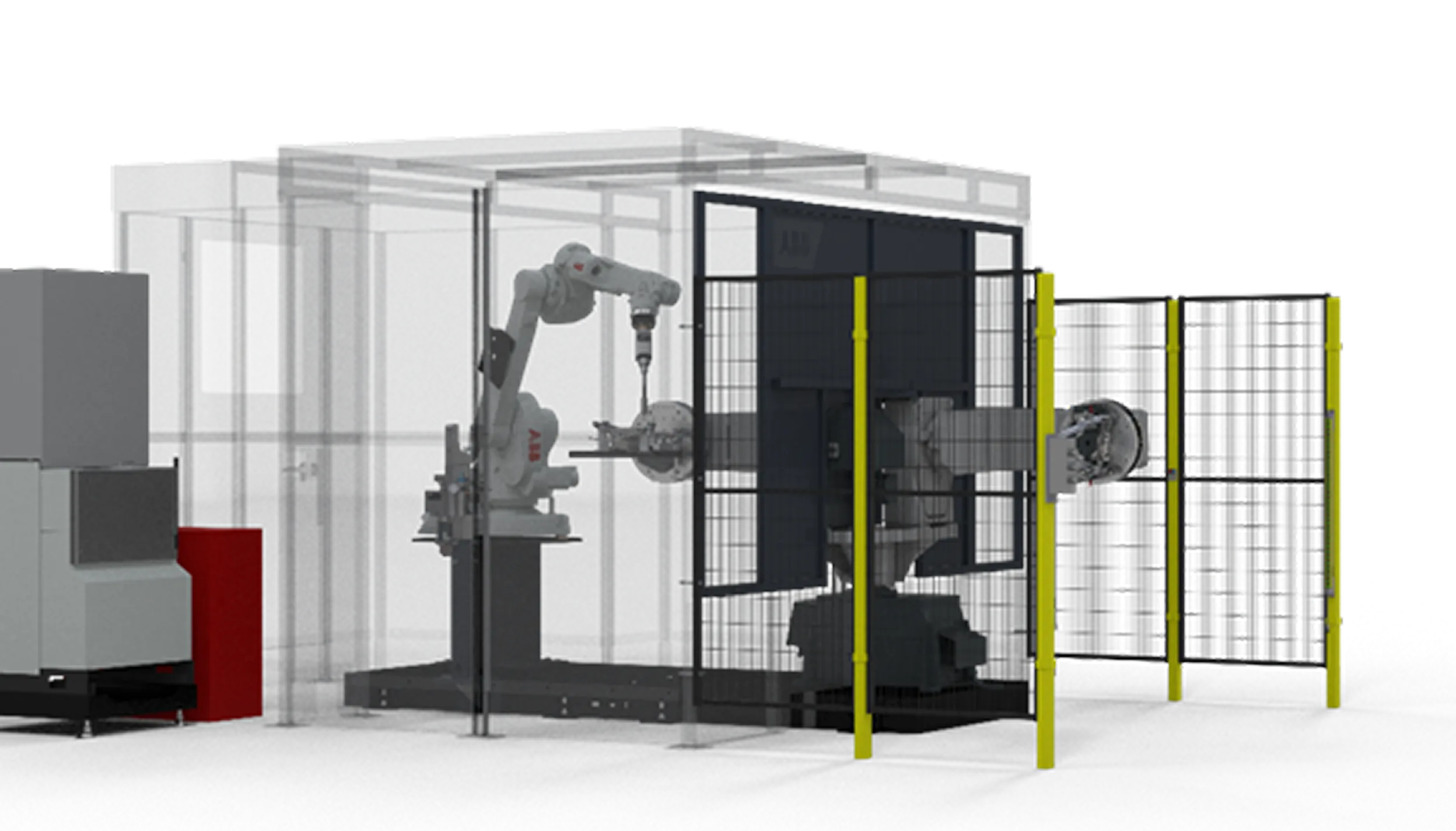
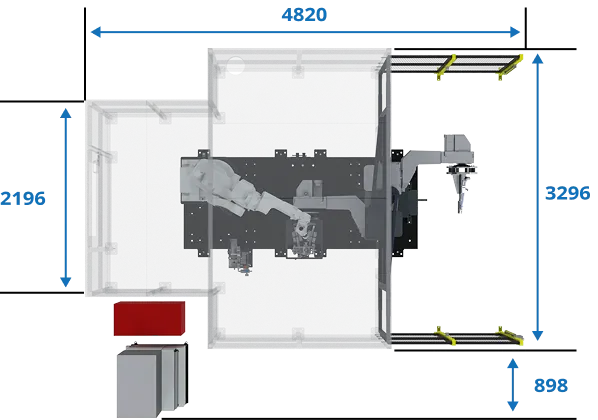
Alternating dual-station operation allows loading and unloading at one station while welding is performed at the other, reducing waiting time and improving equipment utilization and production efficiency.
The BVWD Series features a standardized robotic welding workstation architecture integrating a six-axis industrial welding robot, welding power source, positioner, fixture, and workstation control. Single- or dual-station configurations can be selected according to workpiece size, production cycle time, and loading/unloading requirements.
Welding paths are primarily created through on-site teach-pendant programming and machine-side adjustment. Using a mature and widely adopted robotic welding architecture, the system is suited to small-to-medium batch and mass-production applications with relatively fixed product structures, weld locations, and production conditions.
BVWD is designed around standardization, intuitive operation, rapid implementation, and controlled investment. It is not primarily intended for advanced offline programming, complex coordinated multi-axis motion, or applications requiring high absolute positioning accuracy, making it well suited to stable repetitive welding and rapid automation deployment.
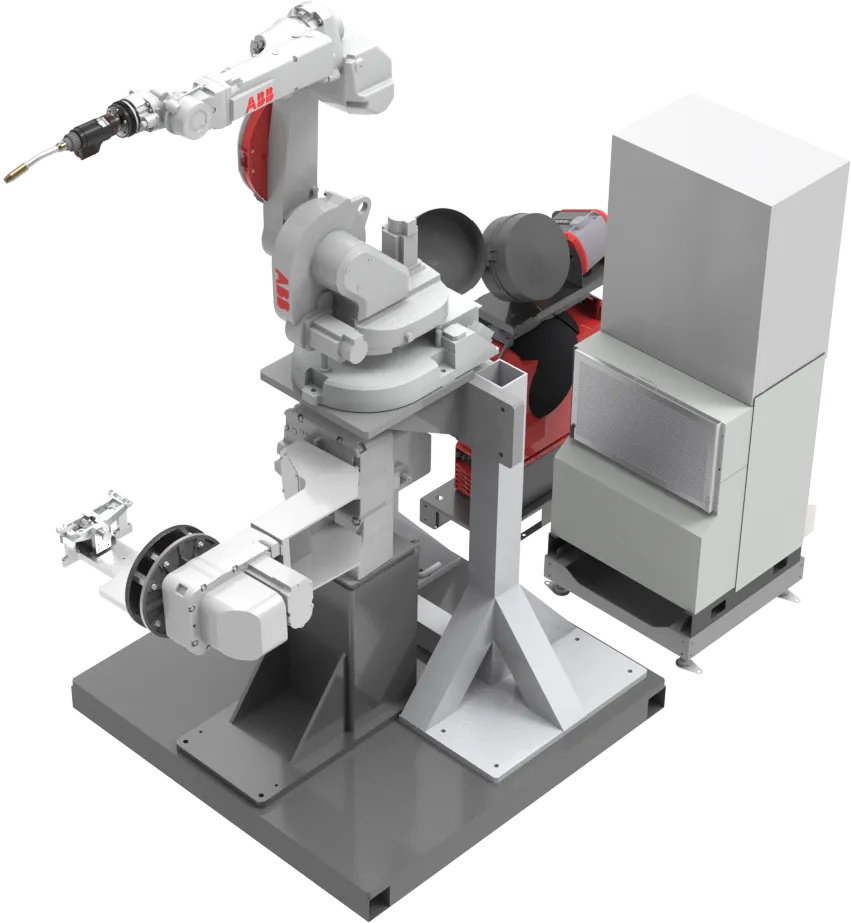
| Configuration | Description | |
|---|---|---|
| 01 | Robot | ABB six-axis industrial welding robot |
| 02 | Welding Power Source | Fronius welding system, configurable for MIG / MAG / CO₂ or TIG processes according to application requirements |
| 03 | Workstation Configuration | BVWD-1P single station / BVWD-2P dual station |
| 04 | Positioning System | Standard positioner configured according to workpiece and welding requirements |
| 05 | Path Programming | On-site teach-pendant programming, welding path setup, and machine-side adjustment |
| 06 | Control System | Streamlined control architecture using the robot controller to integrate the welding power source and workstation peripherals |
Safety fencing, interlocked doors, light curtains, and related safety devices can be configured according to equipment risk, site conditions, and customer requirements.
Dedicated fixtures, torch cleaning systems, and related welding peripheral modules can be configured according to workpiece and process requirements.
Equipment can be designed and configured according to project and target-market requirements, with support for applicable CE, UL, JIS, and related safety and electrical requirements.
Suitable for fixed workpieces, fixed weld paths, and highly repetitive welding operations
Standardized workstations improve welding consistency and production efficiency
On-site teaching and machine adjustment reduce system setup and programming complexity
Automates repetitive welding operations to improve production stability
Select the appropriate workstation architecture according to footprint, production cycle time, and capacity requirements
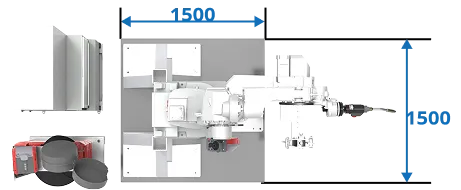
Compact standardized modular design minimizes equipment footprint and is suitable for fixed workpieces, standardized welding processes, and small-to-medium batch production.
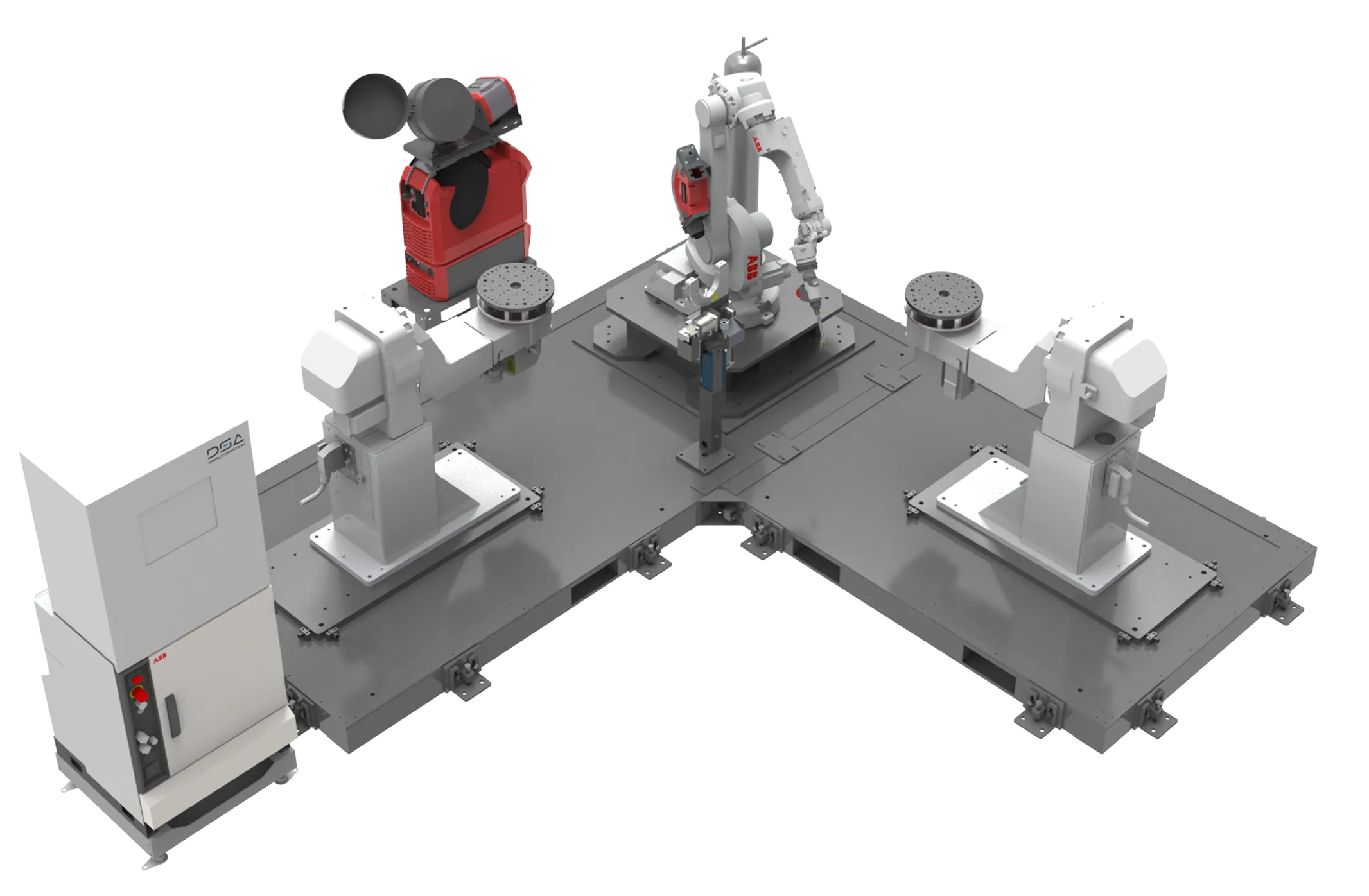
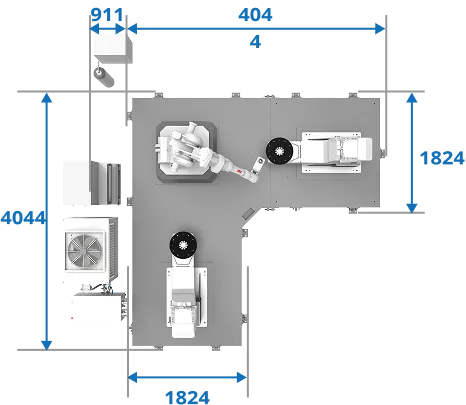
Alternating dual-station operation allows welding to be performed at one station while loading and unloading are carried out at the other, reducing equipment waiting time and improving utilization and production efficiency.
DS Technology integrates modular fixtures, workpiece positioning, welding distortion control, welding sequence planning, heat input management, and robotic process parameters to establish stable, repeatable automated welding processes suitable for production.
Fixture and process standardization reduce manual adjustment and changeover time while improving flexibility for high-mix production. By integrating robots, positioners, and welding paths, the system expands accessibility to complex welds and the range of automated welding.
Standardized and modular fixture design supports different products, dimensions, and process requirements while reducing fixture setup and product changeover time.
Joint-gap control, heat input management, welding sequence, and process parameter control reduce process variation and improve weld quality consistency and repeatability.
Workpiece positioning, fixture restraint, welding sequence, and heat input management help reduce thermal distortion and accumulated dimensional error while maintaining structural dimensional stability.
Multiple robots, external axes, and positioners are coordinated to improve accessibility to complex welds, expand automated welding coverage, and increase overall production efficiency.
Supports high-mix production and rapid changeovers, with scalable robot, positioner, and workstation configurations according to cycle-time and capacity requirements.
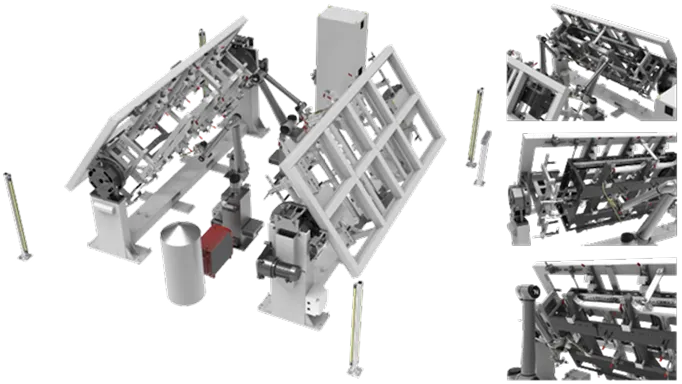
For large AI server rack frames, the system integrates dual robots, a long-axis positioner, and dedicated welding fixtures for automated MAG / CO₂ welding, supporting long weld seams, multi-side welding, and multiple welding angles.
Multi-robot coordination, fixture restraint, welding sequence planning, and heat input management reduce welding distortion and accumulated dimensional error while improving weld consistency, structural dimensional stability, and production efficiency.
With more than 15 years of experience in welding processes and automation, DS provides integrated process engineering covering joint configuration and design, welding sequence, fixture restraint, heat input management, welding parameters, and robot path planning. This helps reduce welding distortion, accumulated dimensional error, and process variation while establishing stable, repeatable welding processes suitable for production.
Welding Fixture & Process Engineering Capabilities
3D scanning, dimensional comparison, and data modeling of workpieces and fixtures are used to verify workpiece geometry, positioning datums, and fixture design conditions, helping reduce assembly variation and accumulated dimensional error.
Robotmaster® is used for robot path simulation, torch posture analysis, reachability evaluation, and interference checking to optimize welding paths and reduce on-site commissioning time.
Actual welding trials are used to optimize current, voltage, wire feed speed, welding speed, and heat input according to material, plate thickness, joint configuration, and welding position. Welding sequence and fixture restraint are then combined to control thermal distortion.
Depending on product and project requirements, DS can perform visual, dimensional, penetration, and related welding quality validation. Where required by product specifications, applicable structural strength and reliability testing can also be performed.
DS designs welding fixtures based on workpiece geometry, positioning datums, weld locations, and welding sequence. Appropriate restraint and positioning methods help reduce welding-induced thermal distortion and accumulated dimensional error.
3D scanning and dimensional comparison are used to verify workpiece and fixture geometry, positioning accuracy, and dimensional changes before and after welding. Robotmaster® offline simulation is also used to validate robot welding paths, postures, reachability, and interference, reducing on-site commissioning time.
Fixture engineering, welding sequence planning, and heat input management improve structural dimensional consistency and welding process stability while reducing subsequent correction, grinding, and assembly effort.
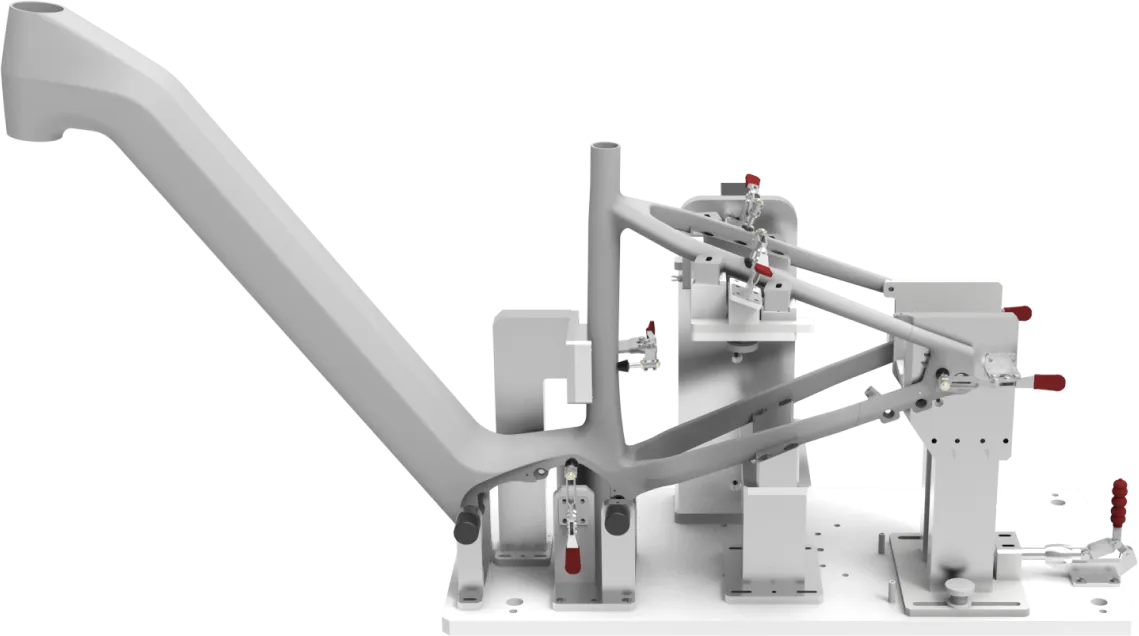
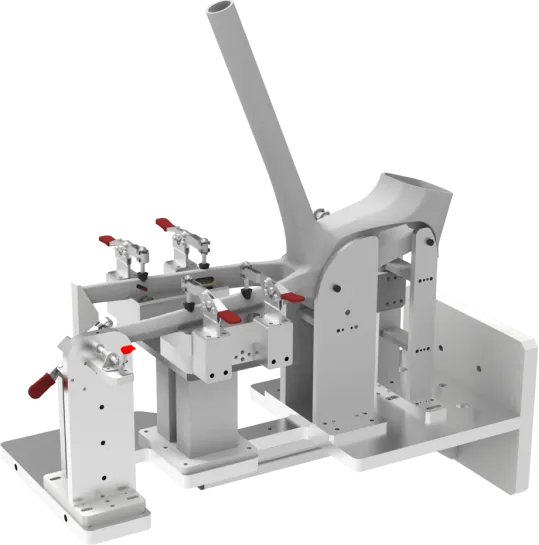
After welding, the workpiece is measured using a 3D scanning system and compared with the CAD reference model to analyze dimensional deviations and verify welding-induced distortion and dimensional control results.
In this case, dimensional deviation in the critical control and downstream surface-finishing areas ranged from -0.119 mm to +0.605 mm, remaining within the ±1.0 mm control target and supporting subsequent automated grinding, surface finishing, and assembly processes.
Adjustable non-critical areas can be corrected according to product function and downstream assembly requirements through post-weld straightening, forming, or positioning adjustments, balancing welding process stability with final dimensional requirements.
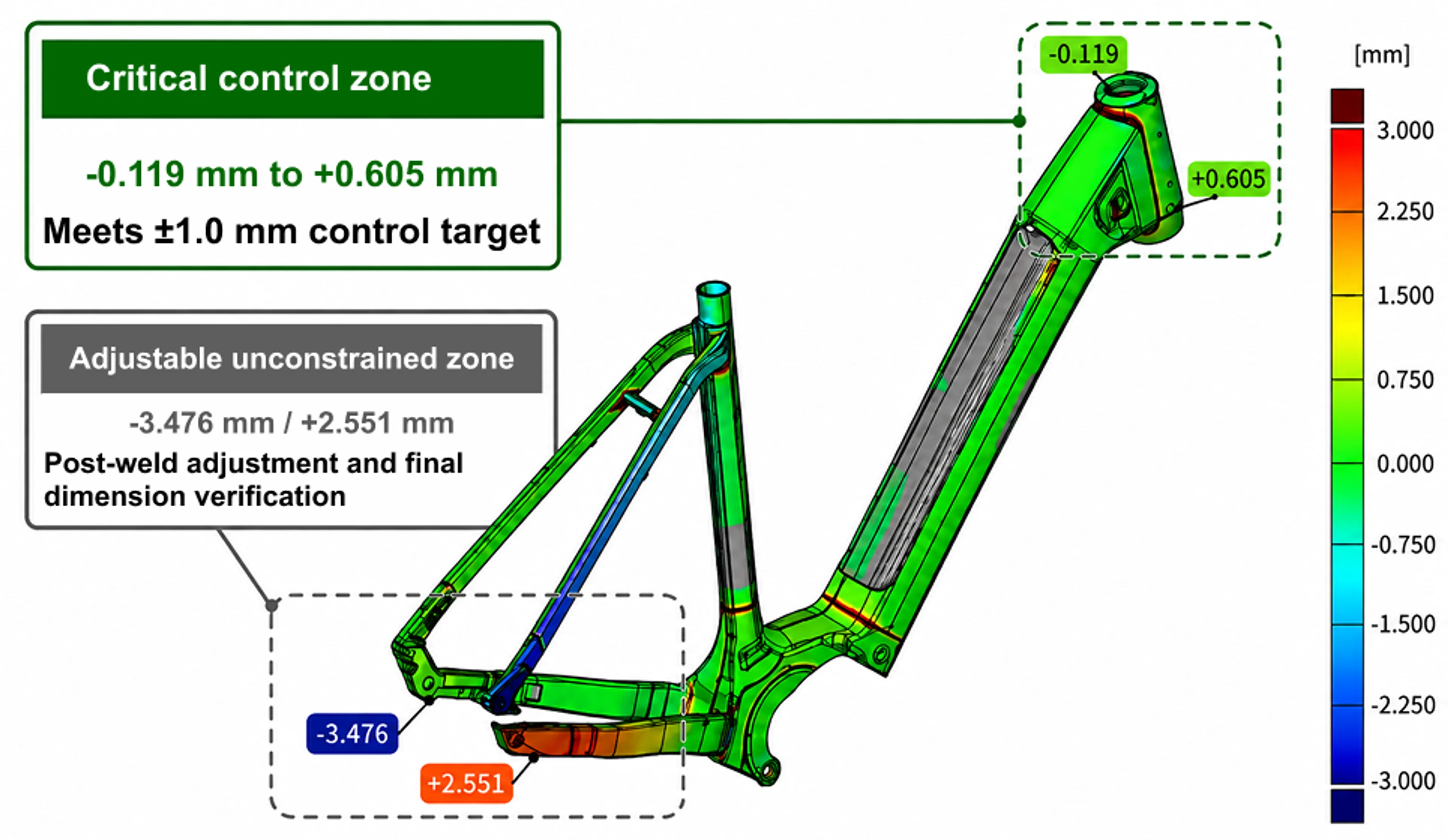
Post-Weld 3D Scan & CAD Reference Model Deviation Analysis
DS provides different levels of welding fixture and process engineering services according to workpiece structure, weld location, dimensional requirements, production capacity, and automation level. Actual configurations are evaluated based on project requirements.
Level 1
Suitable for standard welding applications with relatively fixed workpiece structures and weld paths.
Level 2
Suitable for robotic welding applications with complex weld paths or requirements to expand the range of automated welding.
Level 3
Suitable for products with demanding dimensional accuracy, welding quality, and reliability requirements.
DS Technology establishes stable, repeatable welding processes suitable for production through joint configuration and design, fit-up gap control, fixture positioning, welding sequence planning, heat input management, and welding parameter control.
After welding, weld cross-section examination and process validation can be performed according to product and quality requirements to verify penetration depth, joint penetration, fusion condition, and cross-sectional weld quality against design requirements. The results provide a basis for welding parameter optimization, production-condition development, and quality management.
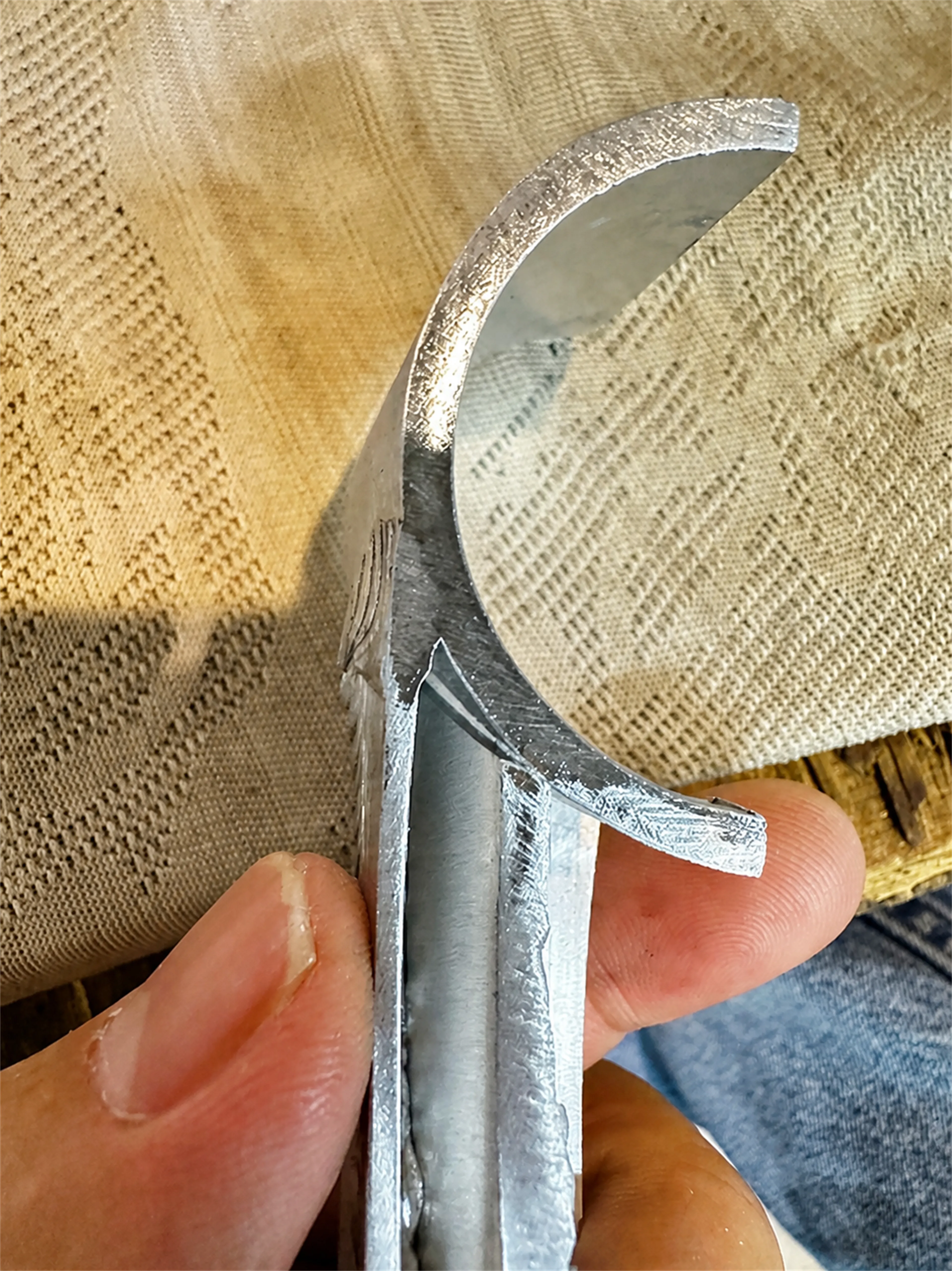
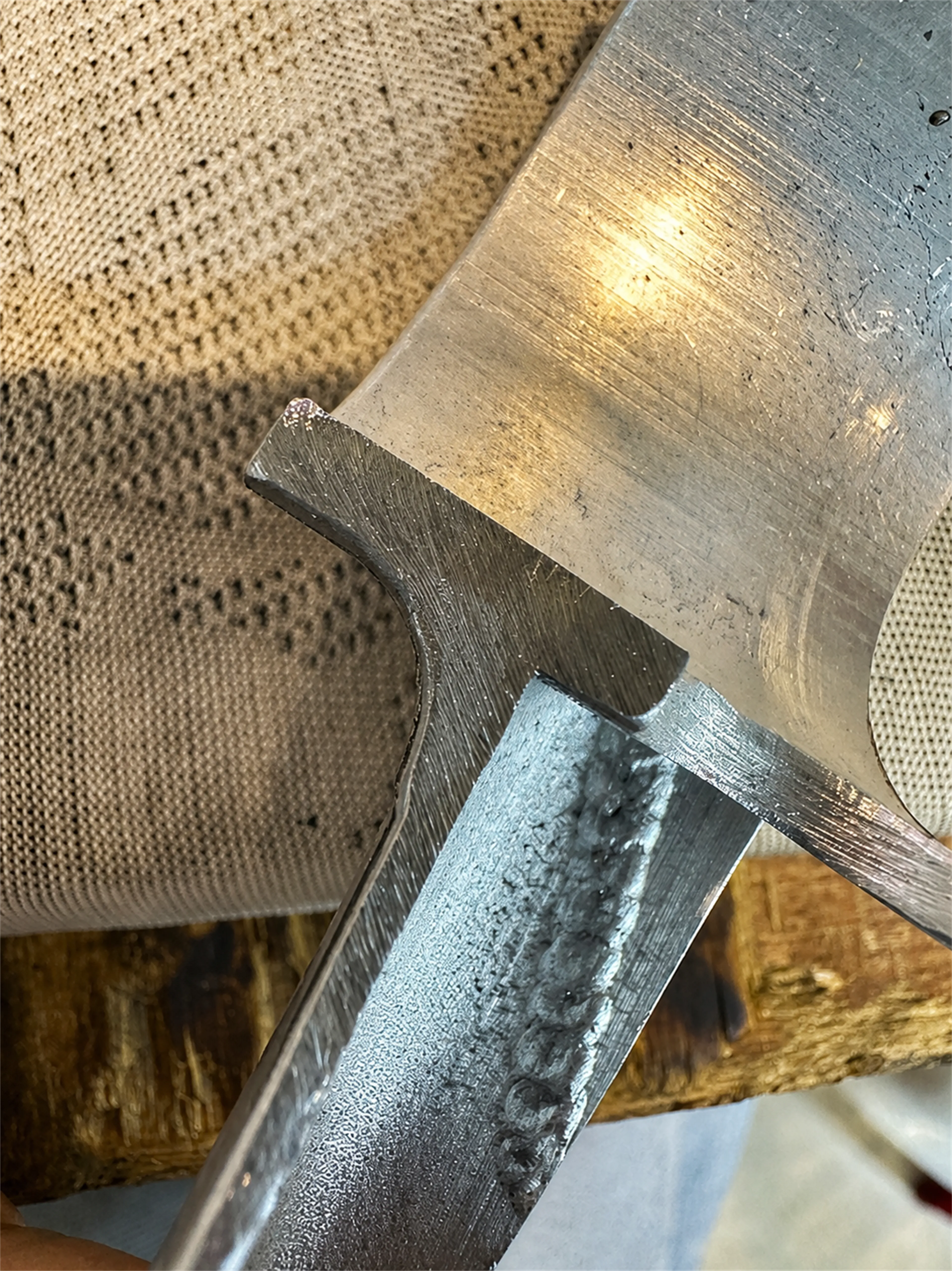
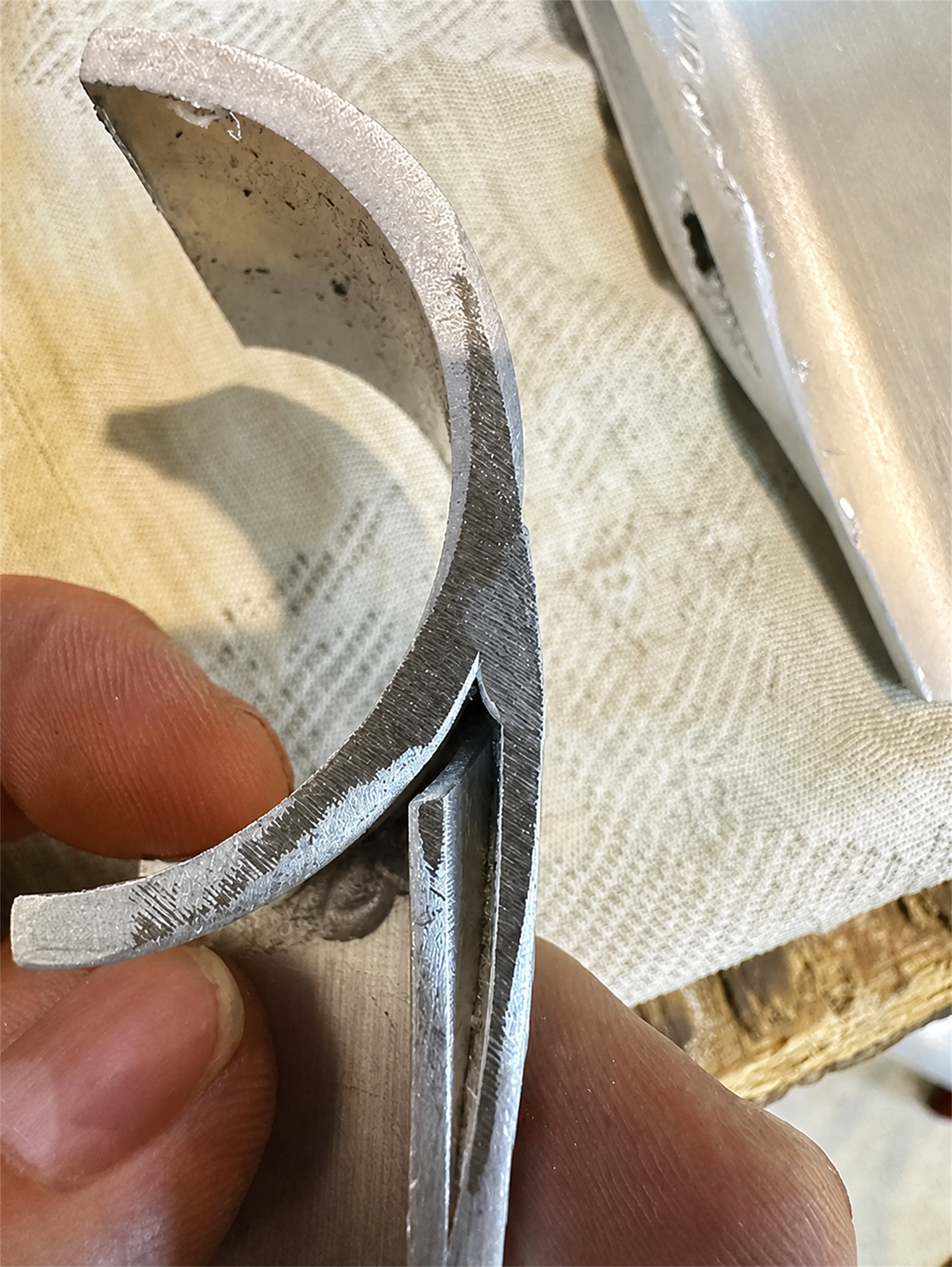
Actual Weld Cross-Section Examination|Penetration & Fusion Verification
| Validation Item | Description | |
|---|---|---|
| 01 | Structural & Fusion Integrity | Verifies fusion between the weld metal and base material to reduce the risk of lack of fusion, insufficient fusion, and related welding defects. |
| 02 | Penetration Depth & Joint Penetration Verification | Cross-section examination is used to verify actual penetration depth and joint penetration according to material, plate thickness, joint configuration, and product requirements. |
| 03 | Process Parameter Validation & Optimization | Actual welding results are used to validate current, voltage, wire feed speed, welding speed, heat input, and other process parameters to establish stable production conditions. |
| 04 | Controlled Post-Weld Grinding Allowance | Weld-bead profile and reinforcement are controlled to maintain a more consistent grinding allowance, supporting FlexRC™ automated weld finishing and surface finishing. |
| 05 | Welding & Surface Quality Consistency | Stable welding processes combined with downstream surface finishing improve weld quality, appearance, and production consistency. |
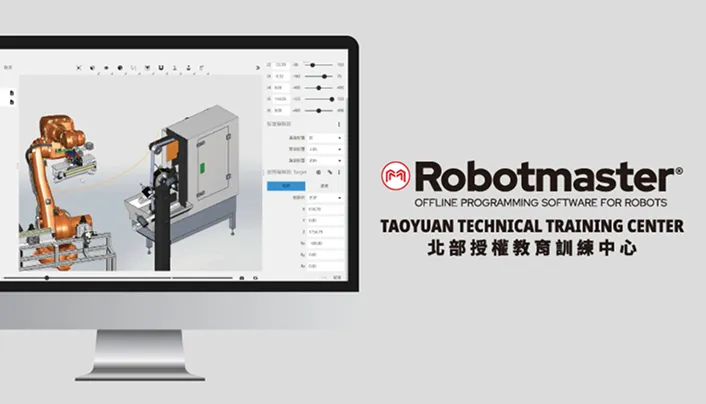
Using digital models of DS-developed robotic welding equipment, Robotmaster® offline simulation is used to validate welding paths, robot postures, weld accessibility, and fixture / equipment interference before deployment, reducing on-site trial-and-error and commissioning time while improving implementation efficiency and welding-path reliability.
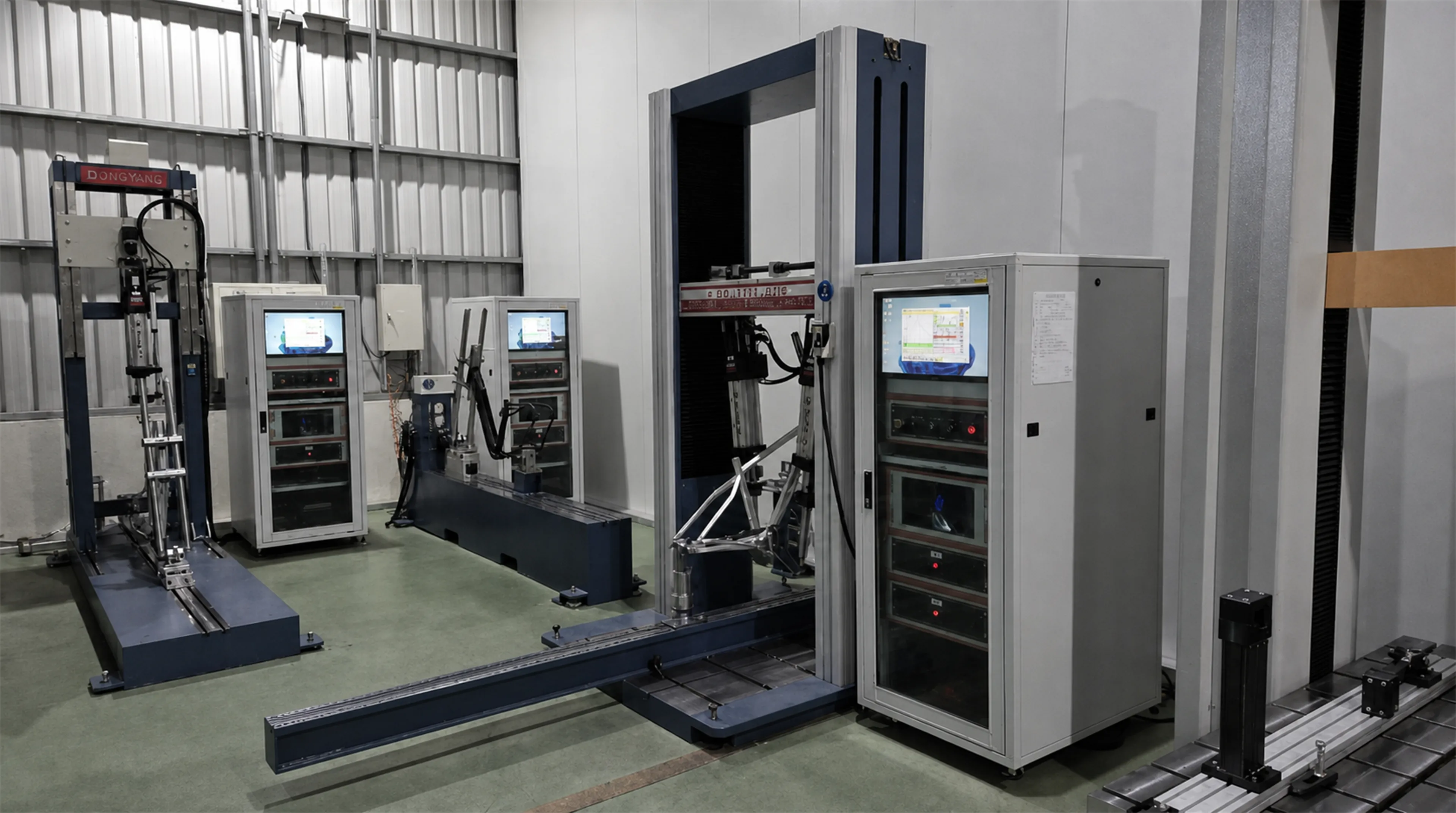
DS has established in-house structural reliability testing equipment to perform fatigue, impact, and static strength testing according to product structure, welded-joint design, and validation requirements.
Structural test results can be fed directly back into joint design, welding parameters, fixture restraint, welding sequence, and structural design, enabling continuous optimization of the welding process and structural reliability and establishing a complete engineering workflow from welding process development to structural validation.
01
02
03
DS integrates welding process engineering, fixture design, robotic automation, post-weld dimensional measurement, and structural reliability validation into a complete engineering workflow.
Results from fatigue, impact, and static strength testing can be fed back into welding parameters, joint design, fixture restraint, and process conditions to improve welding quality consistency, structural reliability, and mass-production stability.
To improve consistency between programmed robotic welding paths and actual weld locations, DS integrates Robotmaster® offline programming, robot calibration, and machine validation to establish consistent geometric and motion relationships between the virtual model and the physical workstation.
Offline path planning, posture and reachability analysis, interference checking, machine calibration, and path validation reduce on-site teaching and commissioning time while improving new-product introduction, changeover efficiency, and stability of complex welding processes.
DS provides Robotmaster® application support, system implementation, training, and technical services, and can generate robotic welding paths based on CAD / CAM data and process requirements.
Through the virtual environment, the following can be performed in advance:
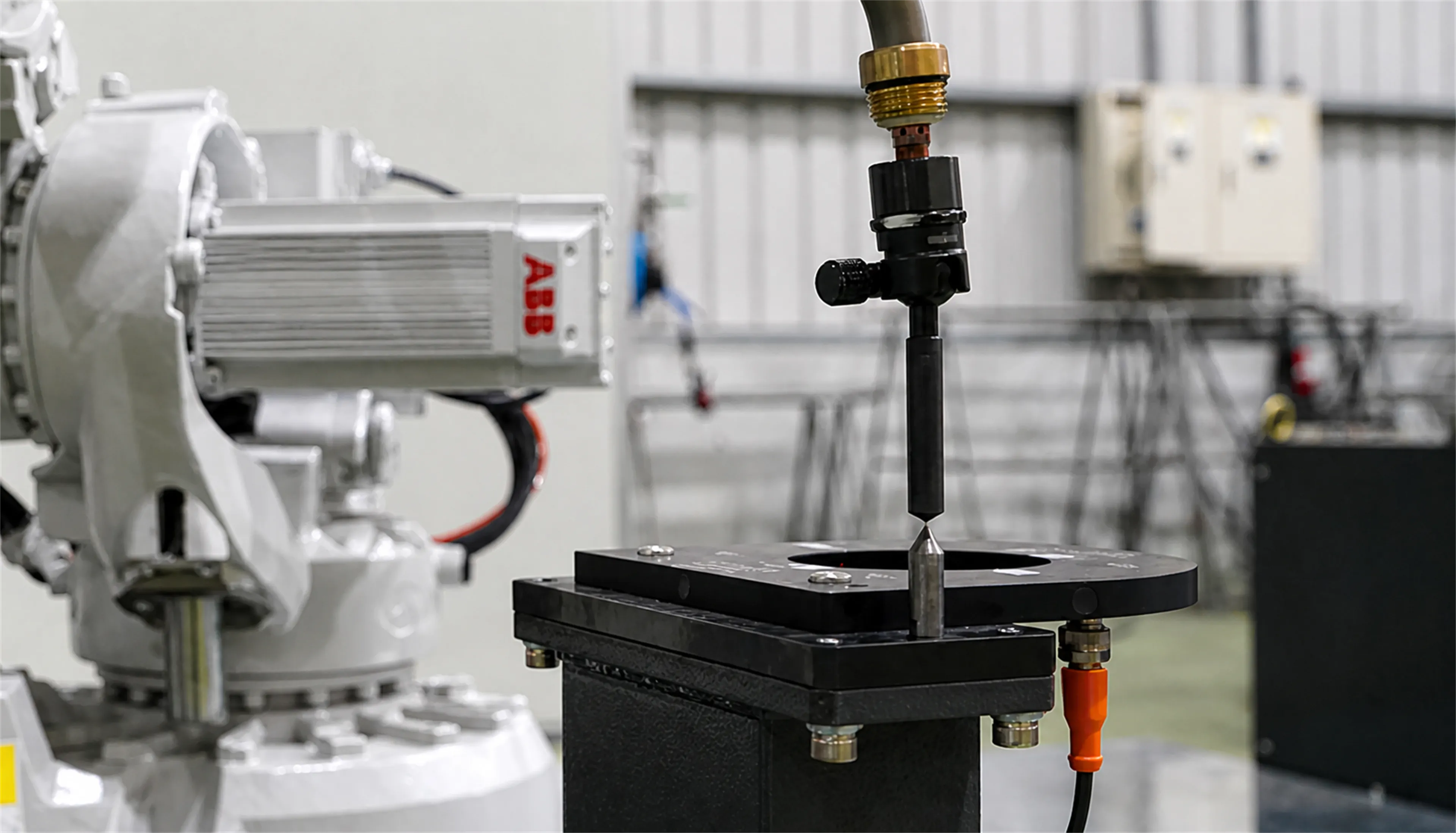
DS calibrates and validates the geometric relationships and motion parameters among the robot, welding torch, fixtures, positioners, and workstation to maintain alignment between offline simulation models and the actual equipment.
Machine calibration reduces deviation between virtual paths and actual weld locations while improving robot-positioner coordinated motion, welding-path implementation, and process consistency after changeovers.
Calibration covers tool, workpiece, workstation, and coordinated-motion settings and can be adjusted and validated according to equipment architecture and process requirements.
DS robotic welding automation and welding process engineering solutions support a wide range of advanced manufacturing industries.


