Compliance Technology and Product Platform for Robotic Surface Finishing
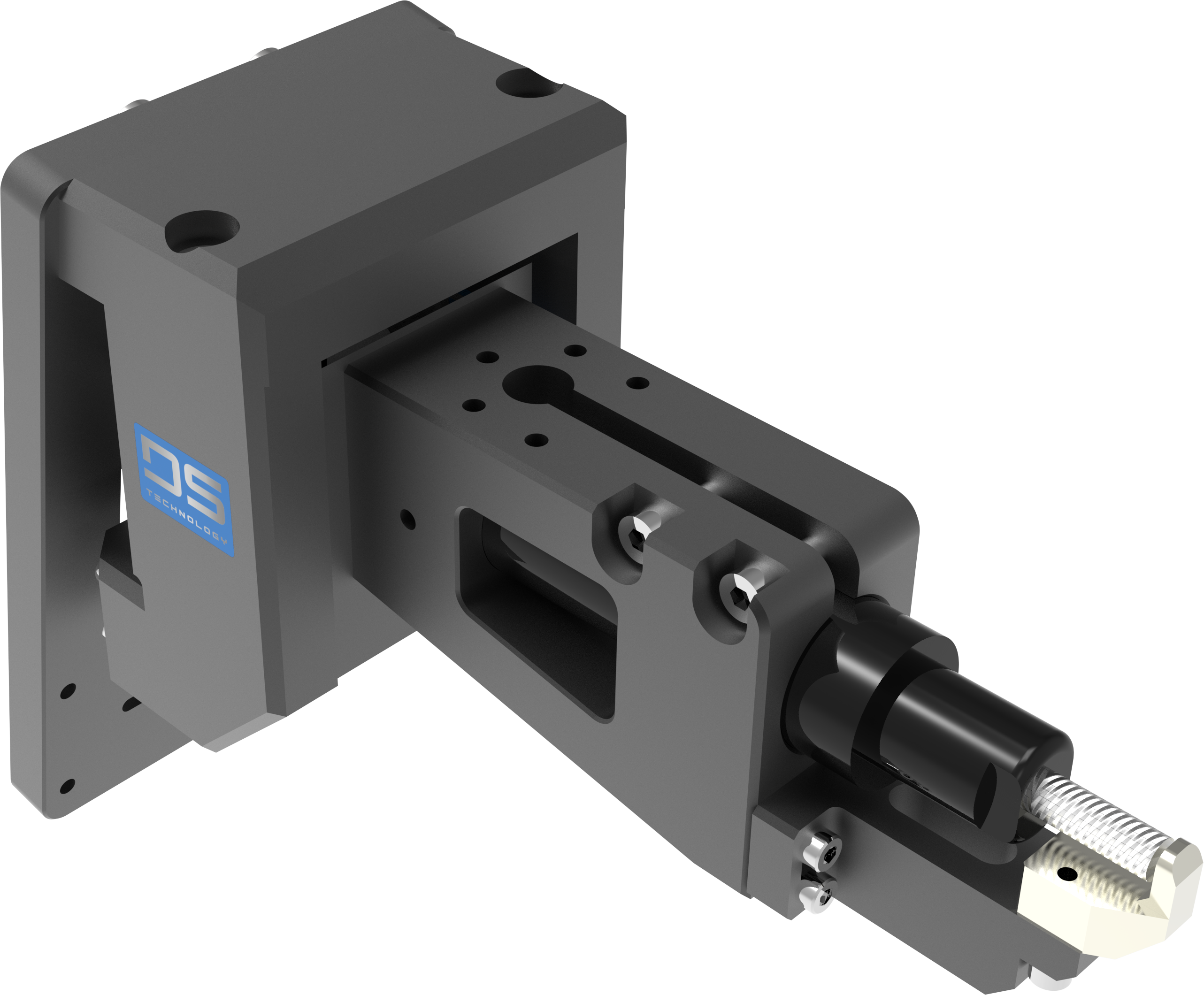
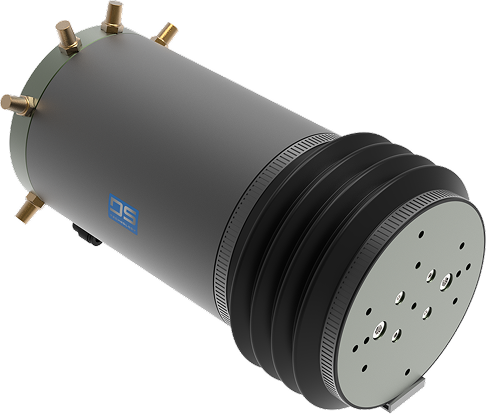
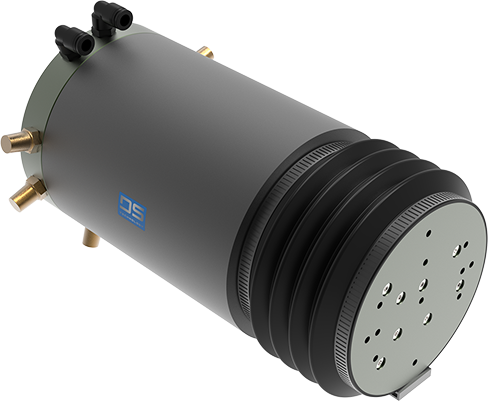
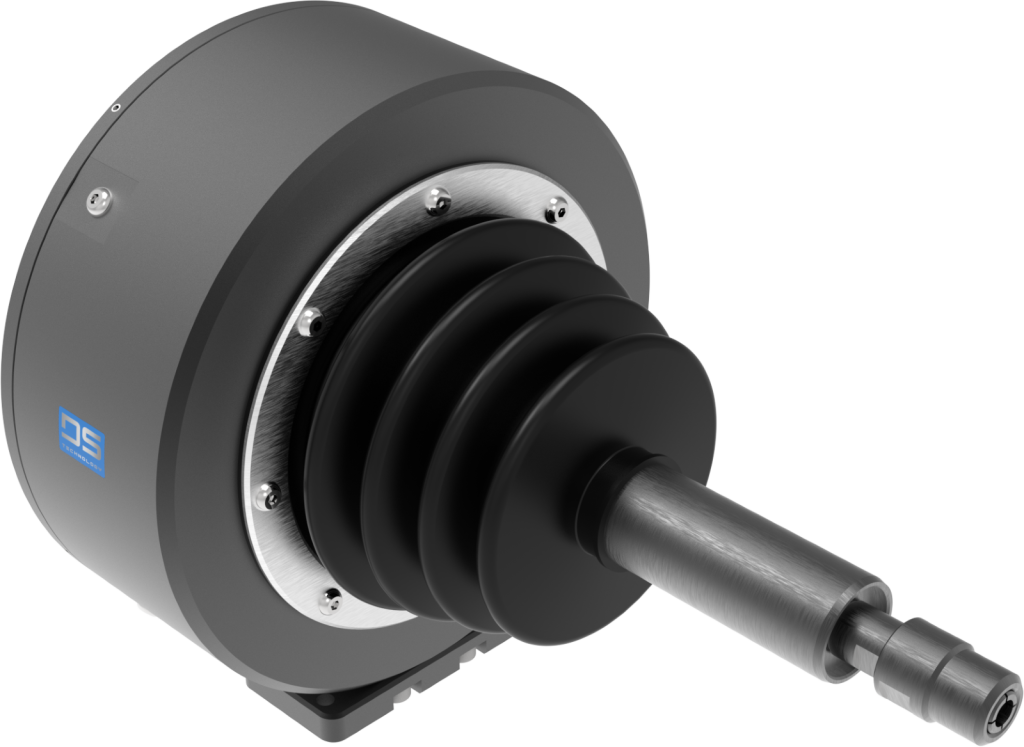
FlexRC™ provides robotic compliance tools and automated surface-finishing equipment, including passive and active compliance tools, high-speed electric spindle tools, belt and flap-wheel grinding equipment, and automatic abrasive change systems for robotic grinding, deburring, polishing, and other surface-finishing processes.
Compliance mechanisms and force control help compensate for part tolerances, contour variations, and robot path or positioning deviations, maintaining stable contact during processing and improving consistency while reducing process variation caused by contact-force and path deviations.
FlexRC™ products are manufactured, assembled, and inspected under DS's ISO 9001 quality management system. Beyond tools and equipment, DS brings hands-on robotic surface-finishing and automation integration experience, supporting tool selection, application testing, offline programming, and system integration. Complete turnkey automation solutions are also available based on project requirements.
Stable Contact · Consistent Processing · Balanced Performance and Investment

From passive and active compliance tools to high-speed electric spindles, belt and flap-wheel grinding equipment, and automatic abrasive change systems, FlexRC™ offers configurations for different processing directions, force requirements, tool loads, and workpiece conditions.
Designed around real industrial automation requirements, FlexRC™ balances processing performance, application flexibility, and investment cost, helping reduce the barrier to initial deployment and future multi-cell expansion.
Supports commonly available abrasive discs, belts, and processing tools, with optional automatic abrasive-disc, belt, and tool-changing functions depending on the product and process configuration, reducing manual intervention and changeover downtime.
Beyond FlexRC™ tools and equipment, DS brings experience in grinding, deburring, polishing, belt finishing, offline programming, and robotic integration—from tool selection and application testing to complete automation systems and turnkey projects.
Select the appropriate compliance tools and equipment based on processing direction, contact force, and process requirements
Applications: Deburring curved and irregular profiles, edge finishing of cast and machined parts, finishing in confined areas, and grinding or surface-finishing processes requiring angular compensation.
Function
Provides angular compliance that allows the tool to accommodate workpiece angle, contour variation, and robot path deviation, helping maintain stable contact as the surface geometry changes. Applied force can be adjusted to suit the process.
Advantage
Reduces the influence of workpiece angle and robot path deviation on tool contact, improving stability on complex contours. The AC Series is available in different processing types, so you can select a model according to the processing location and material-removal requirements.
Applications: Grinding and polishing of flat or locally curved surfaces, deburring, weld and surface finishing, and applications using abrasive discs, wheels, brushes, or rotary tools that require axial compliance.
Function
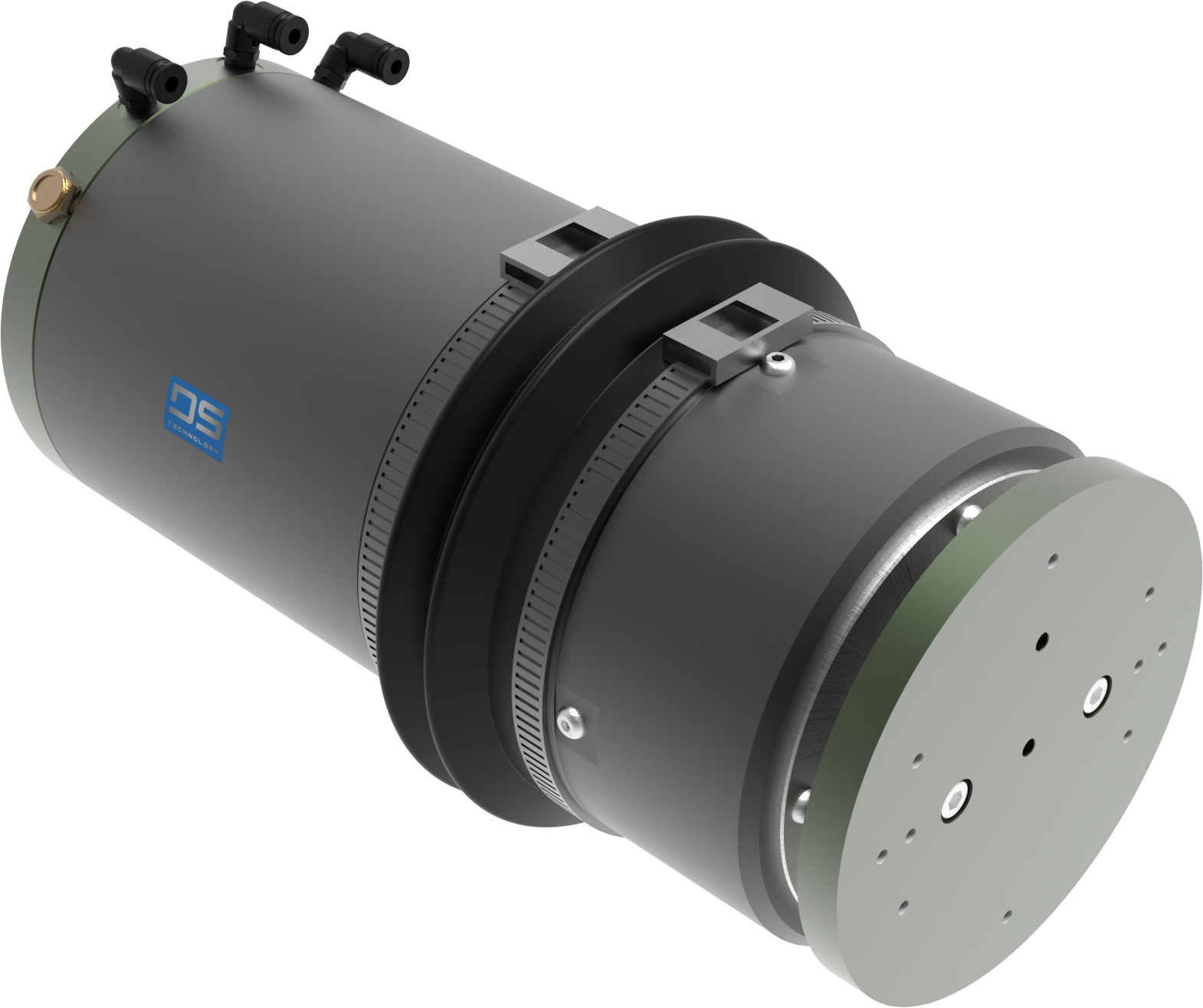
Provides linear compliance along the tool axis to accommodate height variation, dimensional tolerance, fixture error, and changes in process contact, helping maintain compliant contact in the processing direction.
Advantage
The LC Series includes both spindle-integrated tools and modular LCZ units, with configurations for different processes, force ranges, strokes, and tool loads.
Applications: Robotic material removal and surface finishing processes, including parting-line and flash removal on castings, deburring of CNC-machined parts, chamfering, edge trimming, weld slag removal, and finishing of complex contours and curved surfaces.
Function
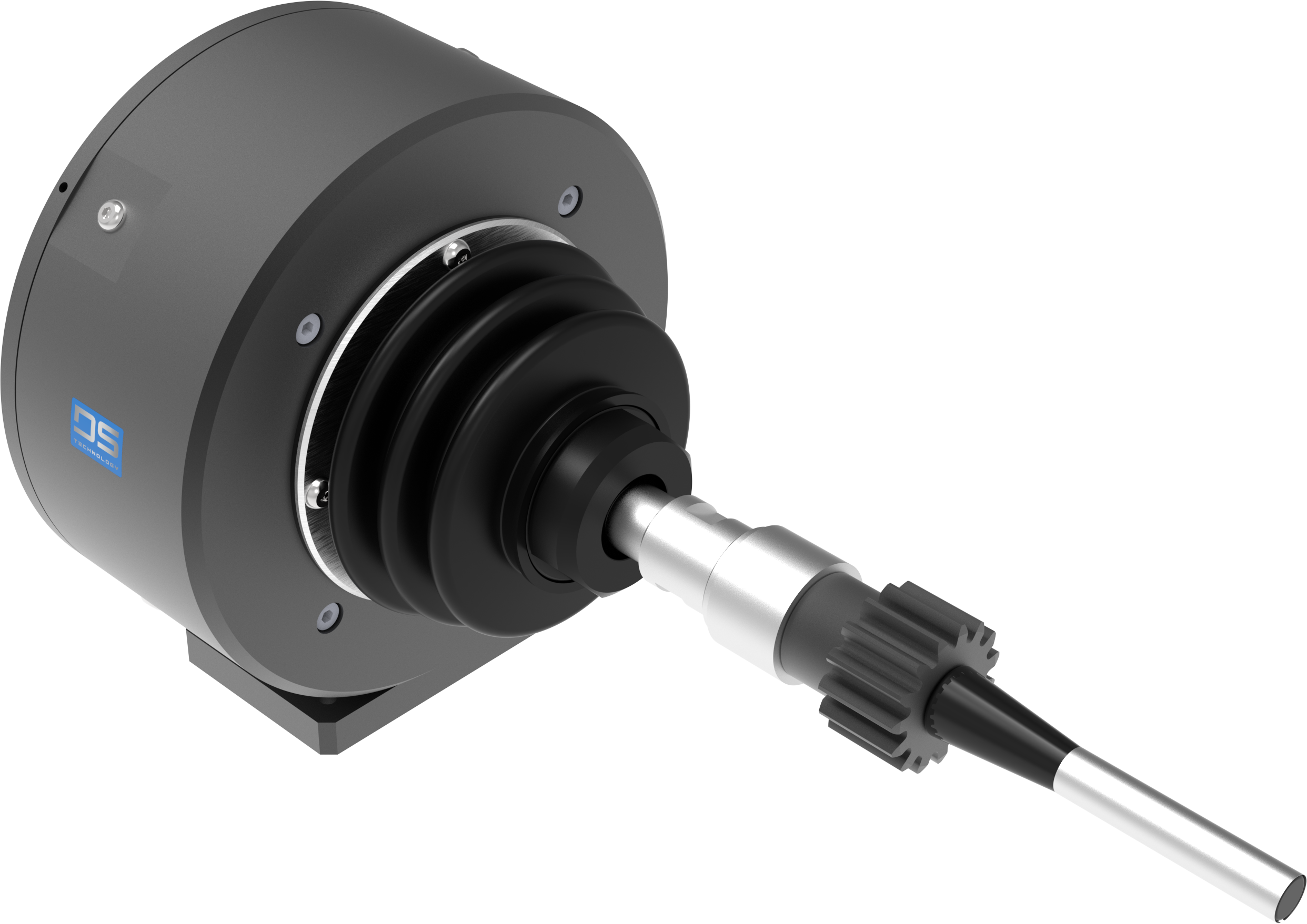
Provides 360° radial compliance, allowing rotary or reciprocating tools to absorb workpiece edges, contour variations, positional deviations, and robot path errors, improving contact stability as the tool follows the actual workpiece contour.
Advantage
Makes machining results less sensitive to robot path and workpiece positioning deviations, improving stability on complex contours. The RC Series is available in a range of sizes, structures, and force ranges, so you can select a model for fine deburring, narrow areas, deep-reach machining, or heavier-load material finishing.
Applications: Narrow areas, inside corners, grooves, deep edges, irregular contours, and other locations that standard grinding wheels or abrasive discs cannot easily reach.
Function
Combines 360° radial compliance, abrasive rolls, and an automatic winding mechanism, so the grinding head adapts to workpiece contours and positional deviations while refreshing the abrasive working area as needed.
Advantage
Integrates compliance and roll-type abrasive consumables into a single tool, extending the robot's ability to process complex and hard-to-reach areas. Paired with the DTroll-E1 automatic belt-feeding module, it removes used abrasive belts and feeds, cuts, and attaches new material, reducing the downtime and manual intervention caused by frequent consumable changes.
Applications: Precision deburring, edge trimming, chamfering, grinding, polishing, light cutting, and automated machining that requires high-speed rotary tools or switching between multiple processes.
Function
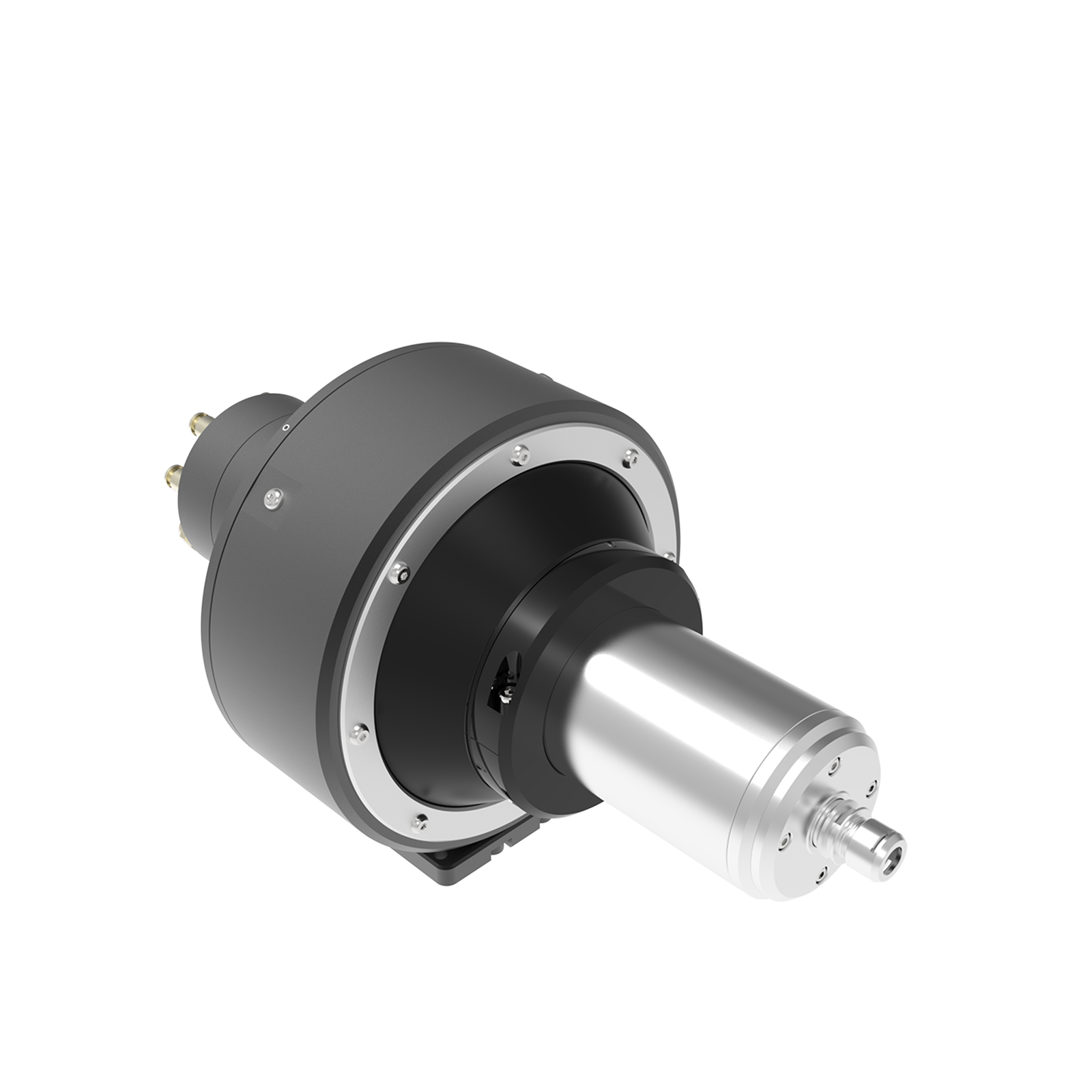
Integrates a compliance mechanism with a high-speed electric spindle, allowing rotary tools to machine while adapting to workpiece contours and positional deviations. Spindles with different power ratings, speeds, and tool interfaces can be configured for each process.
Advantage
The RC-ES60/80/100 offer different power ratings and machining capabilities, with maximum speeds of 60,000, 40,000, and 36,000 RPM respectively. Tool interfaces such as DT11, ISO20, and ISO25/HSK, along with pneumatic automatic tool change configurations, let you switch tools quickly between processes and increase the process flexibility of a single robot cell.
Applications: Grinding, deburring, polishing, and surface finishing of castings, forgings, weldments, formed parts, complex curved surfaces, deep contours, and multi-directional edges.
Function
Combines linear and 360° radial compliance to compensate for variations in workpiece height, position, contour, and multi-directional contact. Linear and radial forces can be adjusted independently for each process, helping the tool handle multi-directional machining conditions on complex workpieces.
Advantage
A single tool handles both axial and radial deviations, reducing the effect of workpiece position and robot path errors on machining contact. Ideal for automated processes with large contour variations or complex contact directions.
Applications: Flat and curved-surface grinding, flash removal, surface finishing, casting cleanup, and automated processes requiring consistent abrasive orientation and contact.
Function
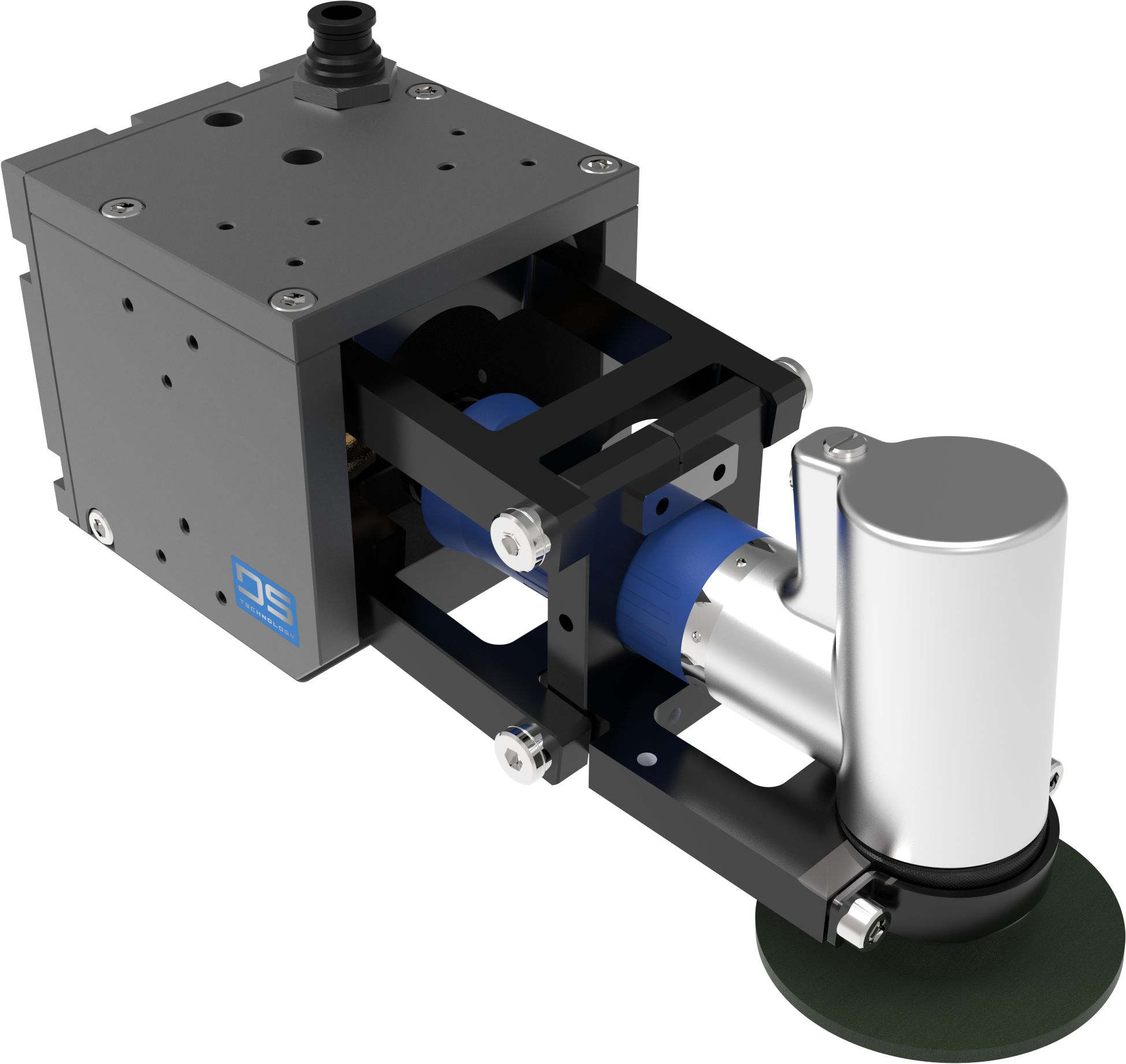
A parallel-link compliance mechanism provides axial displacement while maintaining tool orientation, helping the abrasive remain in stable contact as workpiece height, contour, and position vary. Applied force can be set according to process requirements.
Advantage
The parallel-link design maintains tool orientation during compliance displacement, reducing the impact of changes in processing angle on surface quality.
Both models include contact sensing that can provide a process signal to the robot or control system.
Applications: Weld blending, metal surface grinding, contour and edge finishing, scratch removal, deburring, surface texturing, and continuous robotic belt-finishing processes.
Function
Integrates belt grinding and compliance at the robot end effector, allowing the abrasive belt to accommodate curved surfaces, edges, and dimensional variation while maintaining stable process contact, making it suitable for continuous automated belt grinding and surface finishing.
Advantage
BS Series can be paired with the ABSC4-RTH automatic belt-change system to switch abrasive grits by process, reducing manual belt changes and changeover downtime while improving multi-stage grinding and long-duration continuous operation.
Applications: Complex-surface grinding, precision polishing, deburring, and surface finishing, particularly where part tolerances, robot orientation changes, or consistent contact force are critical.
Function
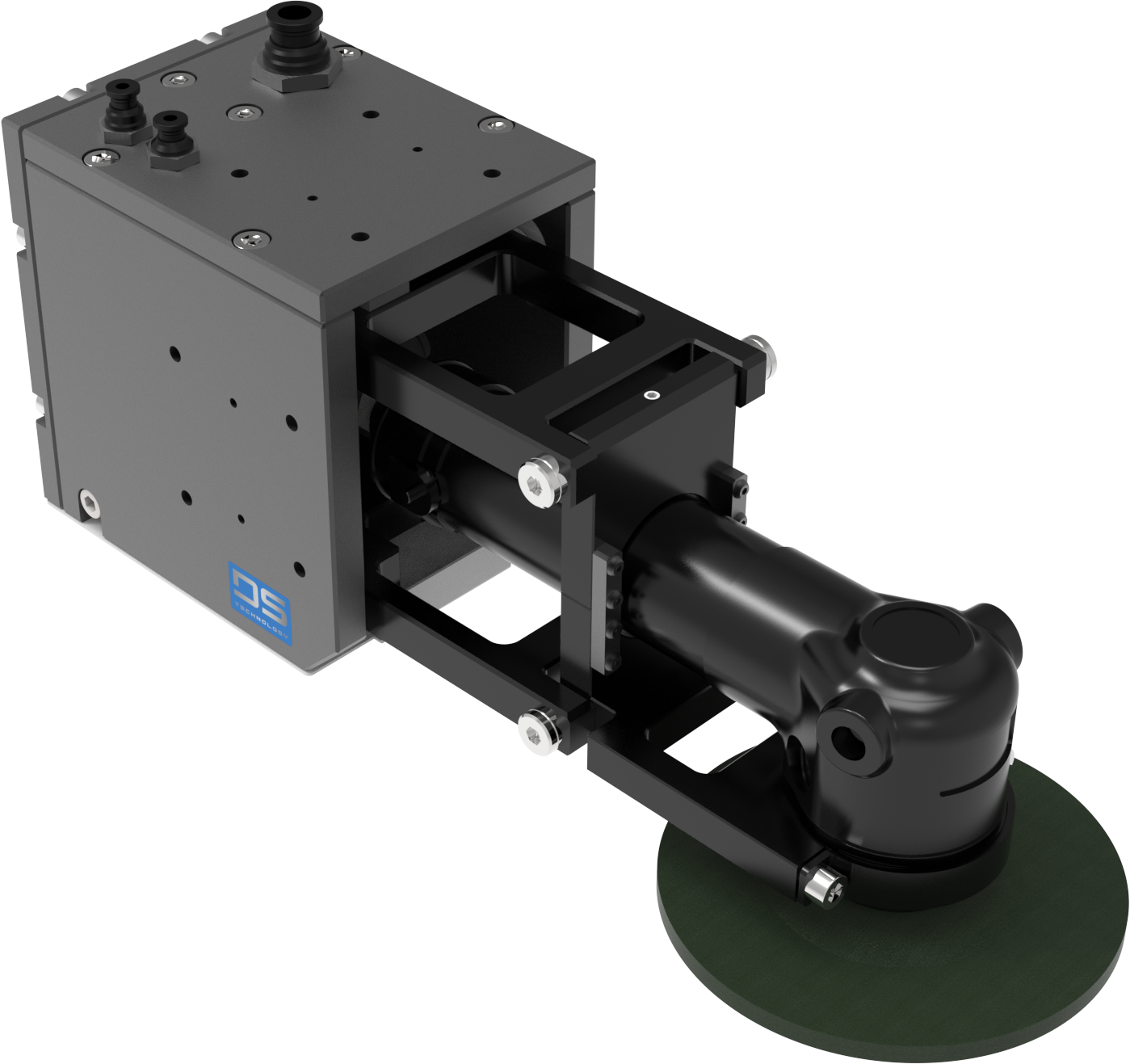
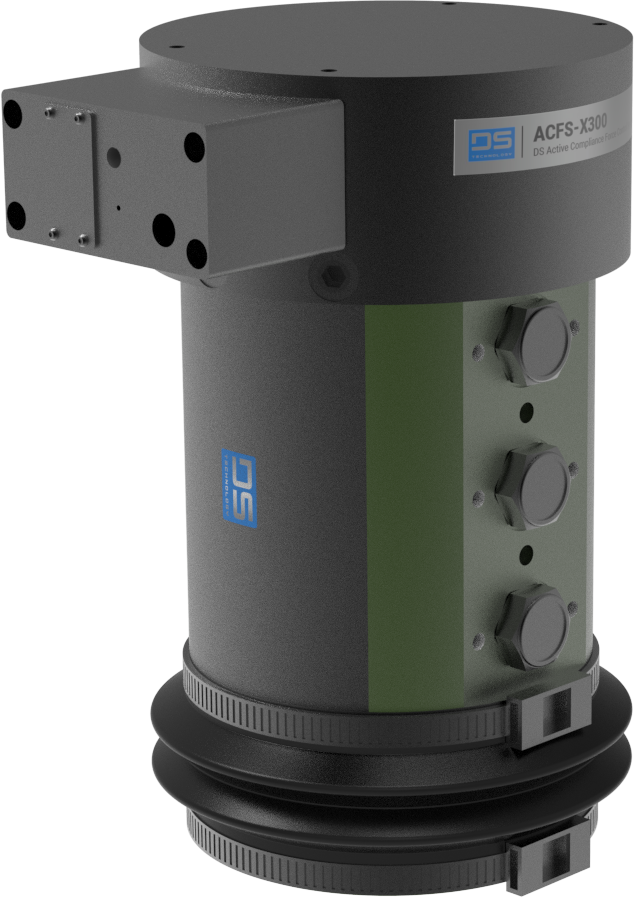
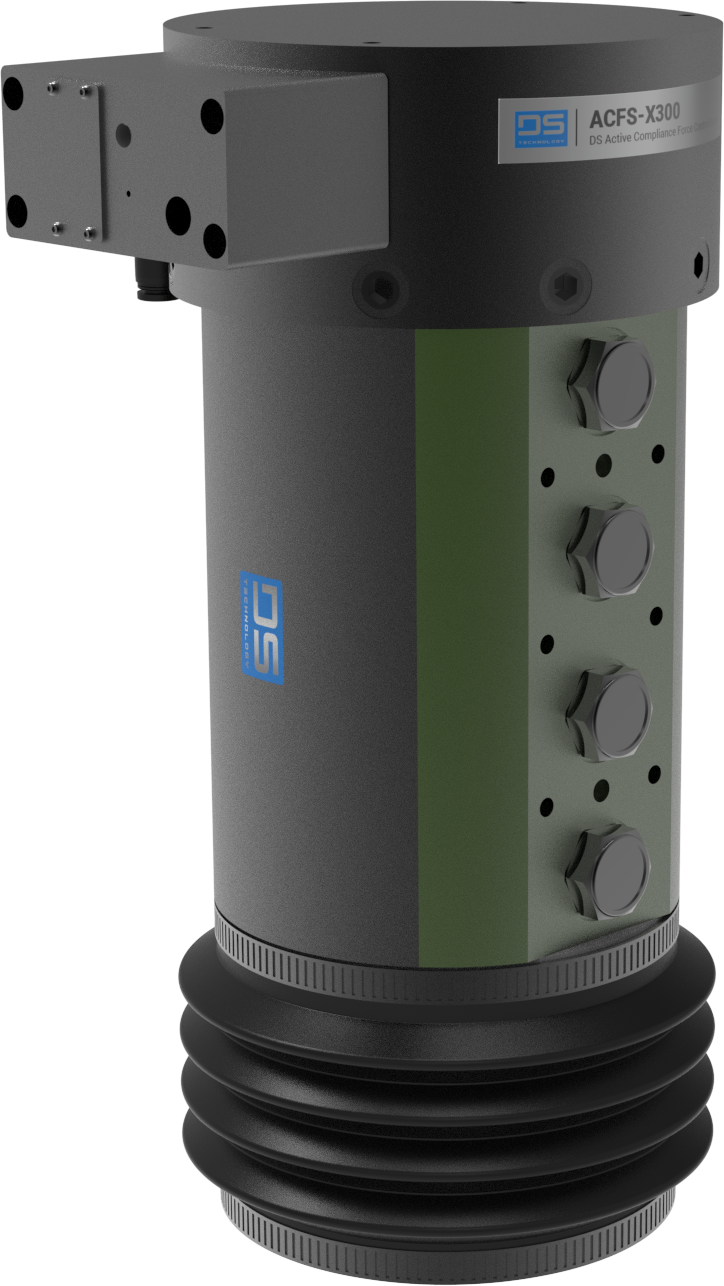
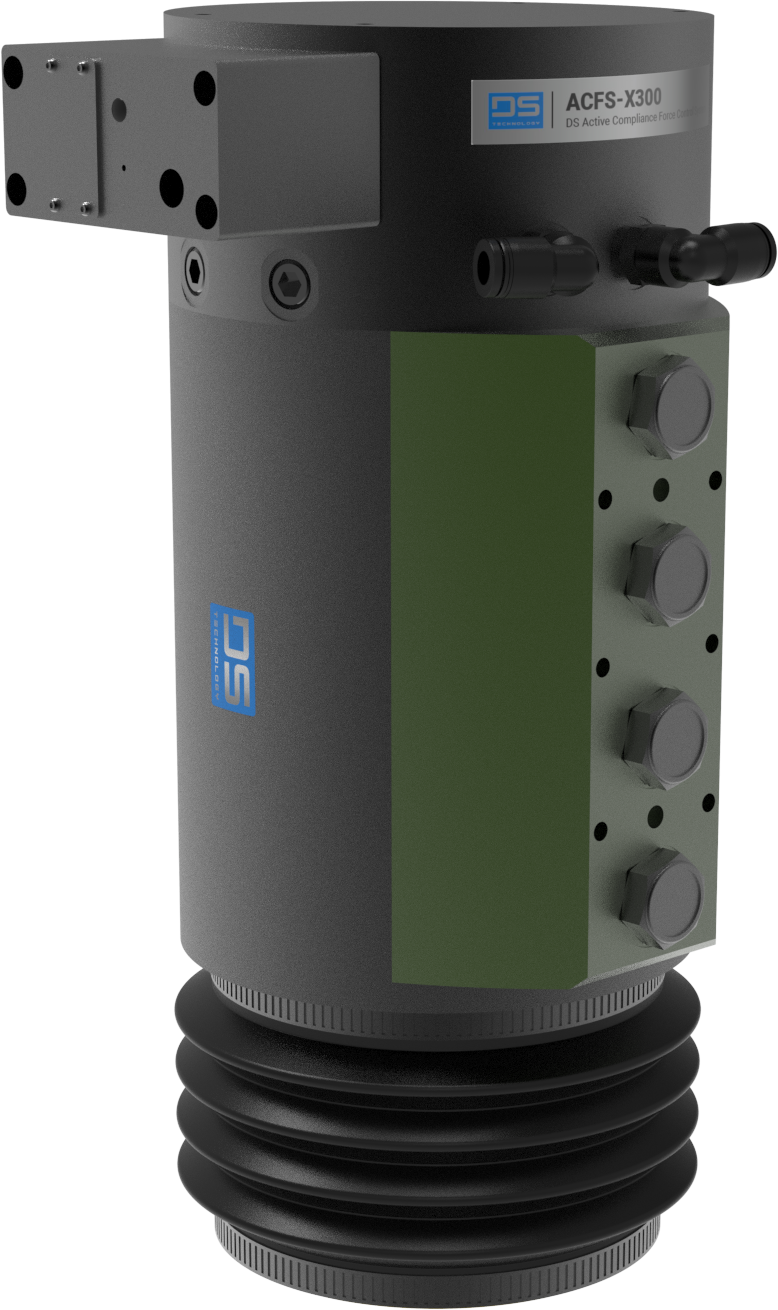
Integrates the LCZ linear compliance mechanism with FlexRC™ active force control to dynamically adjust the applied force according to contact conditions and robot orientation, helping maintain stable and consistent contact force throughout the process.
Advantage
Helps maintain the stability of the commanded force across different robot orientations, reducing the influence of orientation changes on contact force and process results. Compared with conventional passive compliance tools, active force control provides greater control over force variation during processing, supporting improved process consistency for complex surfaces and demanding finishing applications.
The LCZ modular architecture is retained, allowing different grinding, polishing, deburring, and other processing tools to be configured for the application. ACFS-LCZ300, 400, and 500 provide different force ranges, compliance strokes, and tool-load capacities, enabling model selection according to the workpiece, process load, and application requirements.
Applications: Grinding of castings and forgings, weld blending, metal deburring, large-area material removal, belt finishing, brushing, pre-polishing, and finishing of curved surfaces and complex profiles.
Function
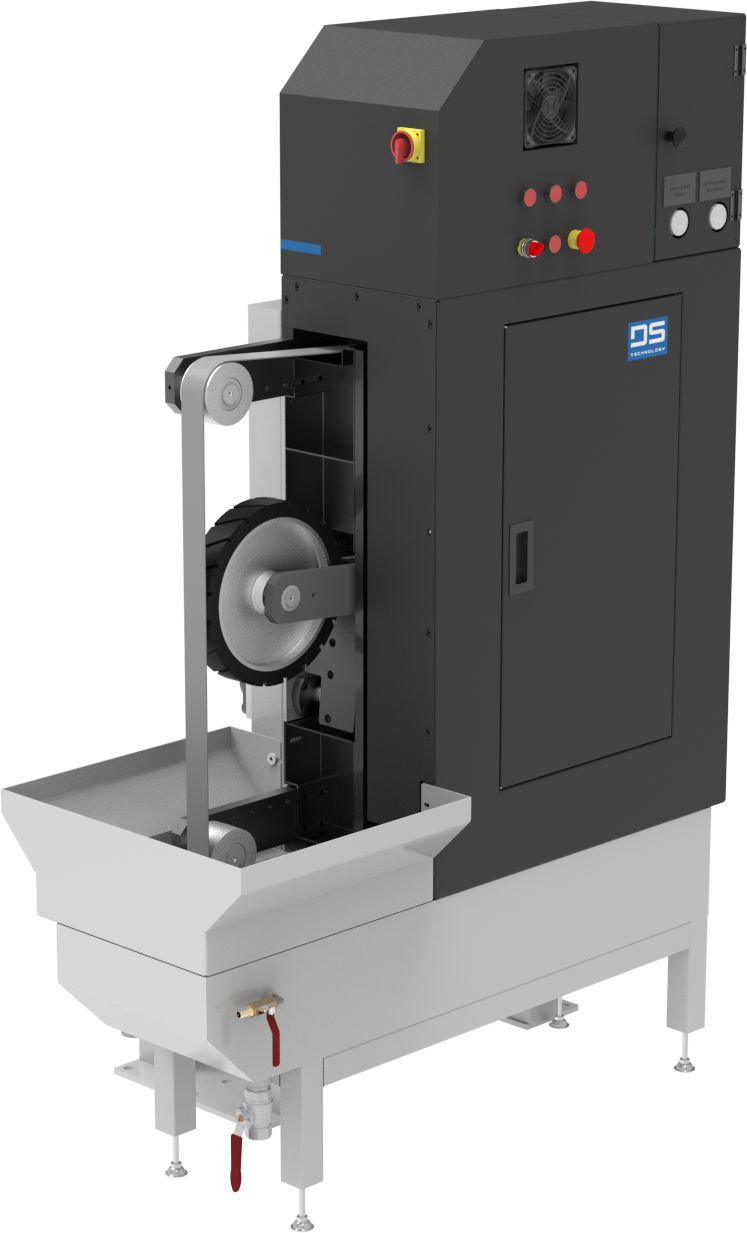
Floor-standing grinding equipment designed for robot-held workpieces. Depending on the model, EBS Series supports abrasive belts, grinding wheels, flap wheels, buffing wheels, and compliant grinding configurations for processes ranging from heavy material removal and deburring to surface finishing.
Advantage
EBS Series includes dual-wheel, programmable compliant belt, heavy-duty belt, dual-belt, dual-compliant-wheel, and compact compliant-wheel configurations, allowing equipment to be selected according to removal rate, contact area, abrasive type, and surface-finish requirements.
The floor-standing design suits robot-held workpiece processing. Abrasives of different grits or types can be configured in the same cell to support continuous multi-stage processing, while simplifying centralized abrasive management and maintenance.
Applications: Multi-grit grinding, rough-to-fine finishing, high-mix production, and automated surface-finishing processes requiring frequent sandpaper or abrasive belt changes, especially where reducing manual changeovers and process interruptions is a priority.
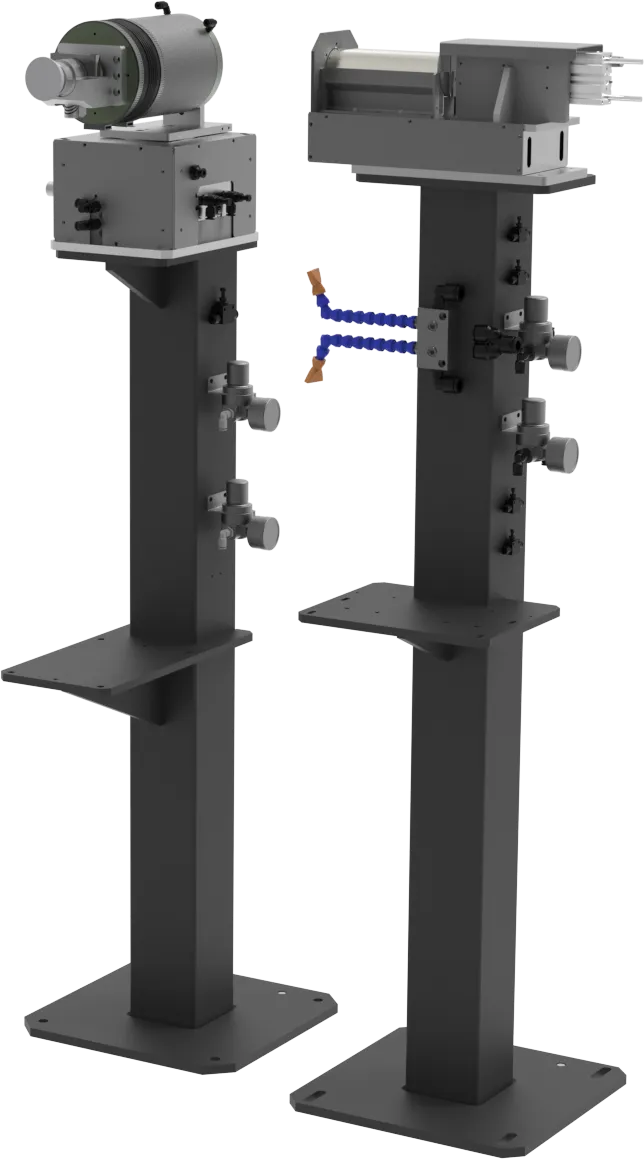
ASC4-RWH
Automatic Sandpaper Changer for Robot-Holds-Workpiece Applications
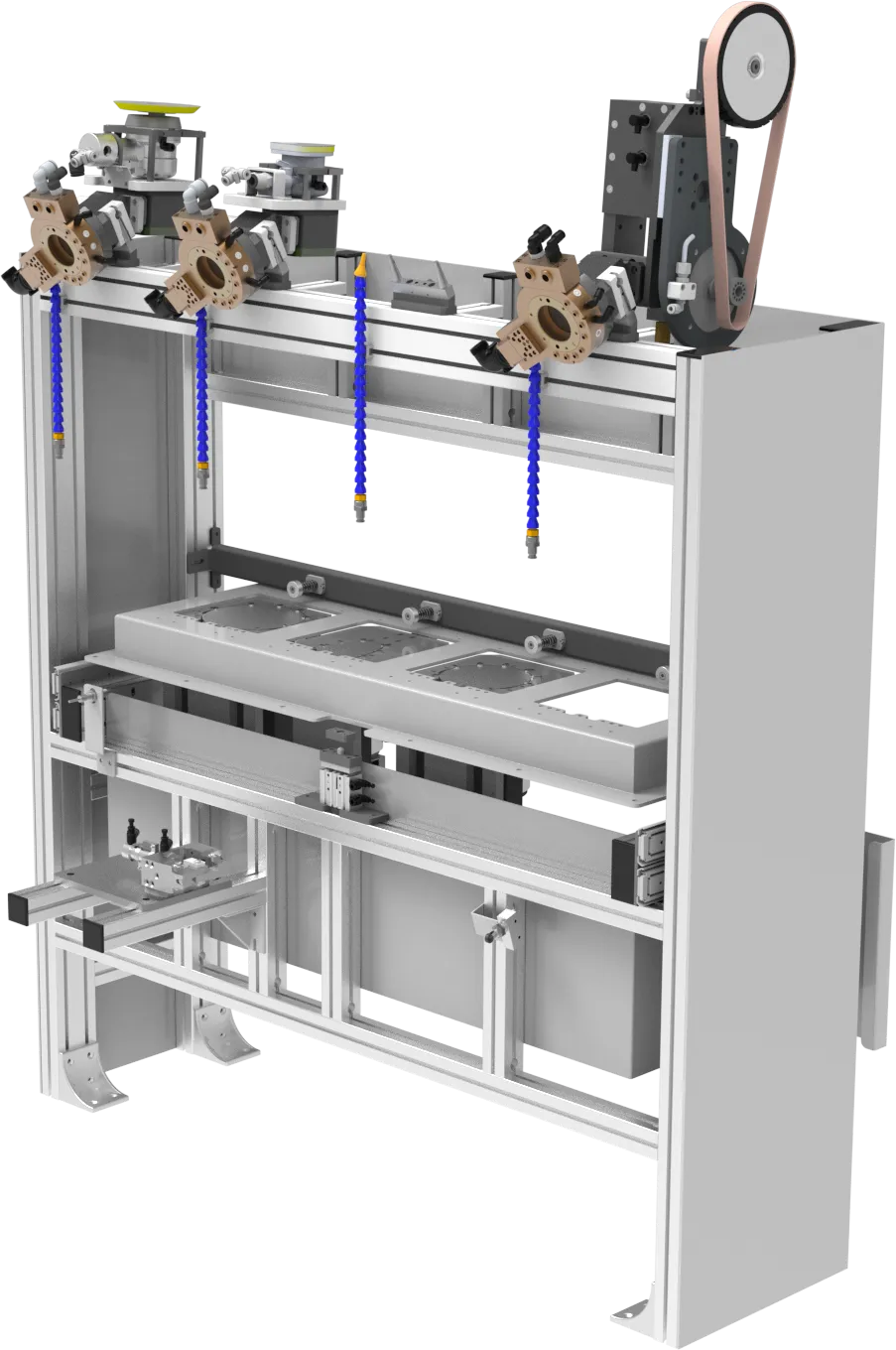
ASC4-RTH
Automatic Sandpaper Changer for Robot-Holds-Tool Applications
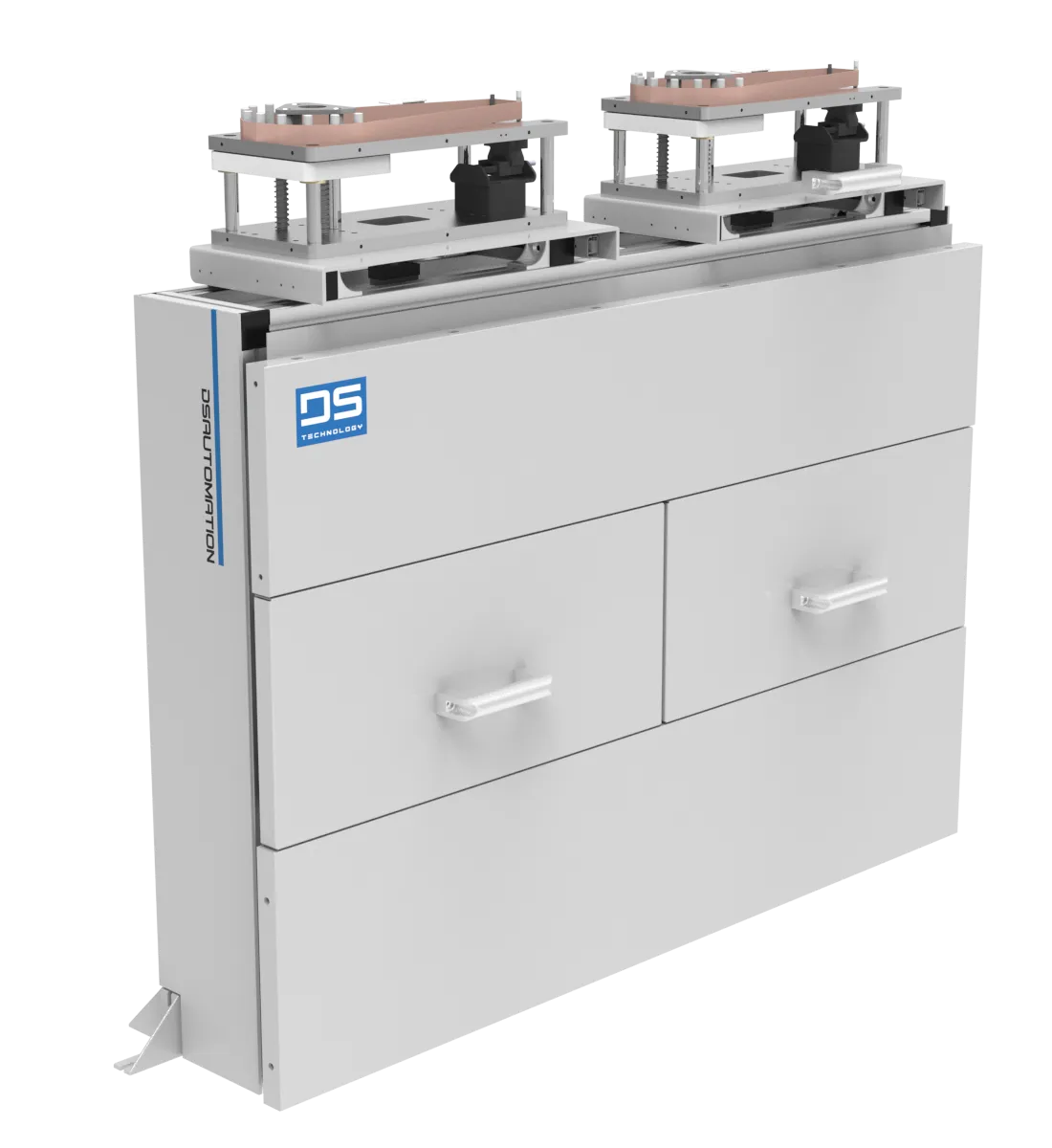
ABSC4-RTH
Automatic Abrasive Belt Changer for Robot-Holds-Tool Applications
Function
Automates the removal and replacement of sanding discs or abrasive belts, including grit changes. Configurations are available for RWH (Robot Holds Workpiece) and RTH (Robot Holds Tool) architectures to support continuous multi-stage robotic grinding, polishing, and belt-finishing processes.
Advantage
Depending on the model, the system supports commonly available abrasives in multiple sizes, shapes, and grit grades, reducing manual changeover and abrasive-replacement downtime while supporting longer continuous operation with less operator intervention. The modular design also simplifies abrasive replenishment, process changeover, and future expansion.
Selection
ASC4-RWH is designed for RWH applications where the robot holds the workpiece and presents it to a fixed finishing tool. The system can automatically select and replace sanding media in different sizes, shapes, and grit grades, making it suitable for multi-stage grinding, polishing, and precision surface finishing.
ASC4-RTH is designed for RTH applications where the robot carries the finishing tool. It automatically removes used sanding media, installs new media, and switches between different grit grades, making it suitable for high-mix, multi-process automated machining.
ABSC4-RTH is designed for RTH belt-grinding applications and is compatible with BSA400 / BSA800-E compliant belt-grinding tools. It automatically handles abrasive-belt positioning, removal, replacement, and grit changeover according to process requirements, reducing manual belt changes and downtime.
From Tool Selection to Automated Process Deployment
FlexRC™ goes beyond compliance tools and grinding equipment. By combining robotic surface-finishing process expertise with automation integration capabilities, DS supports projects from tool selection and application testing through robot integration and complete workstation deployment. From a single FlexRC™ tool to a complete robotic surface-finishing workstation, DS provides process, engineering, and system integration support matched to the project scope.

01
Evaluate the automation approach and key process conditions based on workpiece material, geometry, processing area, target surface quality, material-removal requirements, cycle time, and abrasive consumption.
02
Select the appropriate FlexRC™ tool, spindle, grinding equipment, and abrasive media based on processing direction, compliance-force requirements, tool load, spindle specifications, contact method, and material characteristics.

03
Test actual or representative workpieces to evaluate material removal, surface quality, cycle time, abrasive life, applied force, and process stability, establishing process parameters and evaluation data for production deployment.

04
Evaluate robot reach, paths, and interference, with optional Robotmaster® offline programming, tooling and fixture integration, peripheral interfaces, PLC and safety systems, automatic tool changing, and automated abrasive change. Robot calibration and on-site path adjustment can also be provided when required.

05
For customers requiring a complete system, DS can integrate robots, FlexRC™ tools, grinding equipment, fixtures, dust extraction, safety systems, controls, automatic tool change, and automated abrasive change according to workpiece, process, cycle-time, and capacity requirements, with support for commissioning, process tuning, and production deployment.
Expand the Global Robotic Surface Finishing Market with DS
FlexRC™ is DS's robotic surface-finishing product platform, covering passive and active compliance tools, compliant grinding equipment, high-speed electric spindle tools, and automatic abrasive change systems for grinding, deburring, polishing, belt finishing, and other automated surface-finishing processes.
DS is expanding its global network of FlexRC™ distributors, sales partners, and system integrators, combining local market and service capabilities with DS product, process, and automation expertise to develop new robotic surface-finishing opportunities.
FlexRC™ covers passive and active compliance tools, belt-grinding solutions, high-speed electric spindles, compliant grinding equipment, and automatic abrasive change systems, providing options for different workpieces, processing directions, force requirements, and applications.
Designed around real industrial automation requirements, FlexRC™ balances processing performance, application flexibility, and investment cost, helping lower the barrier to initial deployment and future multi-cell expansion across projects of different scales.
DS brings hands-on experience in robotic grinding, deburring, polishing, belt finishing, and surface processing. We support partners with tool selection, application testing, process validation, troubleshooting, and product and application training to strengthen local sales and technical-service capabilities.
Customers can deploy FlexRC™ tools and equipment as standalone products. When broader automation is required, DS can support partners—according to the collaboration model—with offline programming, robot integration, automatic tool and abrasive change, and turnkey engineering to expand project scope.
Engineering in Taiwan, Supporting Manufacturing Worldwide
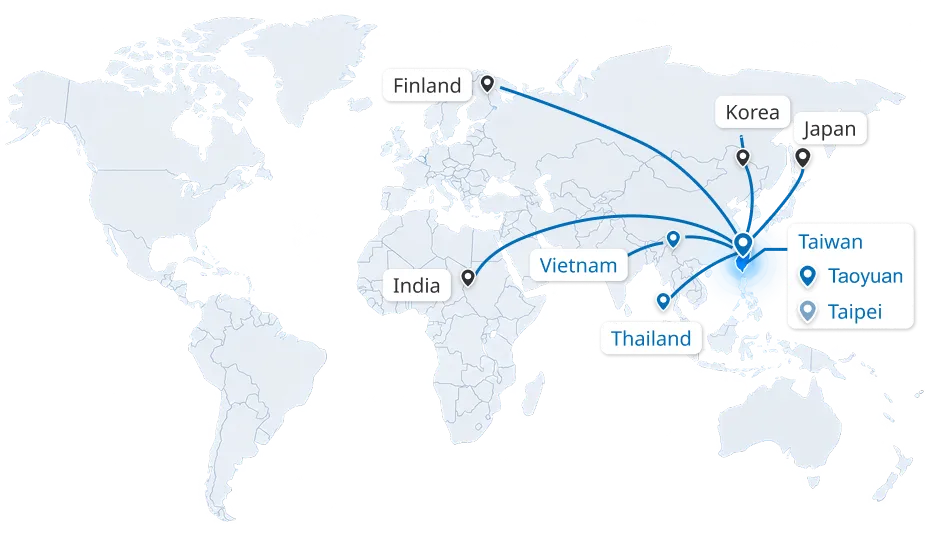
DS has established a growing FlexRC™ sales, application, and technical partner network across Asia and Europe, while continuing to expand local partnerships and service capabilities in North America and other international markets.
Depending on local market requirements and the collaboration model, support is provided by DS technical teams, authorized partners, and ODM partners for product deployment, application support, training, and after-sales technical service—helping customers and partners deploy, operate, and expand FlexRC™ solutions more effectively.
 DS Service Location
 Authorized Partner
 ODM Partner
Product, application, and project support provided by DS engineering and technical teams.
Provide local FlexRC™ promotion, sales, application, and customer support according to regional capabilities and scope.
Support localized product and technical collaboration based on product, market, and project requirements.
Partners with an established customer base in industrial robotics, automation equipment, or manufacturing who want to expand into robotic grinding, deburring, polishing, and surface-finishing products.
System integrators with capabilities in robotics, PLCs, fixtures, and peripheral equipment who want to incorporate FlexRC™ tools and grinding equipment into robotic surface-finishing solutions.
Specialists in abrasives, belt grinding, grinding wheels, polishing, or metal surface finishing who want to extend their process know-how into robotic automation applications.
Distributors with established manufacturing customers and industrial tool or abrasive channels who want to expand into FlexRC™ tooling and robotic surface-finishing applications.
If you have strong local market access, customer relationships, or technical service capabilities, contact DS to explore FlexRC™ products, applications, and partnership opportunities.
Become a FlexRC™ Partner