

|
FMS
When machining operations face challenges such as low utilization of high-value equipment, high-mix low-volume production, labor shortages, frequent changeovers, multi-process coordination, and quality traceability, FMS delivers value beyond automated loading and unloading by coordinating machines, materials, tools, fixtures, machining, and metrology under a unified production logic.
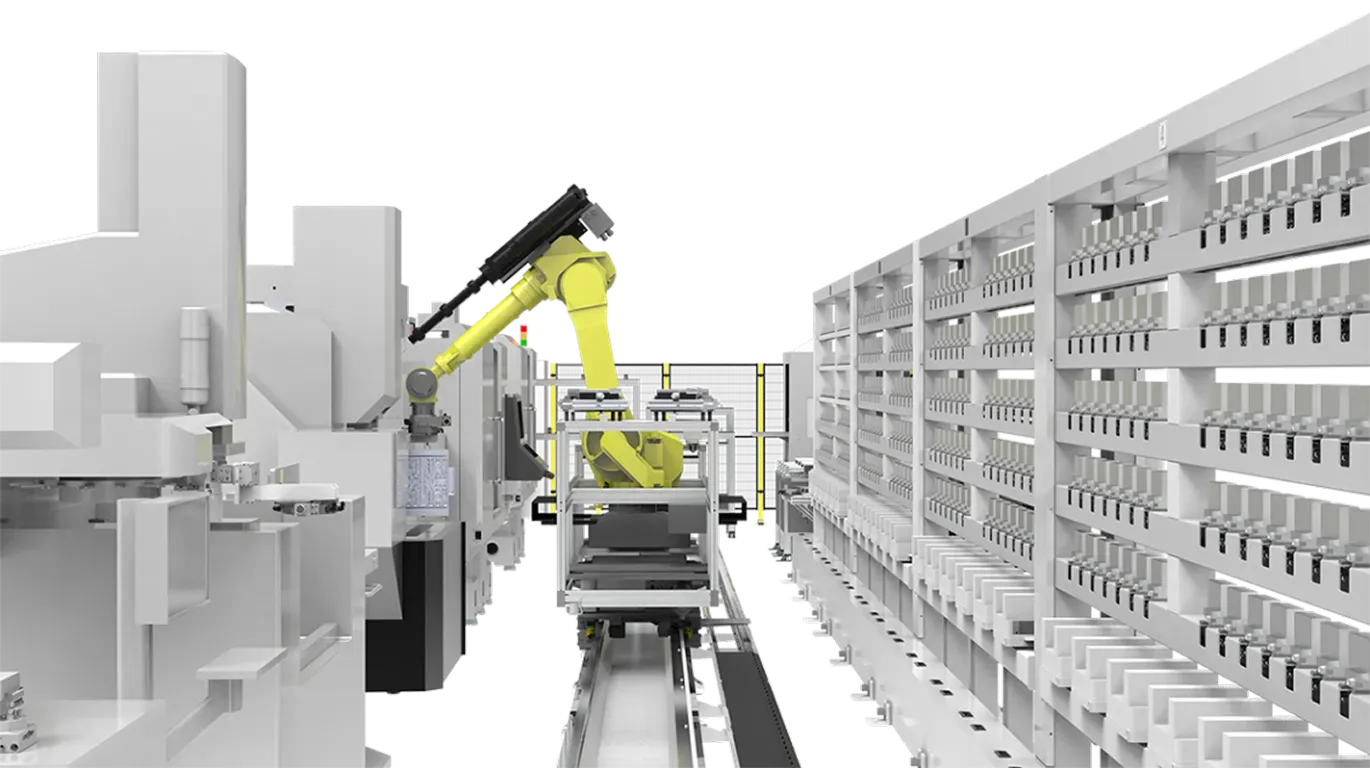
High-value CNC machines, 5-axis machining centers, and EDM equipment lose utilization when they wait for loading, tools, fixtures, or operators.
FMS integrates machining, logistics, and manufacturing resources to reduce waiting and non-cutting time while supporting extended production.
When product variety is high, lot sizes are small, processes are complex, and changeovers are frequent, manual scheduling and resource preparation can become bottlenecks.
FMS dynamically schedules production based on work orders, operations, equipment, and resource availability to improve HMLV flexibility.
When loading, handling, and tool or fixture verification rely heavily on operators, maintaining night-shift and holiday production becomes difficult.
FMS can integrate robots, AMR / RGV, smart storage, and automation peripherals to reduce repetitive manual work and support extended low-manned or lights-out machining.
Mold manufacturing, large precision parts, and long-cycle machining often involve multiple operations, extended machining time, and extensive tool usage.
FMS coordinates equipment, tool life, operations, and metrology processes to improve night-shift productivity and equipment utilization.
Components for AI infrastructure, semiconductor equipment, aerospace and UAV, automotive, and EV applications often require demanding dimensional control, quality, and traceability.
FMS can integrate Probe, Tool Setter, CMM / Equator and other metrology systems to support machining quality management, process feedback, and traceability.
When a product requires multiple components, machines, or operations.
FMS coordinates machining sequences, equipment, materials, and metrology resources according to work orders and process logic, helping reduce delivery delays caused by inter-process waiting.
The Core of FMS is Not Just Robot Loading/Unloading for CNC, but Collaborative Operation
Work Orders, Equipment, Materials, Tools, Fixtures, Machining, Metrology

Integrates work orders, equipment, materials, and manufacturing resources to reduce waiting and non-cutting time while improving utilization of CNC and automation equipment.

Supports high-mix, low-volume production, multiple product variants, and rapid changeovers, with flexible scheduling based on work orders, processes, equipment, and resource availability.

Coordinates automated loading/unloading, material handling, and manufacturing processes to reduce repetitive manual work and support extended low-manned or lights-out machining.

Integrates Probe, Tool Setter, CMM / Equator, and other metrology systems to connect machining, measurement, quality decisions, and process feedback into a traceable quality loop.

Analyzes equipment utilization, Cycle Time, quality, tool usage, and anomalies based on integrated manufacturing data. The optional SmartCore AI™ Manufacturing Assistant supports natural-language queries and analytical assistance.

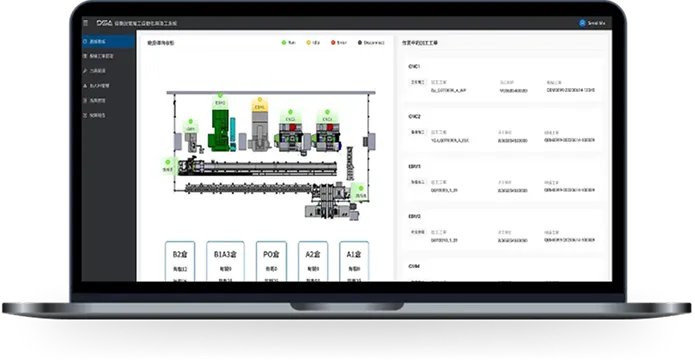
Provides real-time visibility into work orders, equipment, tools, fixtures, materials, machining, and quality status, helping managers quickly identify production bottlenecks and abnormalities.
SmartCore AI™ FMS is built around manufacturing resource coordination and closed-loop control, integrating work orders, scheduling, equipment, automated logistics, machining execution, tooling and fixtures, metrology, and quality feedback into a visualized, controllable, traceable, and continuously improvable manufacturing process.
The system can be deployed independently on a machining line and integrated with SmartCore MES, ERP, or existing enterprise systems as required, supporting phased implementation from a single machining cell to an FMS line or multi-equipment manufacturing environment.
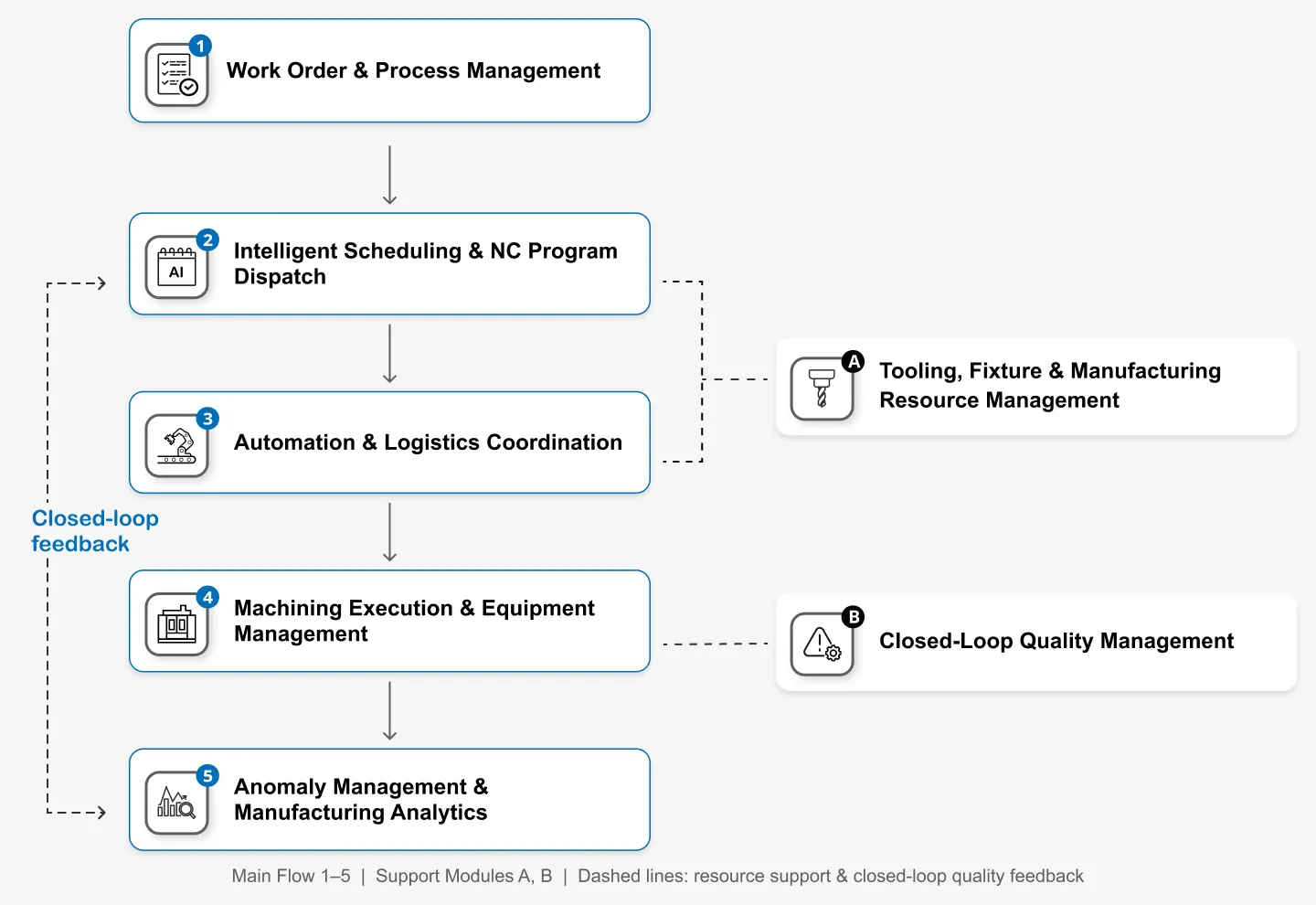
SmartCore AI™ FMS integrates work order and process management, intelligent scheduling, manufacturing resources, automated logistics, CNC / EDM machining, tooling and fixture management, metrology validation, and quality feedback to create a closed-loop manufacturing process from work order to finished part.
The system coordinates manufacturing resources based on work orders, operations, equipment status, tools, fixtures, materials, and quality conditions, while feeding machining, measurement, and anomaly data back into the manufacturing process to improve equipment utilization, production flexibility, quality consistency, and process transparency.
 1
Manage work orders, machining operations, process revisions, material requirements, and related manufacturing conditions to create executable, visualized, and traceable manufacturing tasks.
 2
Dynamically schedule production based on work order priority, equipment status, process requirements, and manufacturing resource availability, and dispatch the corresponding approved NC programs and manufacturing data to designated equipment.
 3
Integrate robots, automated loading and unloading, AMRs, RGVs, smart storage, and related logistics equipment to coordinate the movement of workpieces, pallets, materials, and manufacturing resources between process stations.
 4
Integrate CNC, EDM, washing, and related process equipment, acquiring equipment status, machining progress, axis load, alarms, and process information through available equipment interfaces to support production execution and equipment management.
 5
Integrate equipment, tooling, machining, logistics, and quality anomaly data to support alerts, cause indications, schedule adjustments, standardized handling procedures, and guided recovery. OEE, utilization, Cycle Time, yield, tool usage, and bottleneck analysis support continuous improvement by engineering and management teams.
 A
Integrate tool IDs, tool life, holders, fixtures, pallets, zero-point systems, and related manufacturing resource information to support status, revision, availability, and pre-machining readiness checks.
 B
Integrate Probe, Tool Setter, CMM, Equator, and other metrology systems to connect machining, measurement, quality decisions, and process feedback into a traceable closed loop. Based on part features, tolerances, process capability, and predefined rules, the system can support engineering review, controlled compensation, Hold, and exception handling.
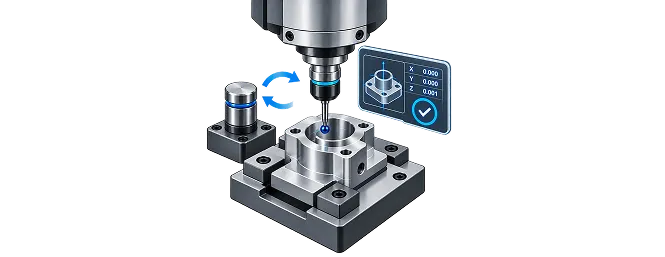
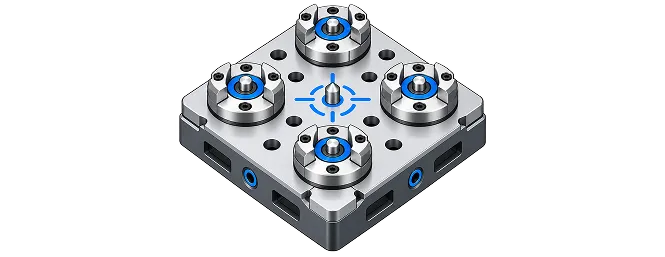
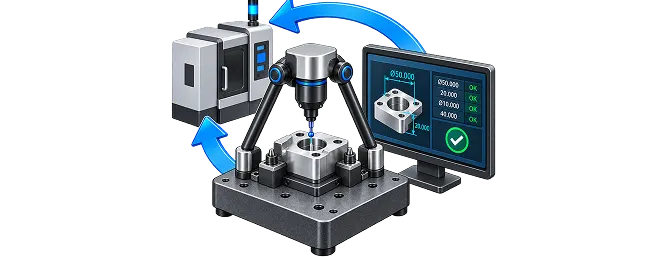
SmartCore AI™ FMS can integrate tool lifecycle management, in-machine measurement, fixture and zero-point positioning, CMM / Equator, and process quality feedback according to project requirements. It connects pre-machining verification, in-process measurement, and post-machining inspection into a traceable quality loop to support machining consistency, process stability, and production traceability.

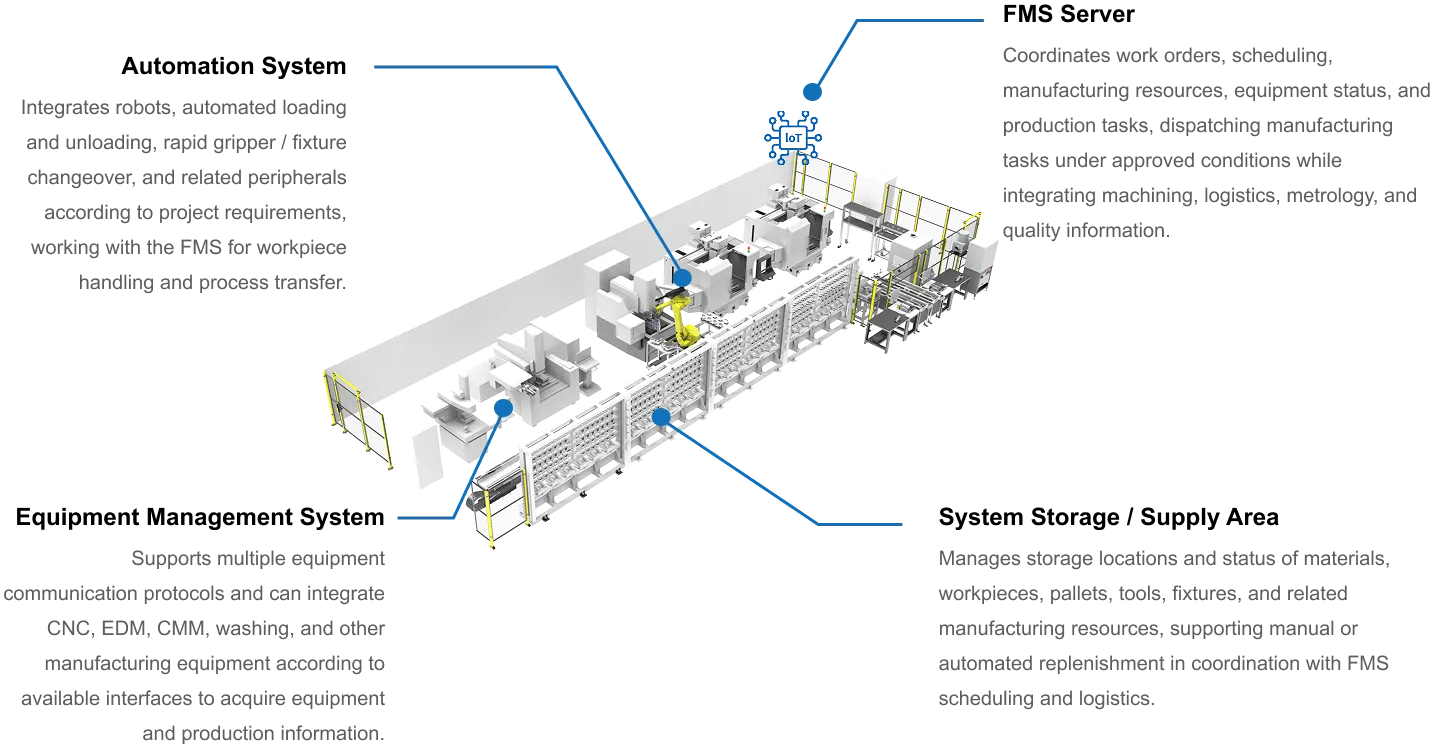
Modular integration of machining equipment, automated logistics, manufacturing resources, metrology, and software platforms according to production-line requirements.

Integrates robots, grippers, and loading / unloading equipment to support multi-station automation and workpiece transfer across CNC / EDM processes.

Integrates AMRs, RGVs, buffers, smart storage, and pallet handling to coordinate material flow according to work orders and process requirements.

Integrates CNC machines, 5-axis machining centers, lathes, EDM, and related process equipment, supporting machining task dispatch, equipment-status acquisition, and production progress management.

Integrates tools, holders, fixtures, pallets, zero-point systems, chucks, jaws, soft jaws, and related manufacturing resources, supporting status, revision, service-life, and availability management.

Integrates Probe, Tool Setter, CMM, Equator, and other metrology equipment to support pre-machining verification, in-process measurement, post-machining validation, and closed-loop quality feedback.

Integrates work orders, scheduling, equipment, resources, machining, logistics, metrology, and quality information to provide manufacturing coordination, equipment and production monitoring, traceability, and data analytics.
The FMS is modularly configured according to product, process, equipment, capacity, and logistics requirements. The following illustrates a typical production-line configuration.
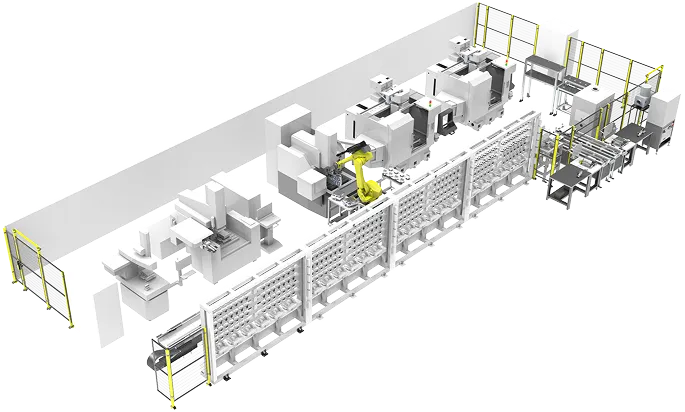
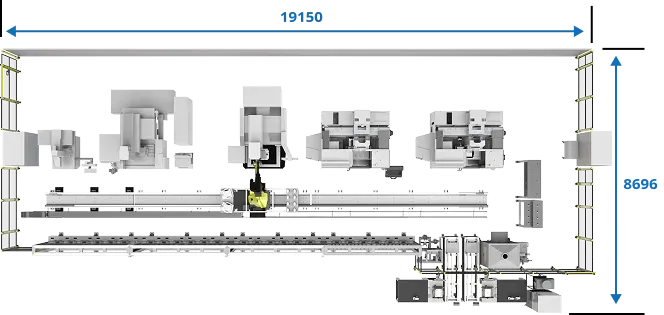
Reference layout: approx.19,150 × 8,696 mm
Actual dimensions vary depending on equipment quantity, logistics method, safety clearance, and project conditions.
01
02
03
04
05
06
From machining centers to lathes, DS integrates machining equipment, robotics, logistics, tooling and fixtures, workholding systems, and manufacturing resource management according to process, workpiece, and capacity requirements.
For CNC machining centers and multi-process precision machining, DS can integrate robotic machine tending, Pallet / Zero Point systems, tool and fixture management, smart storage, and metrology systems such as Probe, CMM, and Equator. Equipment, workpieces, and manufacturing resources are coordinated according to work orders and process requirements, supporting high-mix low-volume production, rapid product changeovers, and extended low-manned or lights-out machining.
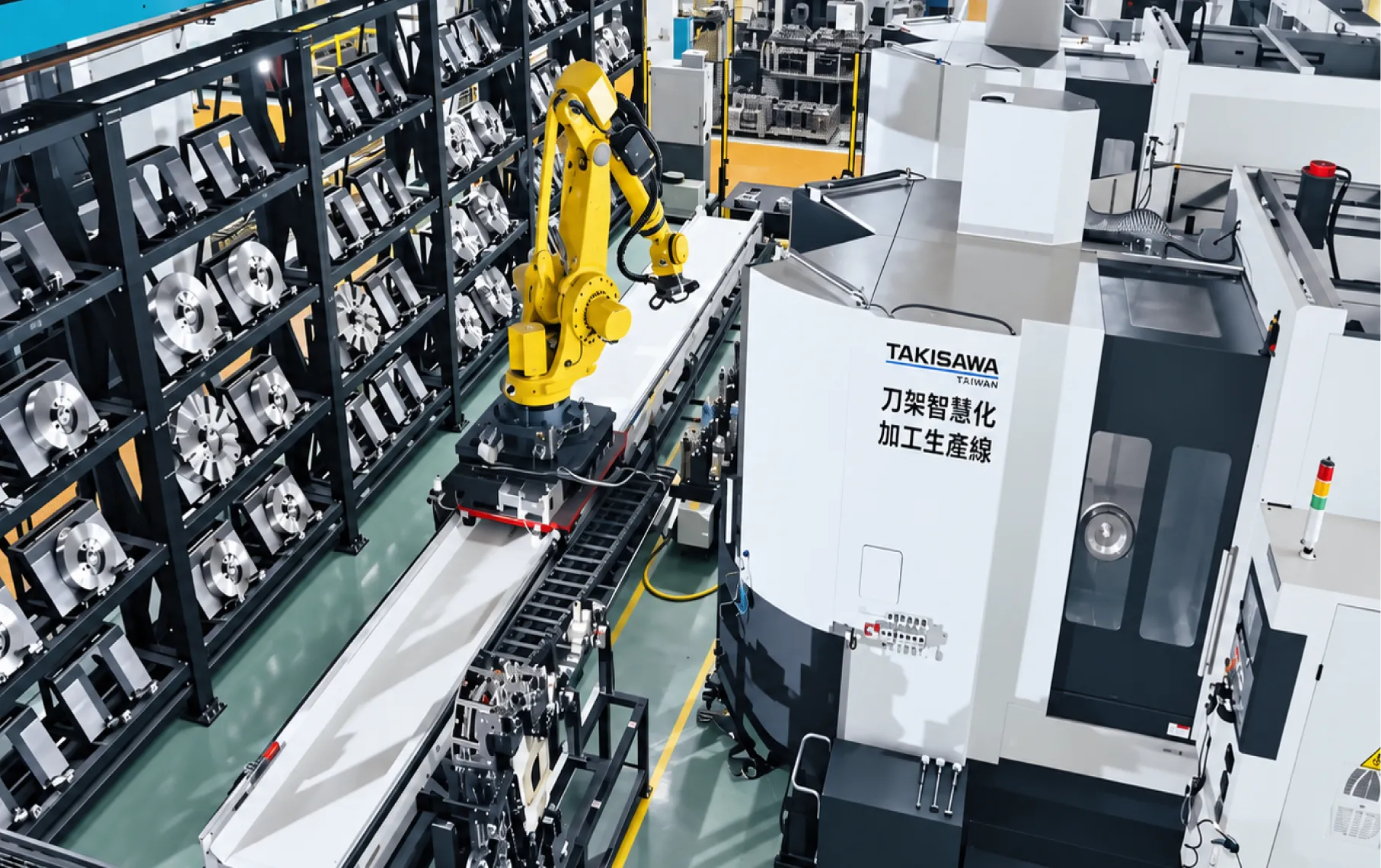
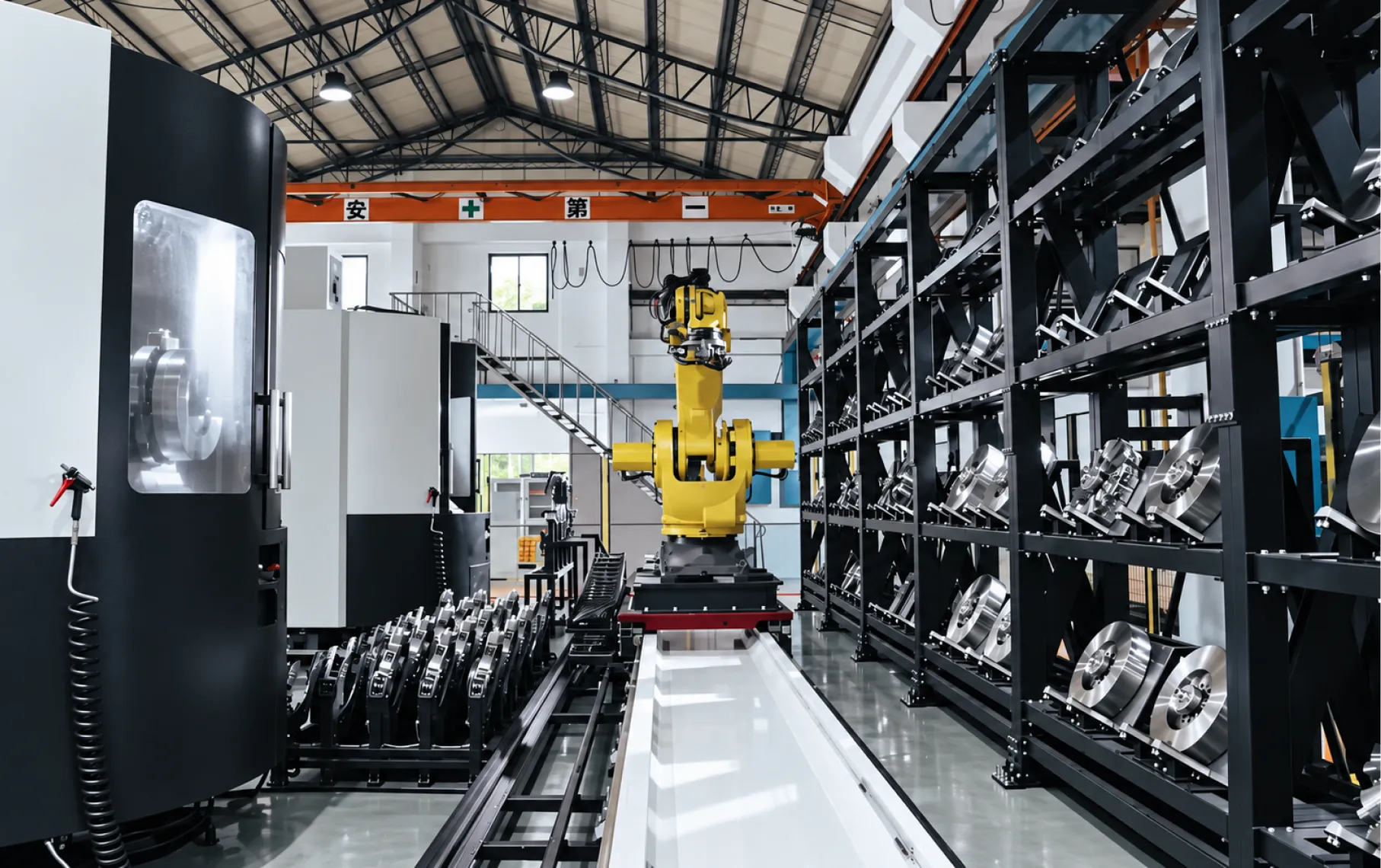
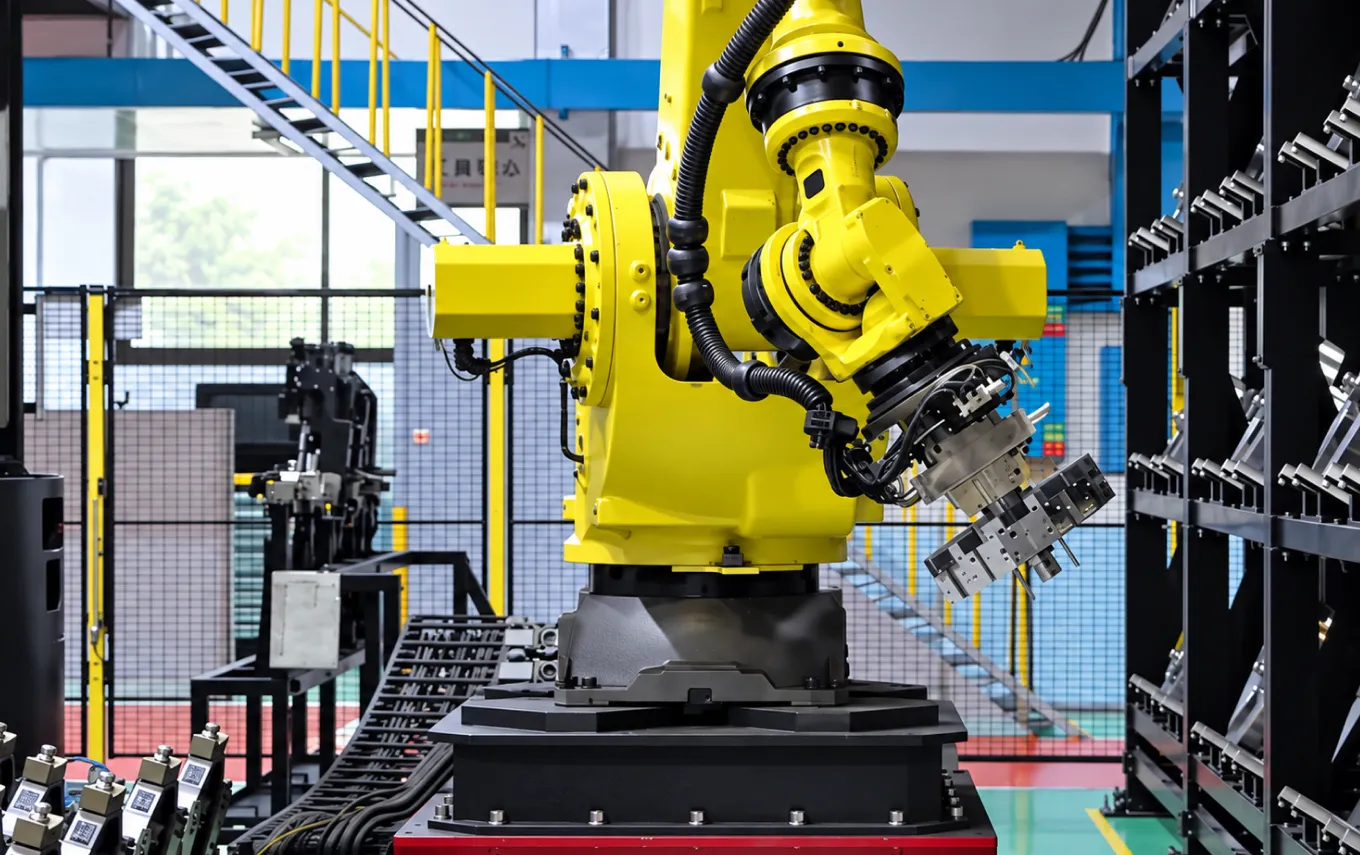
For high-mix turning and frequent changeovers, DS can integrate lathes, robots, automated loading and unloading, Chuck / Jaw / Soft Jaw systems, workholding fixtures, and manufacturing resource management to support rapid changeovers between different workpieces and extended automated machining.
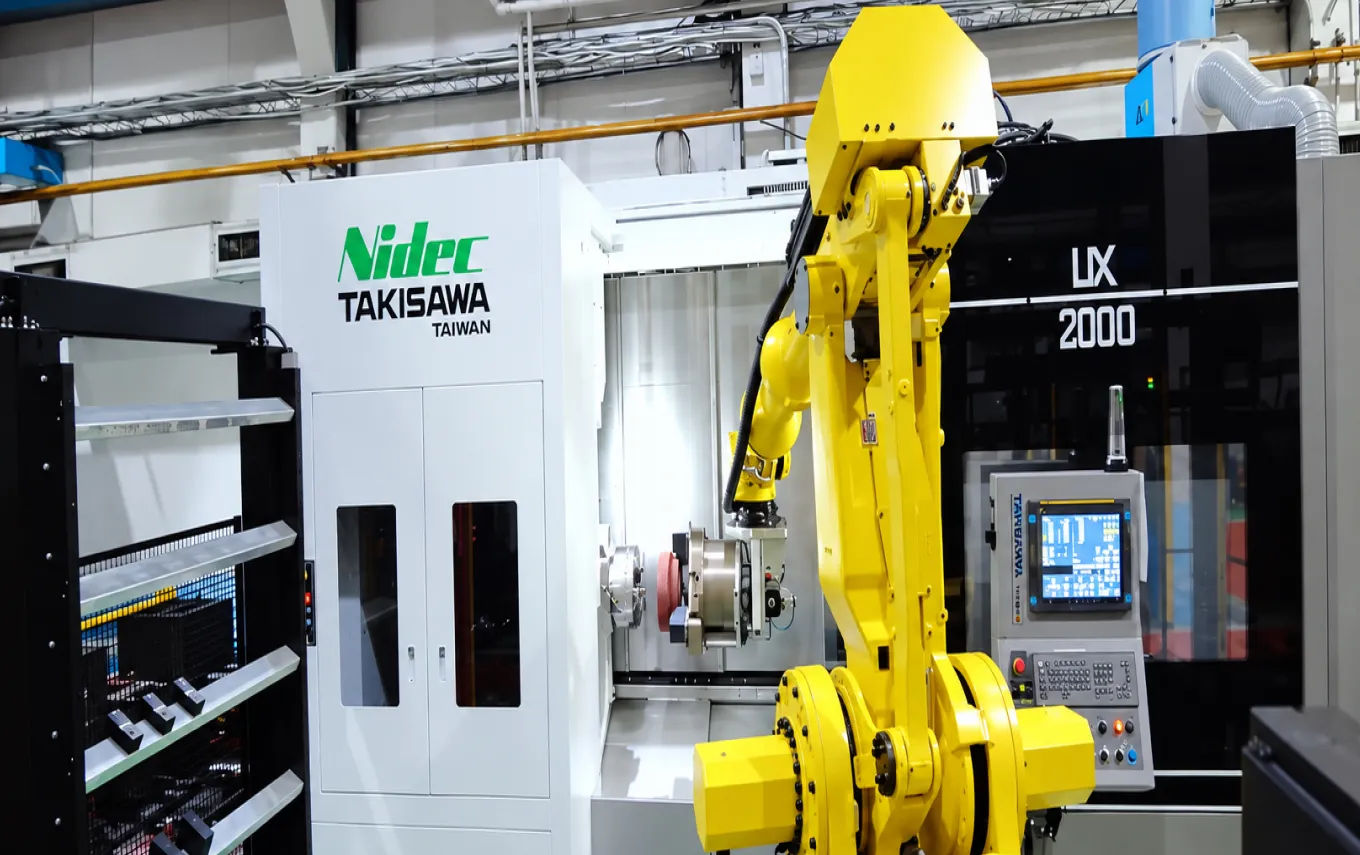
In an actual DS implementation, Nidec Takisawa lathes, FANUC robots, and the SCHUNK RAPIDO-A2 quick jaw change system are integrated into the FMS workflow. Workpiece loading and unloading, Jaw / Soft Jaw changeover, and workholding resource management are coordinated to improve turning flexibility and changeover efficiency.
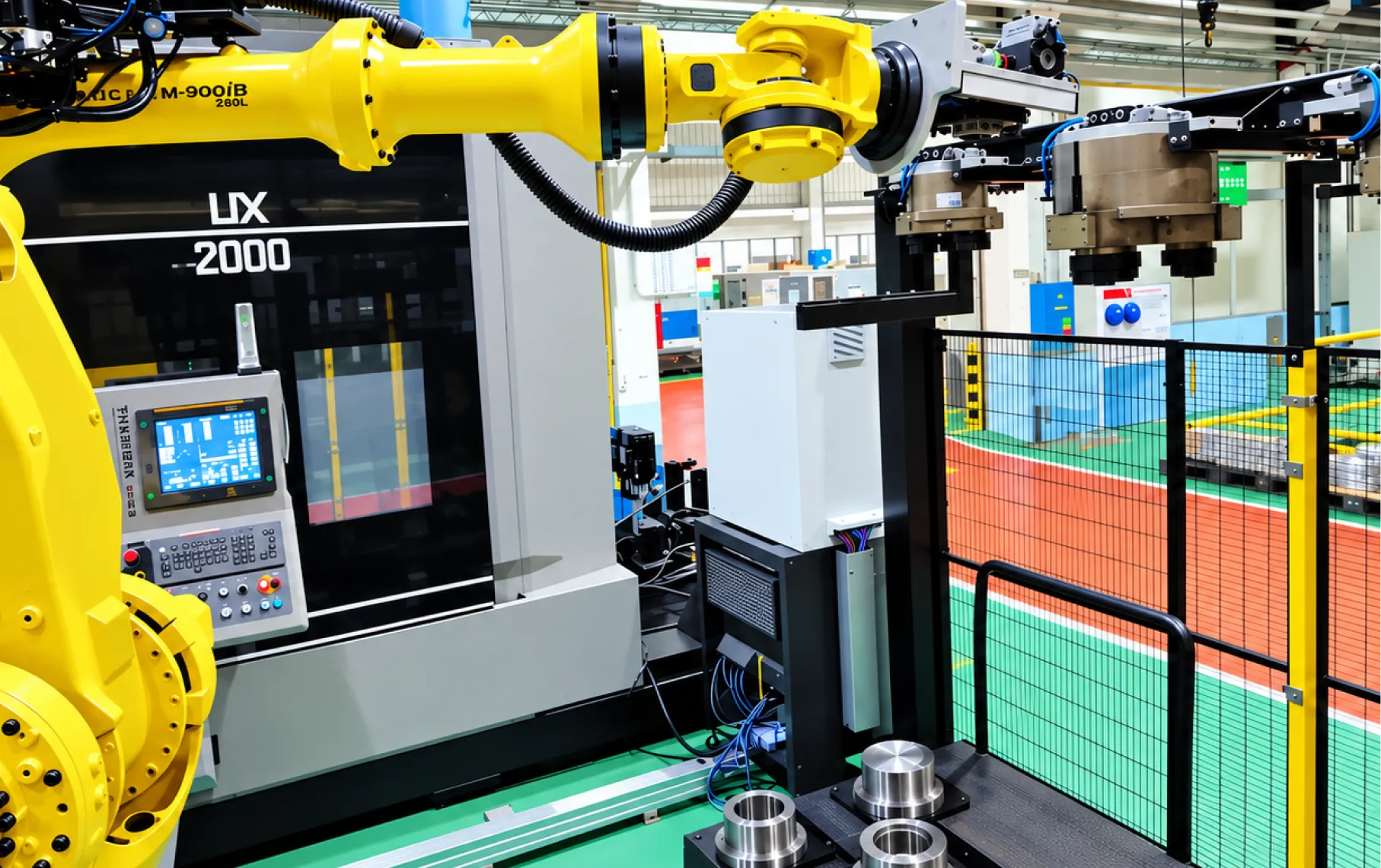
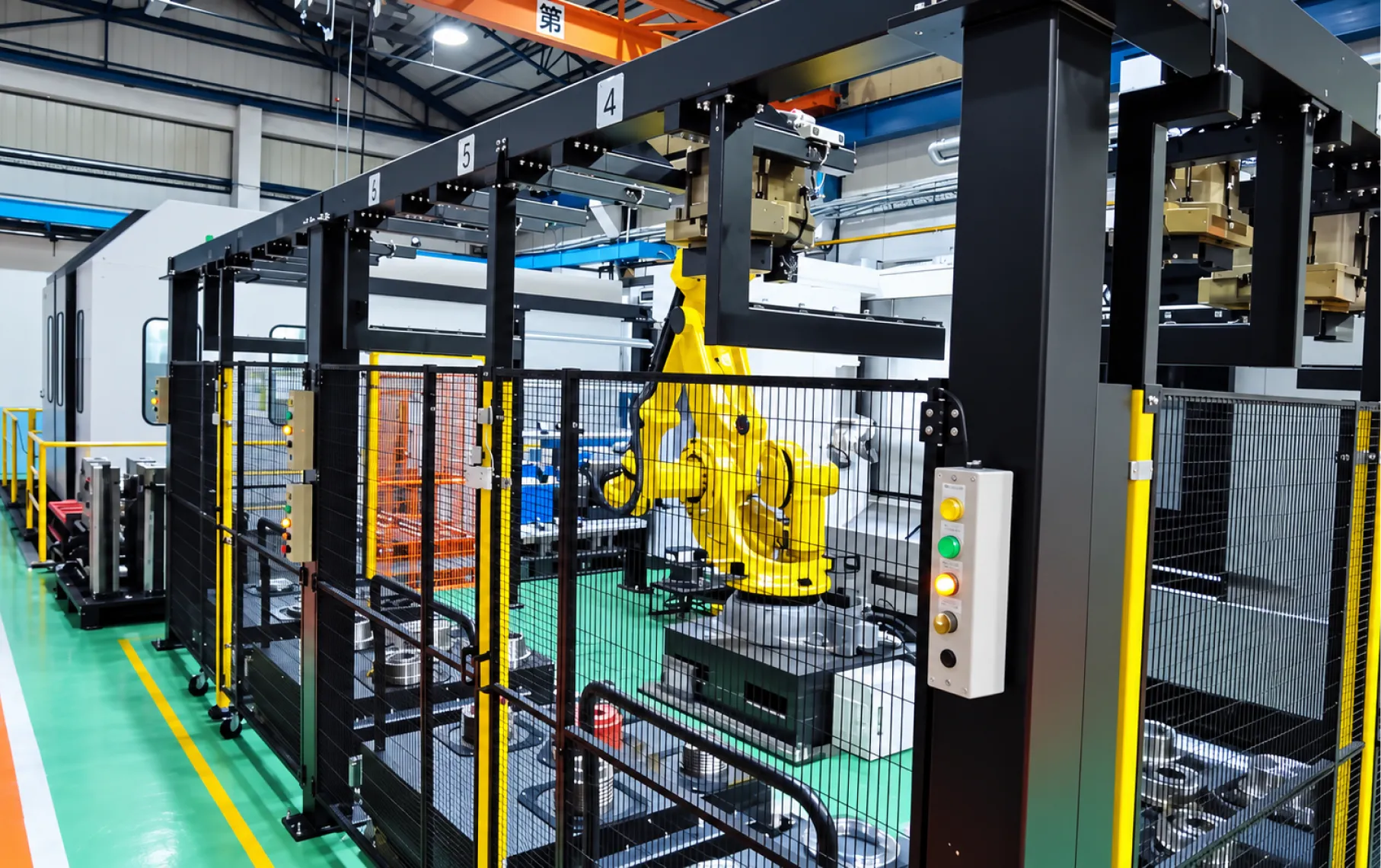
For high-mix, high-precision, multi-process button mold manufacturing, DS integrates CNC machining, EDM, washing, tool and fixture management, in-machine measurement, and precision CMM inspection. The FMS coordinates workpieces, equipment, and manufacturing resources across multiple stations, while machining, measurement, and quality results are captured as traceable data. Based on predefined process and quality rules, the system supports quality decisions and controlled compensation feedback, forming a closed-loop workflow from machining and washing to measurement and validation.
|
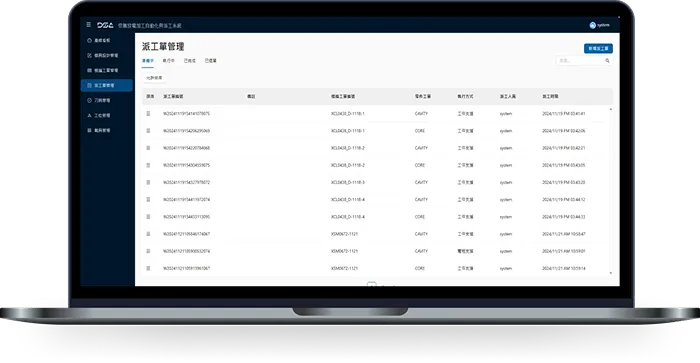
Integrates work orders, scheduling, equipment, manufacturing resources, machining, logistics, metrology, and quality information into a visualized, traceable, and coordinated FMS manufacturing management platform.
After a work order is imported, the system can expand assembly and part requirements. Engineers define eligible machines or machine groups based on process requirements, while materials, tools, fixtures, and operation completeness are checked before the work order proceeds to scheduling and execution.
Convert work orders into assembly and part lists, including machining routes and operation requirements for each part.
Engineers define eligible machines or machine groups according to process requirements, allowing subsequent dispatch based on scheduling and resource availability.
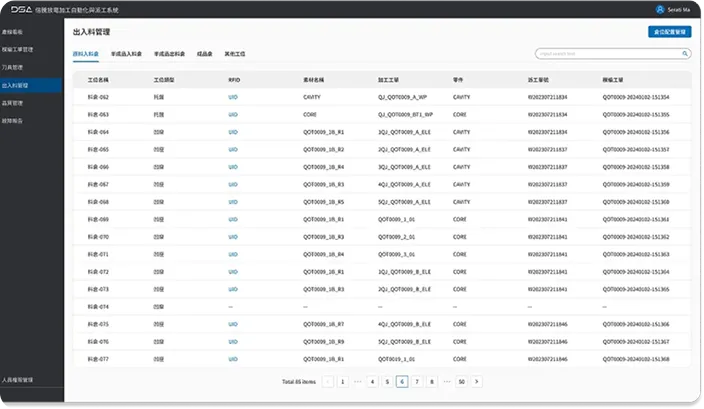
Verify material type, stock dimensions, batch, quantity, and related information before scheduling to reduce execution issues caused by incomplete material conditions.
Verify tool life, backup tools, fixture specifications, and workholding conditions against machining requirements.
Determine whether washing, degreasing, fixture positioning, tool offset setup, first-part measurement, or other pre-process operations are required.
Check whether operations, equipment, materials, tools, fixtures, and related process conditions are complete before releasing the work order to subsequent processes.
If materials are unavailable, equipment is unavailable, tools are insufficient, fixtures are not ready, or process conditions are incomplete, the system issues an alert and places the work order on Hold until the missing conditions are resolved.
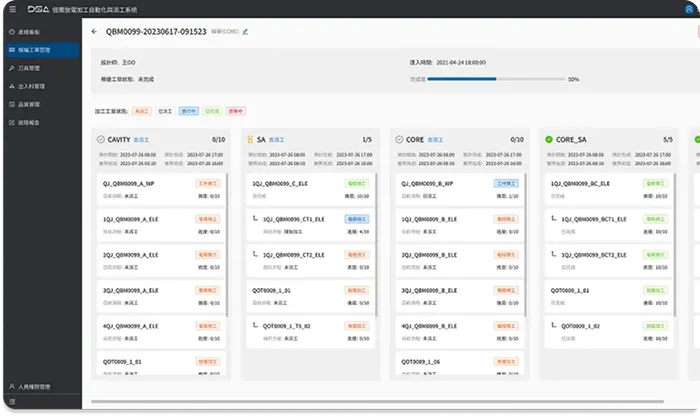
SmartCore AI™ FMS dynamically schedules production based on work-order priority, process requirements, equipment status, and manufacturing resource availability. Based on approved process conditions, it dispatches the corresponding NC programs, process data, and automation tasks to designated equipment, coordinating machining, handling, washing, measurement, and related process stations.
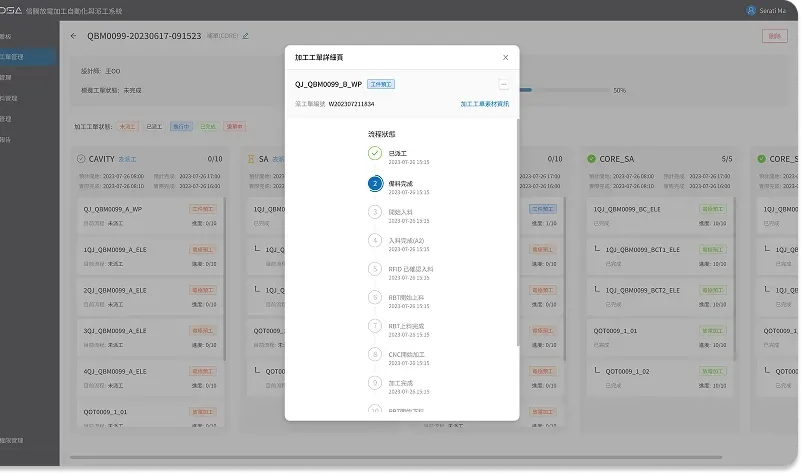
Establish machining sequences based on equipment status, process order, delivery priorities, and resource availability, with dynamic adjustment according to shop-floor conditions.
Coordinate process allocation and workload across CNC, EDM, metrology, washing, and automation stations to reduce equipment waiting and process bottlenecks.
When equipment, tools, fixtures, materials, or quality conditions become abnormal, the system can reassess the schedule according to available resources and predefined rules. Changes involving programs or process conditions are re-dispatched only after the required approval process is completed.
Dispatch the corresponding NC programs and manufacturing data to designated equipment based on approved program revisions and process conditions, reducing the risk of using incorrect revisions or unapproved data.
Manage NC programs, process revisions, and dispatch records to support the use of correct and approved revisions while maintaining complete traceability.
Include handling, loading / unloading, fixture / pallet changeover, washing, and measurement tasks within the schedule, coordinating each station according to the required process sequence.
Coordinate processes, equipment, and logistics to reduce waiting between machining, handling, washing, and measurement stations, improving overall equipment utilization and production flow.
SmartCore AI™ FMS can integrate robots, automated loading and unloading, AMR / RGV systems, washing stations, tool management, fixture changeover, and related peripheral equipment. Based on work orders and process requirements, it coordinates workpieces, pallets, tools, and manufacturing resources across stations to improve the continuity and control of machining, handling, washing, measurement, and changeover processes.
Robots perform workpiece picking, placement, and positioning to connect machining equipment with upstream and downstream process stations, reducing manual handling and repetitive loading and unloading.
Robots, AMRs, RGVs, or other handling equipment can be integrated according to the production-line layout, enabling workpieces and pallets to move automatically between machining, washing, storage, and metrology stations according to process requirements.
Tool Setter data, spindle load, and other monitoring signals can be integrated to detect broken tools, abnormal wear, and related conditions, with alerts, Hold actions, or subsequent tool replacement handled according to predefined rules.
Monitor and alert based on tool usage time, machining count, and remaining tool life. Depending on equipment and project configuration, backup tool replenishment or tool replacement can be supported to reduce production interruption risks caused by insufficient tooling.
Spray washing, air blowing, air knives, or other cleaning modules can be integrated to remove chips, fluids, and residues after machining, supporting subsequent measurement, transfer, or re-machining processes.
Depending on workpiece and process requirements, pallets, zero-point systems, dedicated fixtures, robot grippers, and lathe Chuck / Jaw / Soft Jaw quick-change mechanisms can be integrated to improve flexibility in high-mix, low-volume production.
Automated tasks such as handling, loading and unloading, washing, measurement, and tool or fixture changeover can be coordinated with work-order and process schedules to reduce station waiting and improve overall production flow.
SmartCore AI™ FMS coordinates CNC, EDM, and related equipment to execute machining tasks according to approved work orders, schedules, and process conditions. Equipment status, machining progress, tooling information, and exception records are returned to create a visualized and traceable machining execution process.
Equipment executes approved machining tasks according to work orders and process sequences dispatched by the FMS, reducing the risk of manual dispatch and program-selection errors.
Approved NC programs, M-codes, tool data, and related process settings are called according to controlled revisions, supporting the use of correct and approved manufacturing data while reducing revision errors.
After machining is completed, the FMS can coordinate automated workpiece transfer to washing, metrology, subsequent machining operations, or storage according to the next process step.
Acquires machining status, spindle load, feed rate, Cycle Time, alarms, and related information through available equipment interfaces to support production and exception monitoring.
Records tool usage time, machining count, and tool-life status, with support for tool alerts, backup-tool management, and exception handling depending on equipment and project configuration.
When alarms, overloads, tool abnormalities, or process-condition exceptions occur, information can be returned to the FMS for alerts, Hold actions, task adjustment, or subsequent handling according to predefined rules.
Work orders, equipment, NC revisions, tools, fixtures, machining time, and related process records can be associated according to the project architecture to support production traceability, quality analysis, and continuous improvement.
SmartCore AI™ FMS can integrate Probe, CMM, Equator, optical measurement, and other inspection equipment according to project requirements. Measurement results can be associated with work orders, equipment, tools, fixtures, and machining processes, supporting traceability from first-part validation and in-process measurement through post-machining quality verification. Quality decisions and process feedback create a traceable quality data chain to support machining stability and production consistency.
Depending on the production-line and project configuration, workpieces can be transferred by robots or automated logistics systems to CMM, Equator, optical measurement, or other inspection stations, with results returned to SmartCore AI™ FMS.
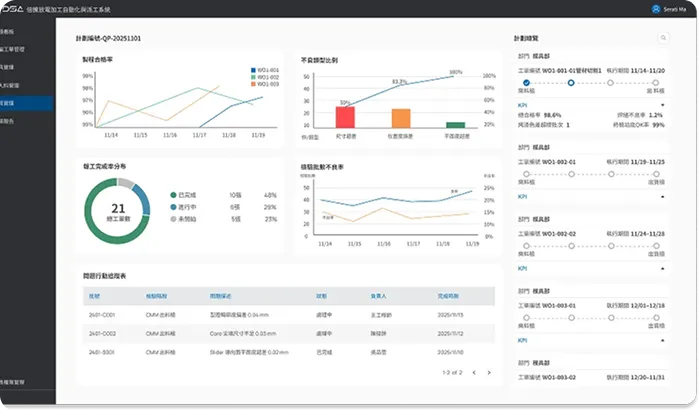
Supports first-part inspection, in-process measurement, and sampling inspection to monitor dimensional results and process variation, providing a basis for production-condition confirmation and quality management.
Measurement results can be returned to SmartCore AI™ FMS. Based on product features, tolerances, process capability, and predefined compensation rules, the system can support controlled tool compensation, engineering review, or Hold to reduce the risk of continued dimensional drift.
Based on predefined quality rules, measurement results can be classified as OK, NG, requiring engineering review, or requiring further action, with the decision linked to work orders and process records.
When measurement results do not meet quality requirements, workpieces can be marked as NG or Hold according to the production-line and automation configuration, restricting entry into normal downstream processes and supporting segregation, re-inspection, or engineering disposition.
When dimensional limits are exceeded, quality trends become abnormal, or measurement results deviate from predefined conditions, the system can generate alerts and notify relevant personnel to support rapid engineering review and response.
Measurement results, quality decisions, equipment, work orders, tools, fixtures, and related process information can be linked according to the project architecture to support quality inquiries, reporting, SPC trend analysis, and continuous improvement.
SmartCore AI™ FMS can integrate exception information from equipment, tools, fixtures, materials, machining, and quality processes. The system generates alerts and initiates predefined handling workflows according to the type of exception. It can support Hold actions, resource revalidation, schedule adjustments, and alternative-equipment evaluation while providing cause information and handling guidance to help engineering and operations teams shorten recovery time and reduce the risk of exception escalation.
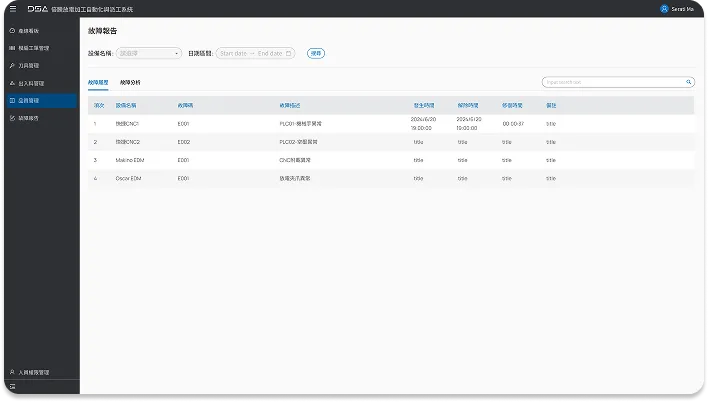
The system can consolidate equipment alarms, program status, manufacturing data, and related exception information, identify exception types according to predefined rules, and provide handling workflows and corrective guidance. Changes involving NC programs, process conditions, or quality decisions remain subject to engineering approval.
Exception information can be displayed in the user interface and linked with equipment, tools, fixtures, programs, materials, and quality information. Handling guidance and status records support troubleshooting, event traceability, and continuous improvement.
When tool life is insufficient, a tool is broken, backup tooling is unavailable, or materials are short, the system can issue alerts and support backup-tool preparation, replenishment, or task adjustment according to resource status. Actual automated replenishment depends on equipment and storage configuration.
When positioning, measurement, quality, or machining exceptions occur, the related operation can be placed on Hold. According to the exception type and predefined process rules, the system can support re-measurement, engineering review, compensation, or re-execution. Changes to NC programs or process conditions require approval before execution resumes.
When a work order is cancelled, suspended, or its production conditions become invalid, the system can stop subsequent task dispatch and place related operations on Hold, reducing unauthorized execution and unnecessary resource consumption.
When machining equipment fails or becomes temporarily unavailable, the system can reassess the schedule using alternative equipment that meets machine capability, process revision, and resource requirements, helping reduce waiting and production delays.
SmartCore AI™ FMS can coordinate with storage and automated logistics systems to revalidate manufacturing conditions once materials, tools, or fixtures become available again, and resume subsequent handling and machining tasks according to the schedule.

SmartCore AI™ Manufacturing Intelligence Assistant is built on the OpenAI API and can integrate SmartCore FMS / MES, production, equipment, work order, quality, and process data. It supports natural-language queries, cross-module data aggregation and analysis, and can combine internal manufacturing data with public web information for comparative analysis and engineering reference.
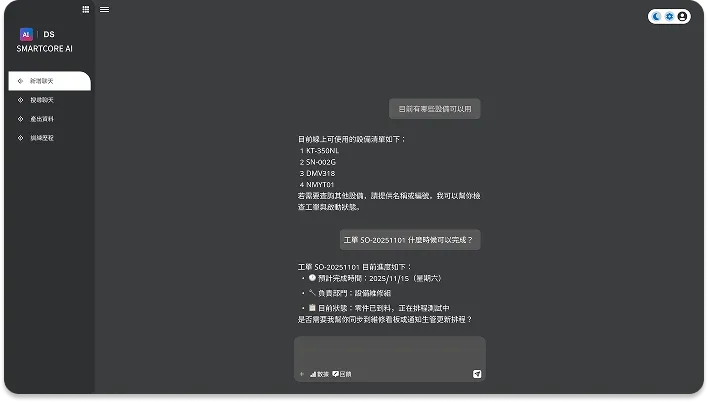
Query equipment status, work-order progress, production information, quality results, and exception records through natural-language conversations, reducing time spent searching across multiple systems.
Integrates FMS, MES, equipment, production, and quality information, aggregating relevant data according to user queries to provide manufacturing context.
Searches public technical documents, equipment information, and industry data, and compares them with internal manufacturing information for analytical reference.
Consolidates equipment alarms, tooling, work orders, quality information, and process records to help engineers understand exception context, related information, and possible causes.
Equipment manuals, SOPs, maintenance documents, and process knowledge can be integrated according to project requirements, helping operators and engineers access technical information quickly.
Provides data according to user permissions and distinguishes internal enterprise data, public web sources, and AI-generated analysis to maintain clear sourcing and traceability.
01
Under OpenAI's official API data policy, API inputs and outputs are not used by default to train or improve OpenAI models unless the customer explicitly opts in to data sharing. Data retention methods and periods depend on the API features, settings, and applicable data-retention controls.
02
SmartCore AI™ Manufacturing Intelligence Assistant is a cloud-based AI application and requires internet connectivity to the OpenAI API and related online services.
03
The service uses a monthly subscription model. AI API charges are based on actual token usage, selected models, and enabled features, with final plans configured according to data integration scope, usage scale, and project requirements.
04
AI primarily provides querying, aggregation, analysis, and recommendations. Schedule release, NC approval, quality decisions, and equipment safety control remain the responsibility of SmartCore FMS / MES and controlled shop-floor systems.
Connects the customer's existing CAD/CAM environment, including Siemens NX / hyperMILL, with engineering validation, SmartCore AI™ pre-machining readiness checks, FMS / CNC automated execution, and metrology-based quality feedback. Actual manufacturing results are continuously fed back into subsequent process optimization, creating a traceable closed-loop workflow from engineering data to the first good part.
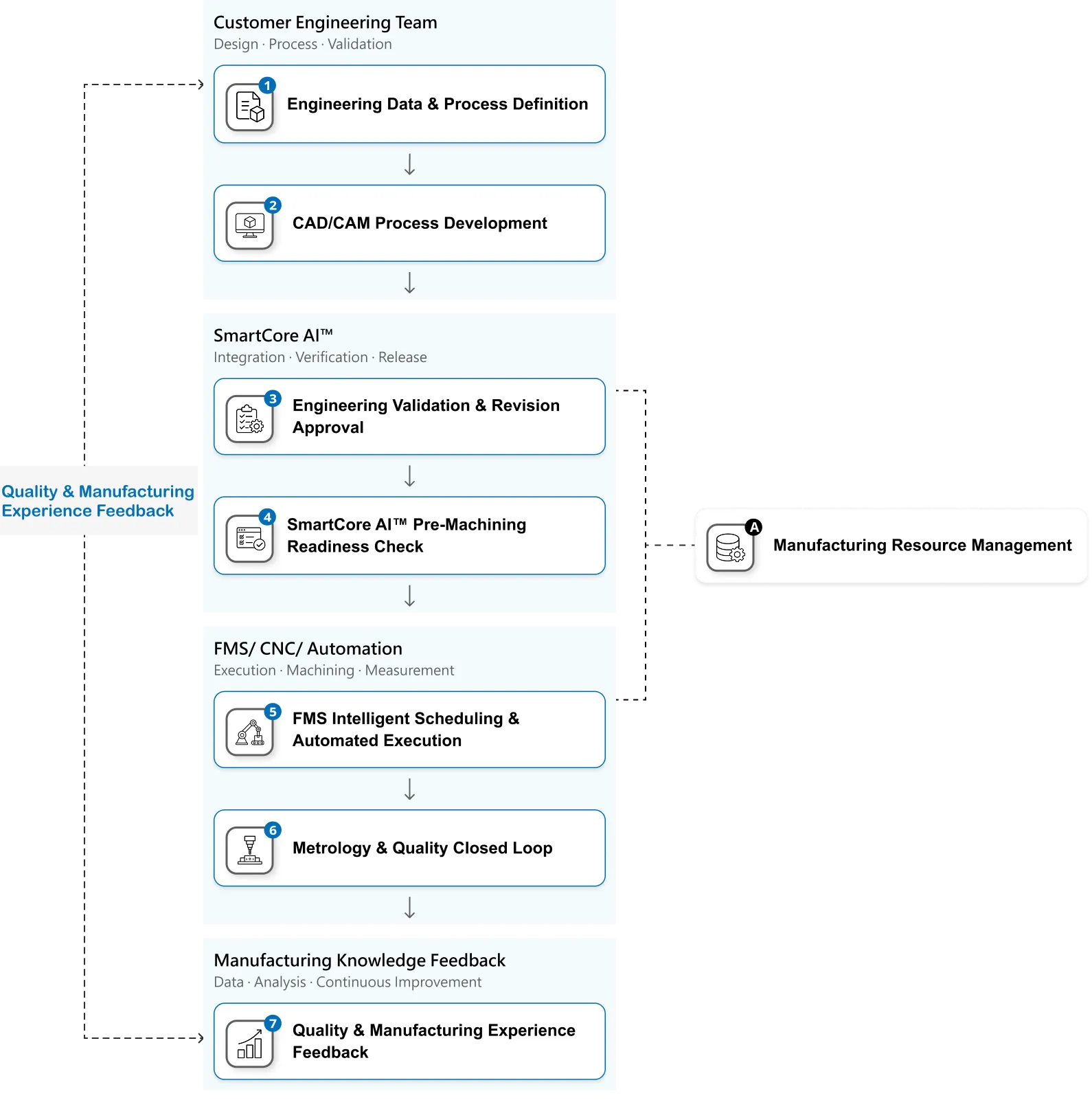
Design, Process, Validation
 1
Convert product design requirements into manufacturing conditions that can be used in downstream machining processes.
Organize CAD, PMI / GD&T, material, stock, datum, surface requirements, and critical quality characteristics to establish the engineering definition required before machining.
 2
Convert engineering conditions into machining strategies, toolpaths, and manufacturing process data.
The customer's engineering team uses CAD/CAM platforms such as Siemens NX and hyperMILL for DFM, machining strategy development, tool selection, toolpath planning, Post processing, NC programming, and related manufacturing data preparation.
Integration, Check, Release
 3
Verify machining data, programs, and equipment conditions and establish controlled revisions.
Perform machining simulation, collision checking, machine-capability validation, Post / NC verification, and revision management. After engineering approval, the data proceeds to SmartCore AI™ for pre-machining readiness verification.
 4
Verify that the correct revisions, required resources, and valid engineering evidence are all available before production dispatch.
Check machine capability, tools and tool life, fixtures, pallets, zero-point systems, NC / Post revisions, machining simulation, Probe, calibration, and quality conditions. Qualified jobs are released; non-conforming conditions result in Hold with the reason returned.
Execution, Machining, Measurement
 5
Convert approved manufacturing tasks into shop-floor machining and automation workflows.
FMS manages task dispatch, dynamic scheduling, NC program dispatch, Pallet / Buffer management, robotic loading and unloading, Zero Point setup, alignment, tool setting, and CNC / EDM machining, while coordinating logistics and related process stations.
 6
Connect actual machining results with quality requirements to create controlled quality feedback.
Probe / Tool Setter supports pre-machining and in-process verification, while CMM / Equator performs post-machining quality validation. Predefined quality rules can support controlled compensation, engineering review, or Stop / Hold actions.
Data, Analysis, Continuous Improvement
 7
Accumulate actual production results as input for subsequent process improvement.
Consolidate Cycle Time, Tool Life, quality results, exception records, and engineering changes, feeding them back to SmartCore AI™ and the engineering team for process-rule improvement, resource planning, and future manufacturing optimization.
 A
Manufacturing resource information including tools, fixtures, pallets, machine capability, revisions, tool life, and calibration status.
Improving Utilization, Manufacturing Stability & Cost Transparency
SmartCore AI™ FMS combines manufacturing resource coordination, automated execution, closed-loop quality management, and data traceability to reduce repetitive manual operations and process variation while improving equipment utilization, production stability, and operational transparency.
01
Integrates automated loading and unloading, material handling, and manufacturing resource coordination to reduce repetitive manual operations and support low-manned and extended automated production.
02
Dynamic scheduling, resource readiness checks, and process coordination reduce equipment waiting, material shortages, and changeover time, improving utilization of high-value equipment such as CNC and EDM machines.
03
Equipment monitoring, tool and fixture management, exception alerts, and guided recovery help reduce production interruption risks caused by equipment, resource, or process abnormalities.
04
Integrates machining, measurement, quality decisions, and process feedback while recording work orders, equipment, tools, fixtures, quality, and production data to support quality improvement, manufacturing cost analysis, and management decisions.
The true value of FMS goes beyond automation. It makes manufacturing resources, quality, production efficiency, and operational risks more transparent, measurable, and manageable.