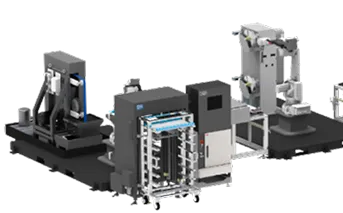
DS integrates robots, automation equipment, FlexRC™ compliance control tools, and process application expertise to deliver complete automated solutions for cutting, sandblasting, deburring, grinding, polishing, and surface finishing.
The system can be flexibly configured according to workpiece material, shape, surface condition, and quality requirements. It is applicable to metals, plastics, ceramics, carbon fiber composites, and other engineering materials, and is widely used in industries such as semiconductor equipment, AI infrastructure, low Earth orbit satellites, aerospace, automotive, casting, and precision manufacturing.
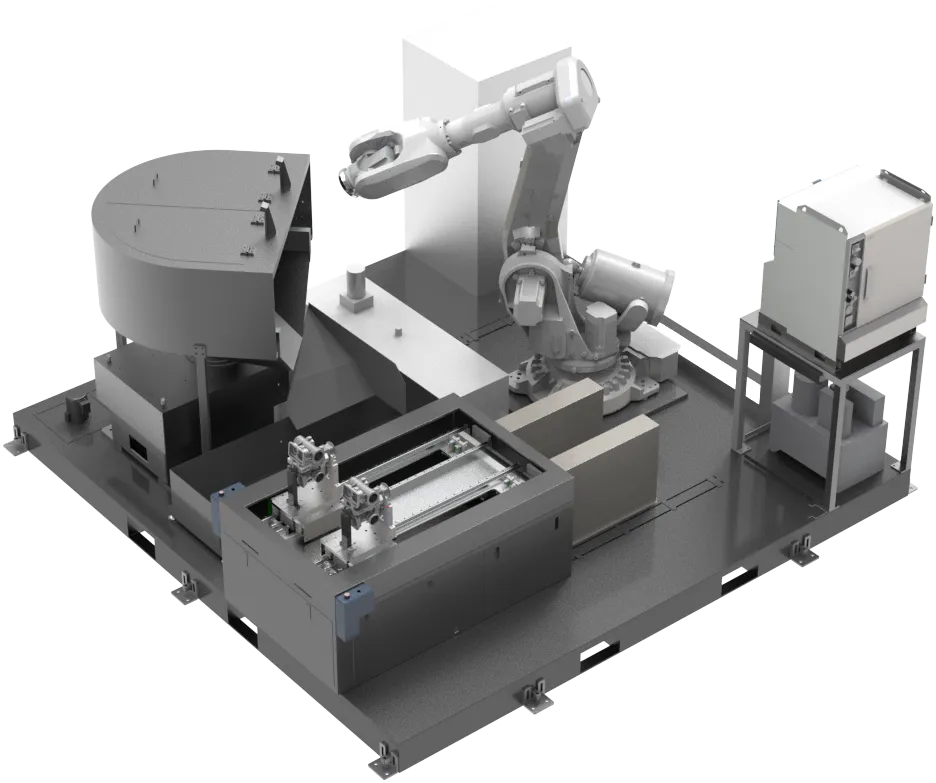


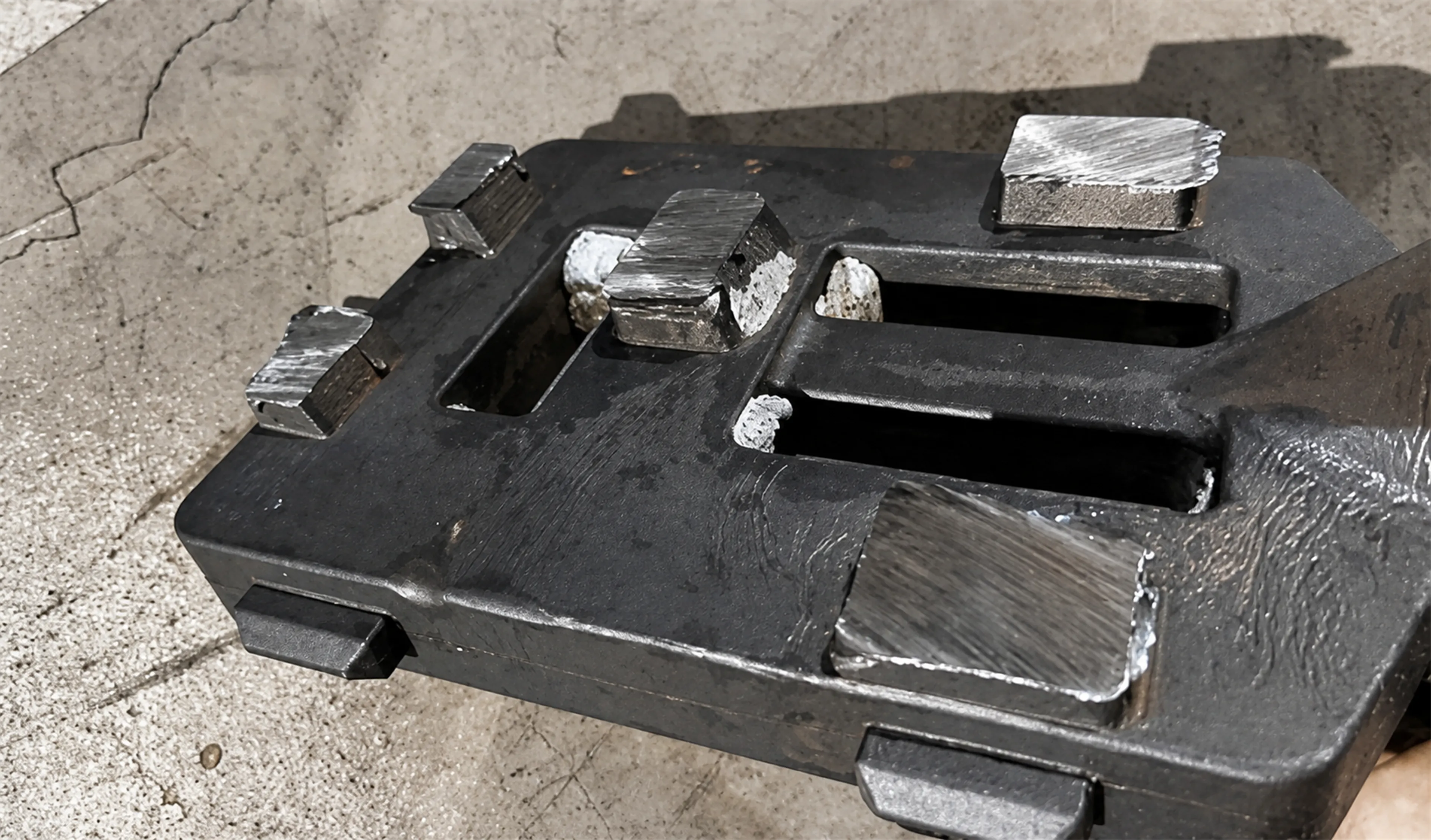
Integrates robots with dedicated cutting equipment to automatically remove and contour-trim gates, risers, flash, excess material, sheet metal, and composite edges. Stable path control and process parameter management improve cutting efficiency, dimensional consistency, and operational safety.
Consistent Cutting Quality, Seamlessly Integrating Automation
Reduced Labor and Maintenance Costs
Increased Production Efficiency
Reduced Abrasive Material Waste
Enhanced Safety
Fully Automated Operation
DS SmartCore Smart Manufacturing Platform
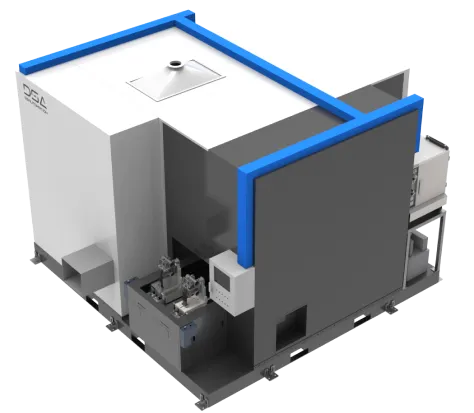
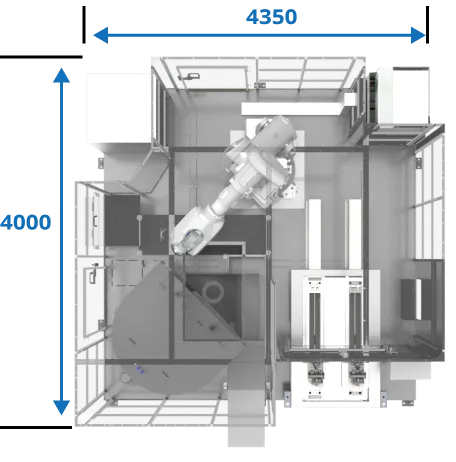
DS integrates enclosed blasting equipment, industrial robots, and automation controls to precisely manage blasting angle, distance, speed, time, pressure, abrasive media, and coverage, establishing a stable and repeatable surface-treatment process. Applications include casting sand removal, oxide and contaminant removal, surface roughening, and cleaning or pre-refurbishment treatment of semiconductor equipment parts, fixtures, metal tubes, and valves.
Abrasive media, particle size, blasting pressure, angle, distance, and processing time can be selected according to workpiece material, geometry, contamination, target surface roughness, and downstream cleaning or coating requirements.
01
Robot and automation control manage blasting angle, distance, speed, time, media, pressure, and coverage to establish repeatable process parameters based on material, contamination, and target surface conditions.
02
Supports automated blasting of casting cavities, grooves, curved surfaces, tubes, valve bodies, and multi-angle workpieces, with robot posture and paths planned according to geometry and reachability.
03
Abrasive media, particle size, and blasting conditions are adjusted according to downstream coating, bonding, cleaning, or refurbishment requirements to control target roughness, cleanliness, and coverage consistency.
04
Robotic blasting paths can be generated from 3D CAD and workpiece geometry, supporting posture optimization, reachability analysis, and collision checking to reduce on-site teaching and program adjustment time.
05
Depending on material and application requirements, aluminum oxide, glass beads, ceramic beads, silicon carbide, stainless-steel beads / shot, plastic / resin media, or other suitable media can be selected, with particle size, usage condition, recycling criteria, and process parameters managed accordingly.
06
Equipment status, process parameters, processing time, exceptions, and quality data can be integrated into SmartCore AI™ according to project requirements, supporting process monitoring, traceability, and further analysis.

Stable robotic control of blasting angle, distance, speed, and time reduces operator variation and improves consistency across complex surfaces, internal cavities, and multiple workpieces.

Manages media type, particle size, usage condition, and recycling criteria to reduce unnecessary consumable usage while maintaining stable surface-treatment conditions.

Integrating blasting into an enclosed automated system reduces direct operator exposure to dust, noise, and highly repetitive tasks, improving the overall working environment.

Recipes and robot paths can be configured for different products, materials, and surface requirements, supporting flexible changeovers and multiple surface-treatment conditions.

Consistent surface cleaning and roughness control provide a stable pre-treatment foundation for subsequent coating, thermal spray, bonding, painting, plating, or quality inspection processes.
Investment Casting Shell Removal & Internal-Cavity Cleaning
Semiconductor Equipment Parts Cleaning & Pre-Refurbishment Treatment
Surface Treatment for Semiconductor Fixtures, Tubes & Valves
Power-Generation / Turbine Blade Refurbishment & Coating Preparation
Surface Roughening for Coating, Bonding & Refurbishment
Robotic blasting can be applied to semiconductor facility exhaust ducts, welded piping components, and other metallic external surfaces that are not ultra-high-purity contact surfaces. The process removes oxides, weld heat tint, surface deposits, and old coatings while creating a uniform surface condition for subsequent precision cleaning, coating, painting, or other surface-treatment processes.
For welded stainless-steel components requiring corrosion resistance or high cleanliness, downstream processes such as pickling, passivation, electropolishing, or precision cleaning should be evaluated according to applicable specifications. Ultra-high-purity gas / chemical wetted surfaces, internal flow paths, and precision sealing surfaces should generally not be directly blasted. These areas should be isolated and protected, with subsequent verification based on cleanliness, surface-roughness, and contamination-control requirements.
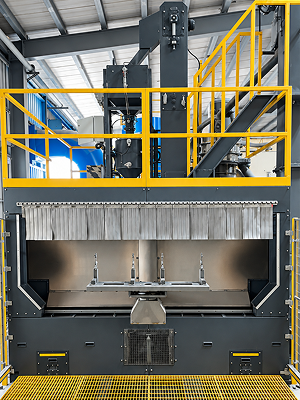
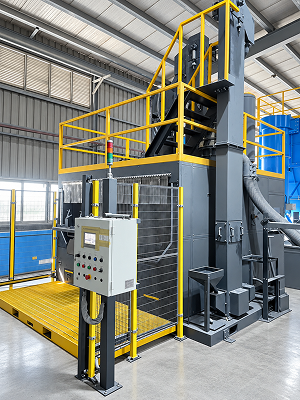
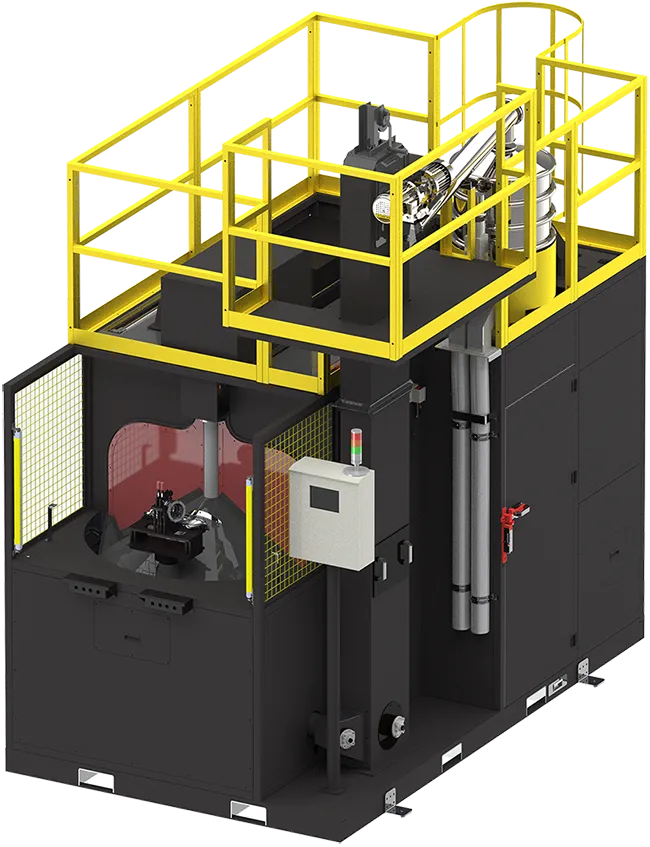
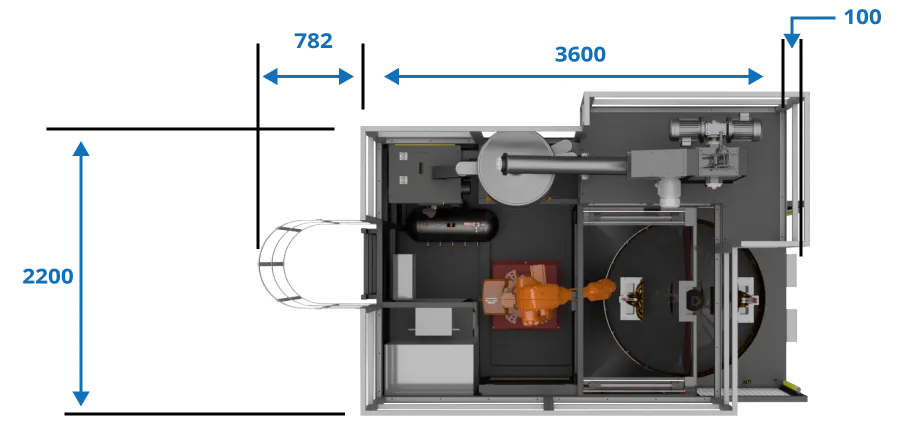
Integrates the blasting chamber, dust collection, abrasive-media circulation, safety protection, and automation controls, with customized configurations based on workpiece size, material, surface condition, and process requirements.
The enclosed blasting chamber integrates dust collection and abrasive-media recovery systems to reduce the escape of dust and blasting media while maintaining stable operating and process conditions.
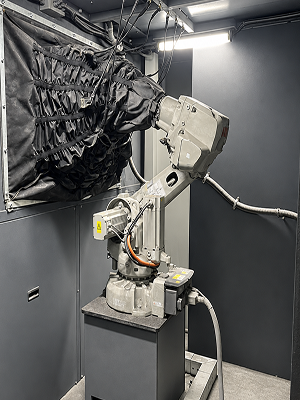
The robot is equipped with wear-resistant, dust-protective covers for its joints, cables, and body. Equipment layout and protective design reduce the exposure of drive and critical components to high-dust, high-abrasion environments and help prevent abrasive media from entering the drive system, supporting long-term operating reliability and reduced maintenance requirements.
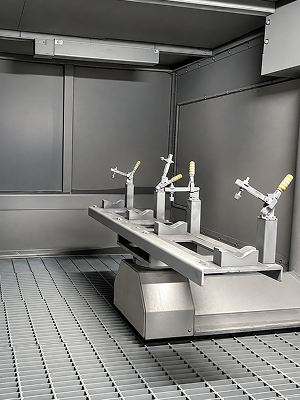
The enclosed blasting chamber can incorporate a rotary fixture for multi-angle positioning and automated blasting according to workpiece geometry and process requirements.
The cleanliness and surface condition of semiconductor equipment parts can affect chamber performance, particle control, and consistency after refurbishment. Depending on part material, deposits, surface specifications, and downstream process requirements, applicable processes may include controlled blasting, precision cleaning, surface roughening, coating preparation, and cleanliness verification.
The actual treatment method should be evaluated according to part function, material, and cleanliness requirements. Not all semiconductor components should be treated as identical blasting applications.
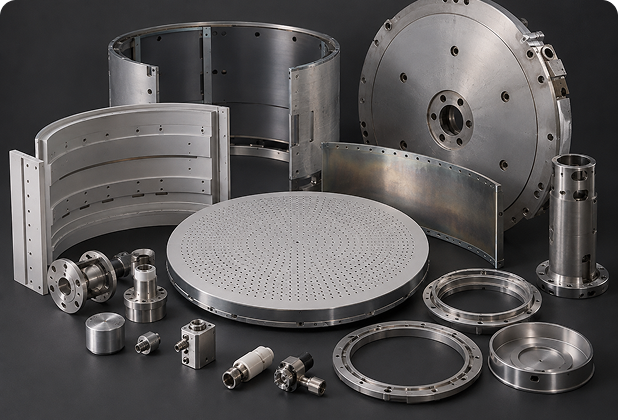
Suitable for chamber components such as Shields, Liners, Chamber Lids, and Shower Heads. Deposits can be removed and surfaces cleaned or selectively roughened according to substrate and downstream process requirements, providing preparation for subsequent precision cleaning, coating, or component refurbishment.
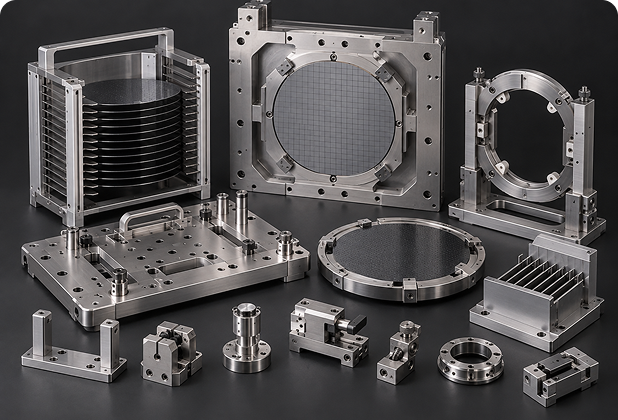
For fixtures, carriers, locating fixtures, and reusable parts, robotic control of blasting paths, angles, and coverage can improve treatment consistency across complex geometries, grooves, internal cavities, and multi-surface areas. Appropriate abrasive media and process parameters can be selected according to material and cleanliness requirements.
Internal flow paths and precision sealing areas in contact with high-purity gases, chemicals, or other UHP fluids should be processed according to cleanliness, surface-roughness, and contamination-control requirements using suitable methods such as precision cleaning, passivation, or electropolishing. Conventional blasting is generally not recommended for these critical surfaces.
Different blasting media provide different levels of hardness, cutting action, surface finish, and contamination risk. DS evaluates media type, particle size, pressure, blasting angle, distance, and processing time according to workpiece material, contaminants, target surface roughness, dimensional tolerances, downstream coating / cleaning processes, and cleanliness requirements to establish suitable and repeatable automated blasting processes.
| Blasting Media | Characteristics | Typical Applications |
|---|---|---|
| Aluminum Oxide Al₂O₃ | High hardness and aggressive cutting action for rapid removal of oxides, deposits, and old coatings, while creating higher surface roughness and an anchor profile. | Casting sand removal, deposit removal from chamber parts, oxide removal, and surface roughening before coating / thermal spray. |
| Glass Bead | Spherical media with lower cutting aggressiveness, producing a uniform matte finish and a gentler surface effect. | Cleaning stainless-steel and aluminum parts, cosmetic finishing, reducing machining marks, and treating dimension-sensitive components. |
| Ceramic Bead | Wear-resistant, long-life media providing uniform impact, suitable for stable production and low-cutting surface treatment. | Precision-part cleaning, surface homogenization, and automated processes requiring high consistency. |
| Silicon Carbide SiC | Extremely hard and highly aggressive, suitable for hard substrates and difficult-to-remove deposits. | Ceramics, high-hardness parts, heavy deposit removal, and rapid surface roughening. |
| Stainless Steel Bead / Shot | Durable and reusable media providing strong cleaning and impact effects on metallic surfaces. | Removal of oxides, corrosion, and deposits from metal parts, as well as pre-refurbishment treatment of castings, blades, and energy-equipment components. |
| Plastic / Resin Media | Lower hardness and density provide gentler treatment of the substrate, with formulations available for cleaning, deburring, smoothing, or polishing. | Low-damage cleaning, deburring, and surface polishing of aluminum alloys, precision parts, molds, aerospace parts, and electronic components. |
| Walnut Shell | Soft organic media with low material-removal rates and minimal impact on the base material. | Light contamination, carbon deposits, oil removal, and low-damage cleaning. Organic residue risk must be evaluated for high-cleanliness applications. |
| Other Specialized Media | Specialized particle sizes, shapes, and composite media can be evaluated according to material and surface requirements. | Precision polishing, special roughness requirements, low-damage surface treatment, and customer-specific processes. |
Actual media selection should be tested and validated according to substrate material, contaminants, target surface roughness, dimensional tolerances, downstream processes, and cleanliness requirements. For high-cleanliness semiconductor parts, particular attention should be paid to media residue, metallic / organic contamination, and cross-contamination risks. Conventional blasting media are generally not recommended for high-purity fluid-contact surfaces.
DS provides end-to-end services from blasting process evaluation, media selection, parameter validation, fixture and system design to robotic automation integration and production implementation. Standard modular or customized blasting and precision surface-cleaning systems can be configured according to workpiece material, geometry, contaminants, target surface roughness, cleanliness requirements, and downstream processes.
Share your workpiece data, material, contamination condition, target surface roughness, cleanliness requirements, and downstream process conditions with DS for media selection, process feasibility evaluation, and automation solution planning.