

 Comprehensive Visibility of Personnel, Equipment, and Materials
 Intelligent Scheduling that Prevents Work Order Interruptions and Material Shortages
 Standardized Processes and Controllable Operations
 Real-Time Production Status Tracking
 Quality Gatekeeping Through Measurement to Prevent Defects from Escaping
 A Central Platform for Factory Data and Standards
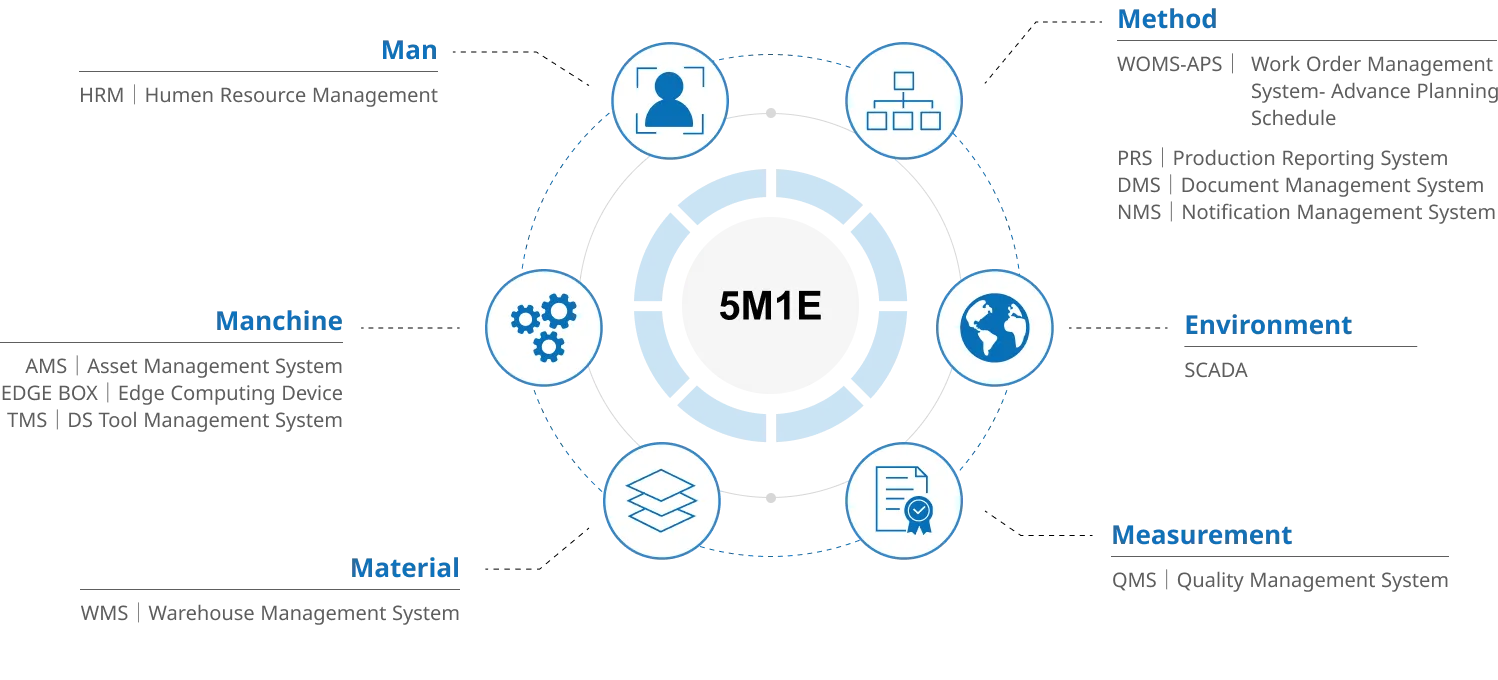
DS SmartCore™ AI MES is built on the 'People, Machine, Material, Method, Environment, Measurement' framework and links with DS SmartCore™ AI. Through 5M1E resource modeling, it establishes a real-time single source of truth for the factory's manufacturing resources, keeping work orders, scheduling, quality, and shop-floor status synchronized, and ensuring processes remain executable, traceable, and stable.

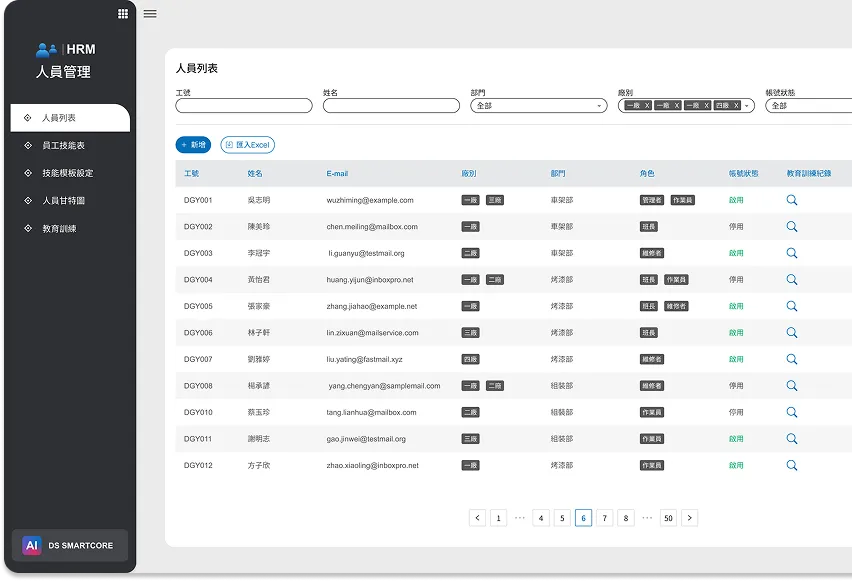
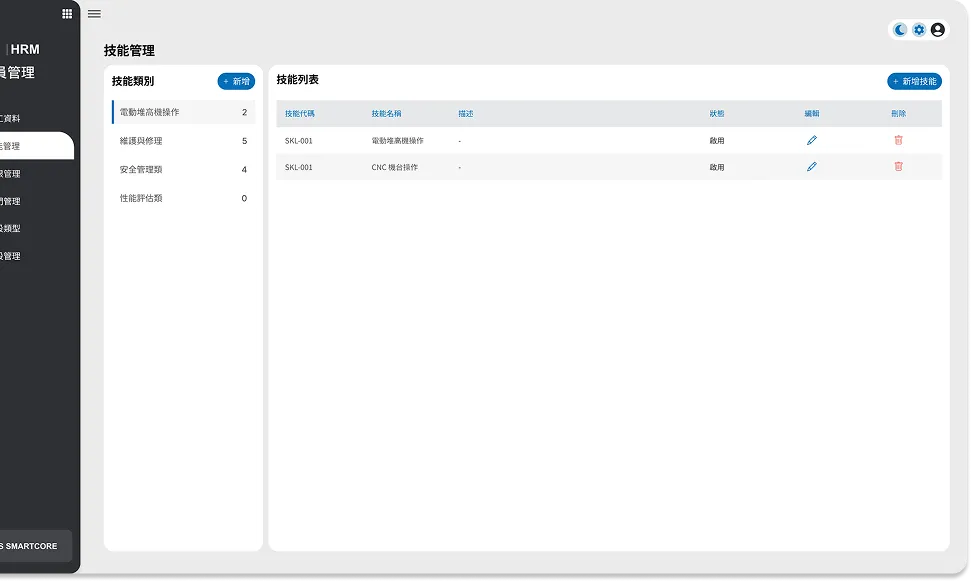
Integrates personnel data, skill qualifications, shift schedules, and real-time availability as the basis for work order assignment and process qualification verification, ensuring the right personnel perform the right operations.

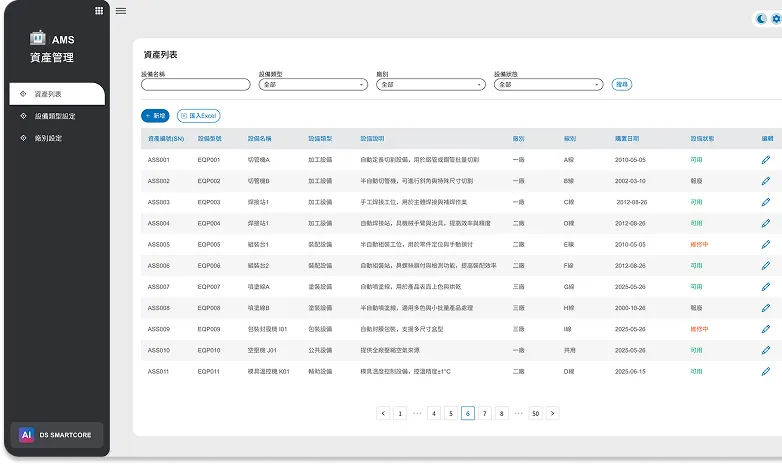
Integrates equipment master data, utilization status, maintenance plans, and abnormality history to build an equipment resource model that supports availability verification and scheduling decisions
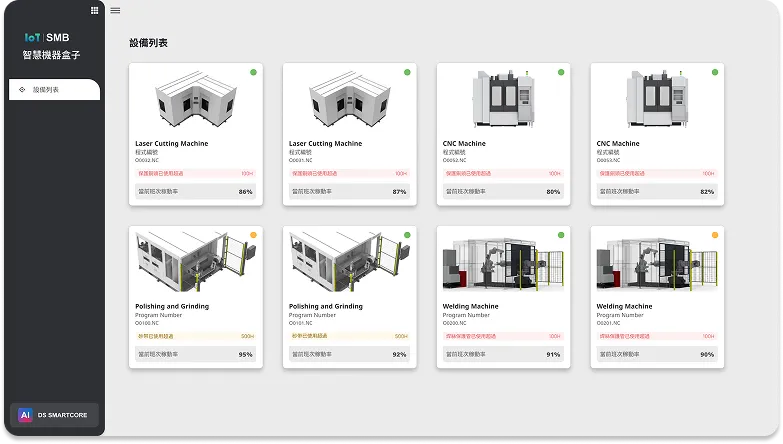

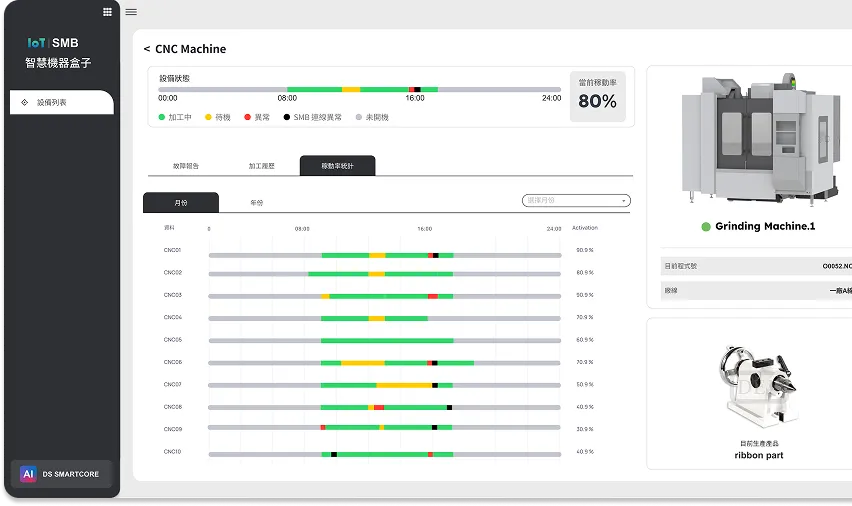
Captures equipment, controller, and sensor data in real time, providing the on-site data foundation needed for equipment status synchronization, process monitoring, capacity analysis, and intelligent scheduling.
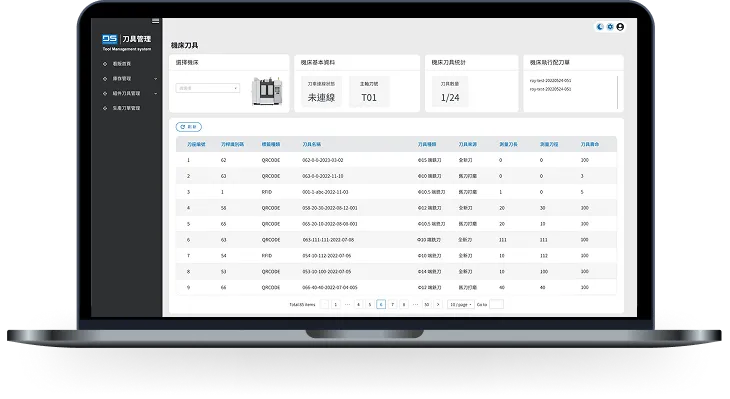

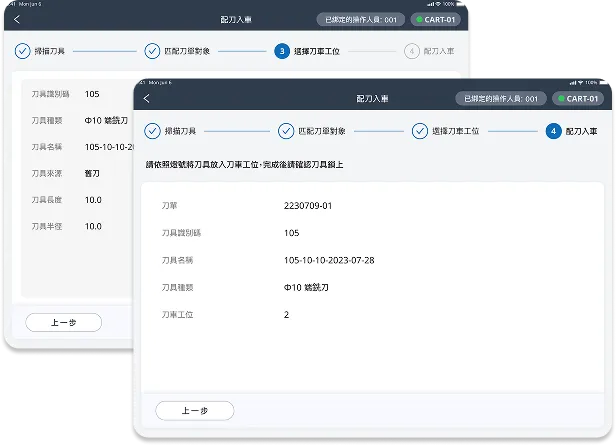
Integrates standard tool lists, tool configuration, inventory, pre-setting, delivery, CNC offset, and tool life data to build full lifecycle tool management. The system verifies tool availability and offset data against work orders, supporting error-proofing, traceability, inventory alerts, and life analysis, ensuring the right tool reaches the right machine at the right time.
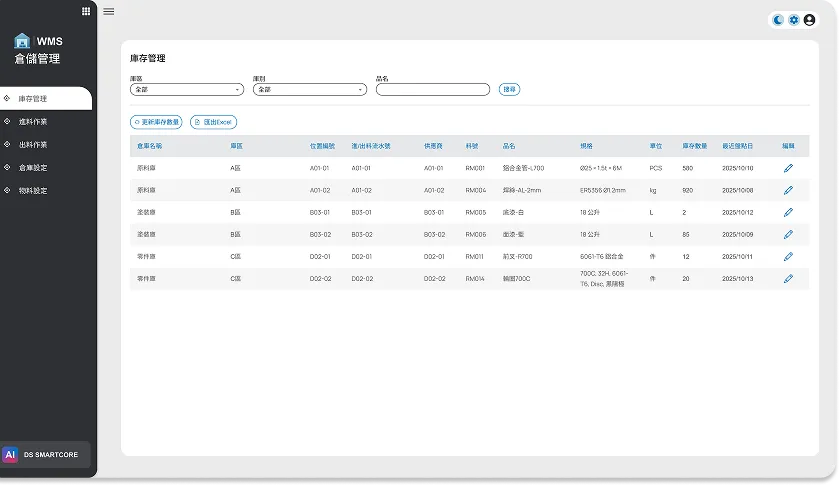

Integrates material master data, batch numbers, inventory, storage locations, and in/out records to build a real-time material availability model. The system checks inventory, reservations, shortage risk, and issuing conditions before scheduling, preventing work orders with insufficient materials from entering shop-floor execution.
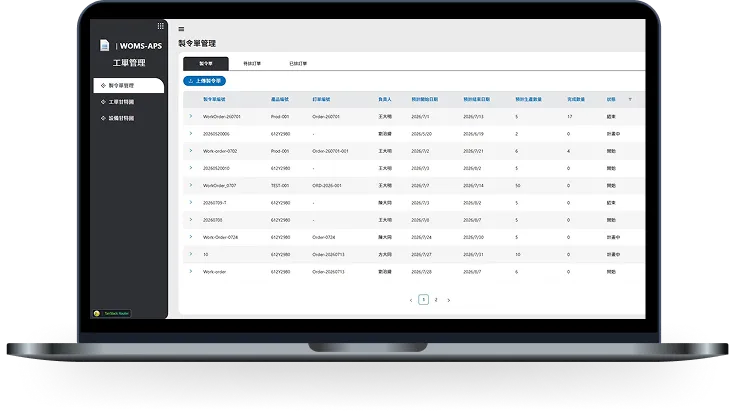

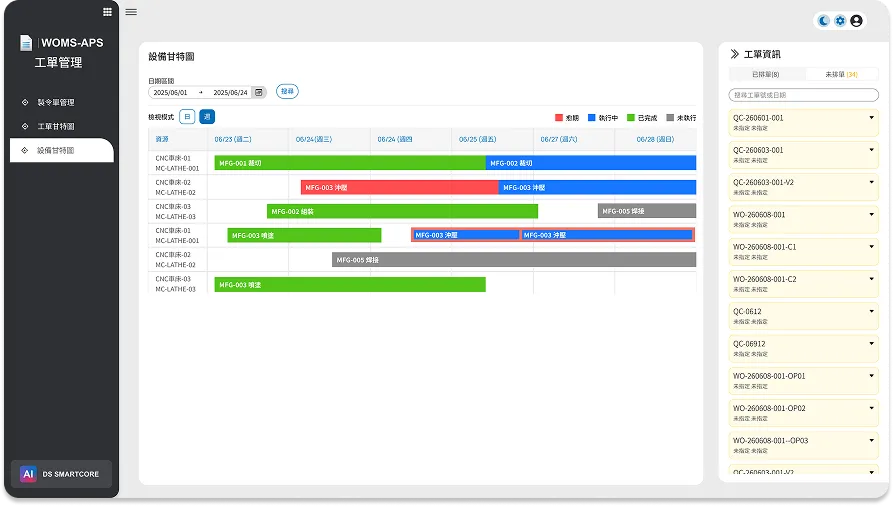
Centered on executable scheduling, it integrates work orders, operations, capacity, delivery dates, and real-time resource status, automatically validating manufacturing conditions such as personnel, machines, materials, and methods before scheduling.
Supports rush order impact analysis, delivery forecasting, bottleneck identification, and dynamic rescheduling, establishing a traceable, predictable, and controllable intelligent scheduling mechanism.
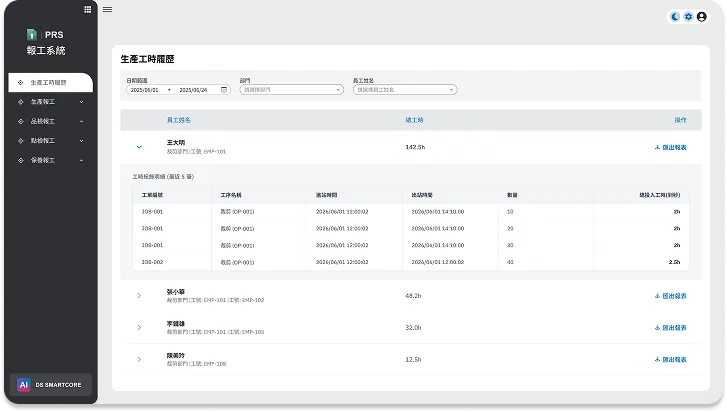

Reports process start and finish times, output quantity, labor hours, equipment status, and abnormal information in real time, creating a closed-loop manufacturing execution cycle synchronized with scheduling and the shop floor.
Production results are fed back to WOMS-APS and MES in real time, serving as the basis for progress updates, capacity analysis, and schedule adjustments.
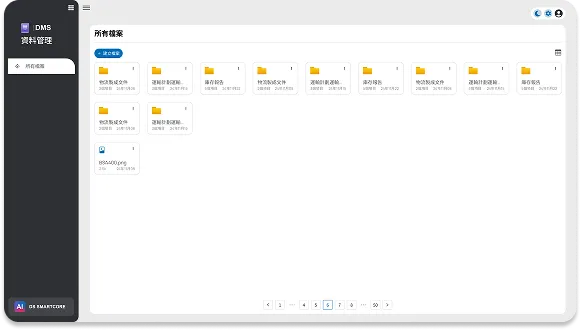

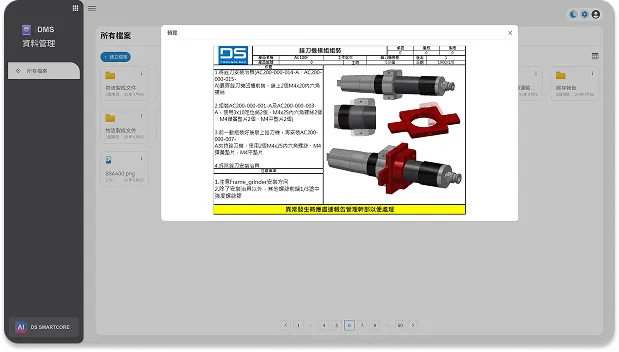
Integrates SOPs, work instructions, engineering drawings, inspection specifications, and process documents, providing version, publication, permission, and change management.
Automatically provides the correct documents by work order, product, and process, preventing the shop floor from using outdated versions or invalid data, ensuring process standardization and traceability.

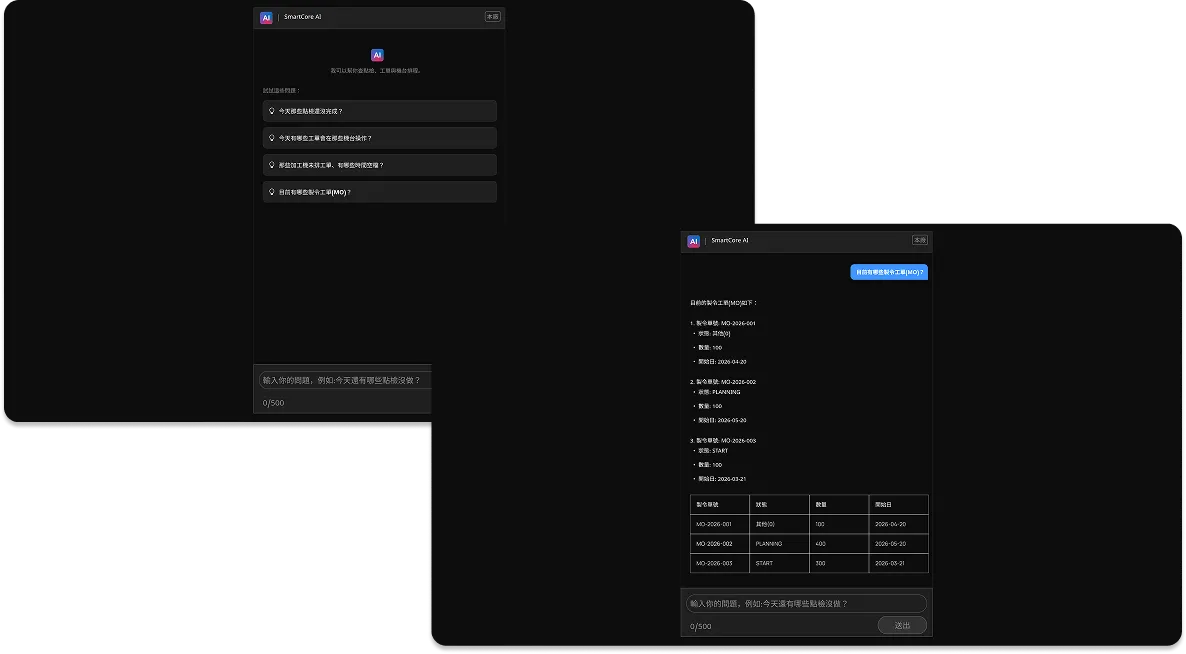
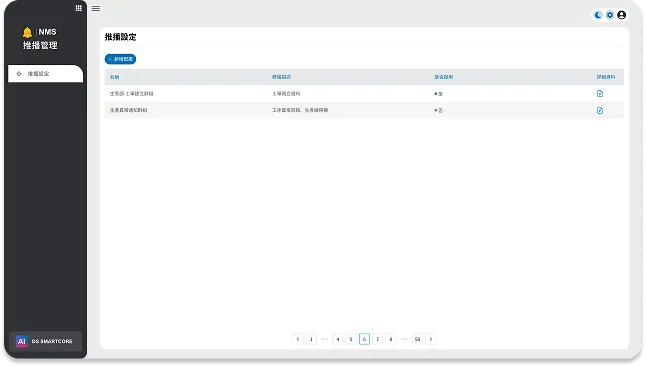
Integrates production, equipment, quality, and material events, pushing real-time alerts, to-dos, and progress notifications based on roles, groups, severity levels, and subscription rules.
Supports notification records, read status, escalation, and tracking, ensuring abnormal information is delivered instantly and handled through to closure.
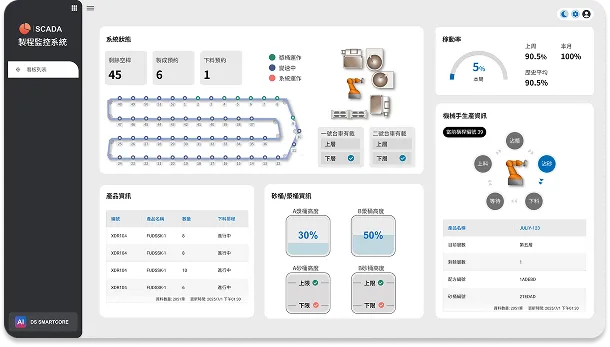

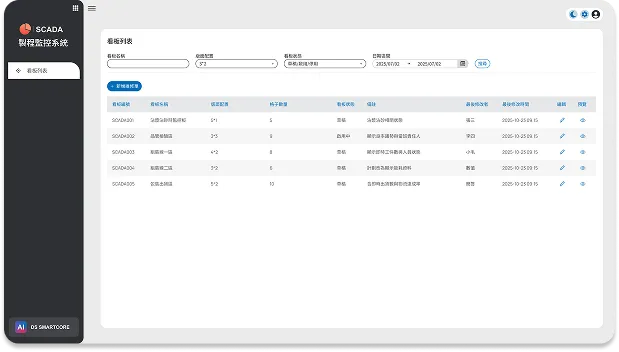
Collects equipment status, process parameters, energy usage, and environmental sensor data in real time, building a real-time factory monitoring and anomaly management platform.
Data is synchronized back to MES and WOMS-APS, supporting equipment utilization analysis, process stability monitoring, energy management, ESG analysis, and abnormality response decisions.
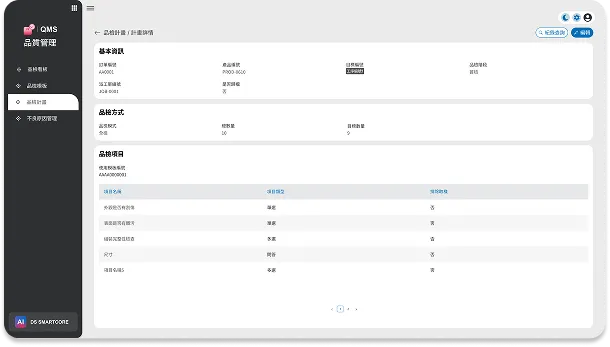

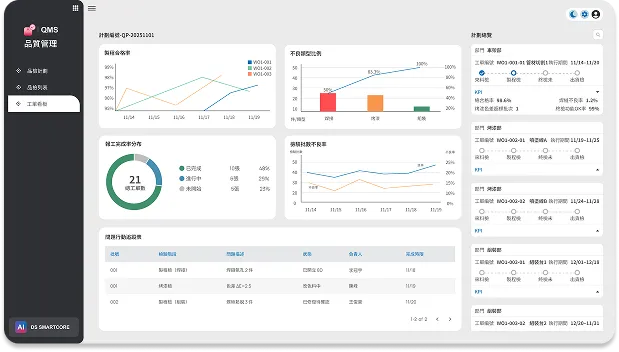
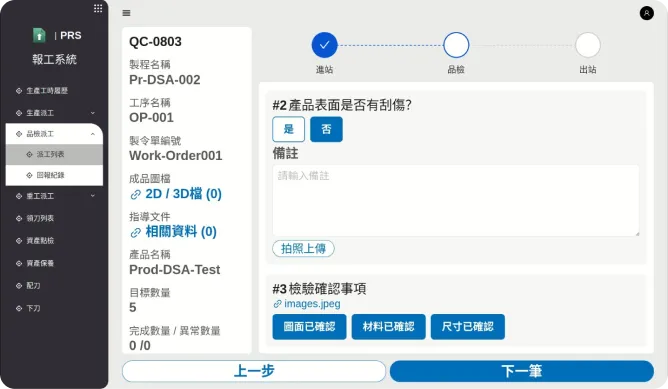
Integrates incoming, in-process, and outgoing inspection data, covering IQC, IPQC, and OQC, and manages quality abnormalities, NCRs, CAPA, and quality traceability.
Inspection results are fed back to MES and WOMS-APS in real time, serving as a key basis for process release, abnormality quarantine, work order execution, and schedule adjustments.